Trump’s confrontation with Venezuela: Oil, power, and the future of the Americas


Editor's note: Russian military-political analyst, expert in the field of strategic security, specialist in the Middle East and Africa Vladimir Bekish. The article expresses the personal opinion of the author and may not coincide with the view of News.Az.
The course of history on our planet has unfolded in such a way that the United States of America is geographically located far from many other places where human civilization has flourished, clashed, and waged wars for centuries. While Europe, the Middle East, Asia, and Africa were shaken by devastating conflicts, the American homeland remained a distant observer.
Throughout history, the U.S. mainland has been geographically shielded from those wars. There were no hostile armies massing along its borders, no immediate threat of invasion, and no direct strikes on its territory. We will not dwell here on today’s nuclear weapons and the countries that possess them, which indeed represent a potential danger to the U.S.
Of course, America itself has been deeply involved in wars and military conflicts around the globe — and continues to be engaged to this day. However, all these battles have been fought far away from the American continent, far from the safety of its own shores.
There have been rare moments when danger arose near America itself. The most famous of these was Cuba during the Soviet era, when the Cuban Missile Crisis erupted. It is well known how decisively and firmly the U.S. reacted to the mere possibility of a military threat appearing so close to its own borders. That episode set a precedent for how Washington would treat threats in its own neighborhood.
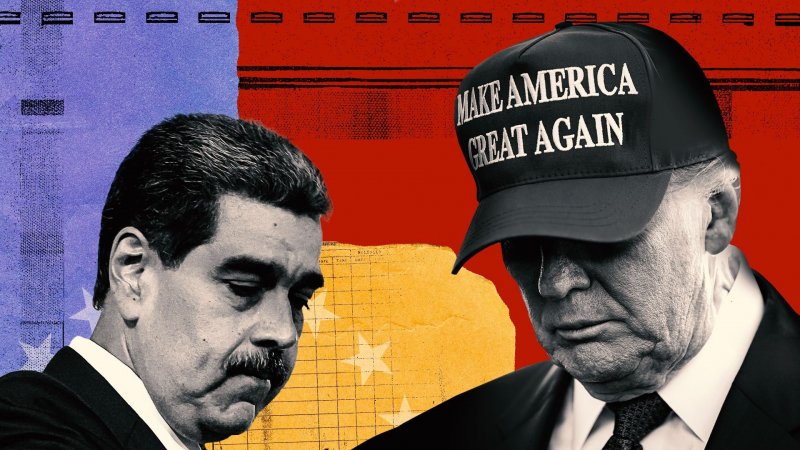
Today, tensions are once again mounting. Military rhetoric is escalating between the U.S. and its not-so-distant neighbor — Venezuela. As part of his fight against drug trafficking, President Donald Trump has now set his sights, in addition to Colombia and Mexico, on Venezuela.
The President is firmly convinced that Venezuelan leader Nicolás Maduro is connected to powerful drug cartels. In August, Washington raised the reward for information leading to Maduro’s arrest from $15 million to an astonishing $50 million — even more than the bounty once offered for Osama bin Laden.
A few weeks ago, this standoff turned deadly. U.S. forces sank a boat, which, according to Caracas, was carrying peaceful fishermen. Washington, however, claimed the vessel was packed with heavily armed drug traffickers. Trump himself published a dramatic video showing the moment of the explosion in the southern Caribbean Sea. There were eleven people on board — all of them perished.
In response, Maduro issued a series of defiant statements and “decisive” actions. “The people of Venezuela will never be humiliated, never kneel. We will stand with our heads held high, in the sunlight, in constant struggle for the dignity of a nation that has earned the right to live, to exist, and to develop,” he declared.
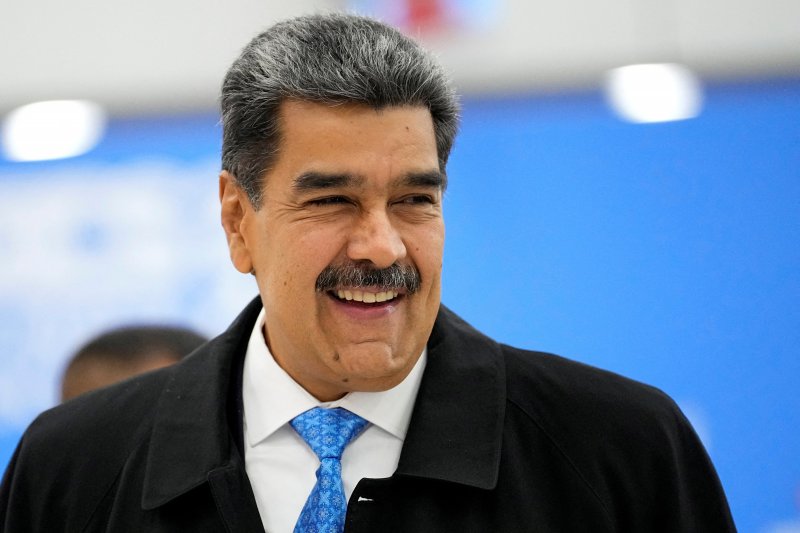
Meanwhile, eight U.S. warships — including a missile cruiser and a nuclear submarine — are already heading toward Venezuela’s shores. Under the pretext of fighting drug smuggling, Washington has also sent ten F-35 fighter jets to a military base in Puerto Rico.
In turn, Maduro announced a mobilization and called up 25,000 reservists. He also openly voiced what he believes to be the true motives behind Washington’s actions: “This is not about drug trafficking. What they really want is oil and gas. Venezuela possesses the largest oil reserves in the world and the fourth-largest gas reserves, spread throughout the Caribbean basin. That is why they have sent their ships here.” Maduro described the current U.S. operation as the greatest threat his country has faced in the past hundred years, claiming that American forces aim to overthrow him and seize control of Venezuela’s resources.
The looming question now is whether this confrontation will escalate into open conflict. Will America launch strikes on Venezuela? And, just as importantly, is Venezuela capable of responding in any meaningful way?
If we take Trump’s statements at face value, a strike on Venezuela appears likely. Yet one must also remember that many of Trump’s declarations about what he plans to do often diverge significantly from what he actually does in practice. Still, it is clear that such strikes could serve Trump’s own interests. By attacking Venezuela, he would remain at the center of global attention, not only as a warrior against drug cartels and narcotics trafficking but also as a bold and decisive leader who stops at nothing to defend the true America.
Furthermore, such strikes and the mounting pressure on Venezuela and its president would send a powerful message to the world: demonstrating which nation — and which leader — stands as the ultimate guide and enforcer of the global order.
However, there are additional circumstances that must not be overlooked. Maduro’s warnings about natural resources are not entirely unfounded. Venezuela ranks first in the world in proven oil reserves. If Washington manages to change the regime in Caracas in its favor, turning Venezuela into an ally, it would open the door for U.S. energy companies to dominate the country’s oil production. This oil and the products refined from it would bring enormous profits to American corporations and to the U.S. economy itself.
Moreover, this would deal a significant blow to China, which currently plays a key role in Venezuela’s oil sector, extracting crude and shipping it home to fuel its massive markets. And oil is just the beginning. Venezuela also possesses vast reserves of aluminum, along with significant deposits of gold and diamonds.
Much of this gold is extracted by small-scale, often illegal miners — I have personally witnessed this in several Venezuelan provinces. Because Venezuela is under numerous international sanctions, this gold is smuggled abroad, primarily to Russia and Iran. Once there, it is rebranded as Russian or Iranian gold and sold successfully on global markets.
But can Venezuela pose any real threat to the United States in return? This is a delicate and complex question. Maduro will surely order his army to fight and resist any U.S. aggression. Yet the issue is one of capability: what can Venezuela realistically fight with?
Venezuela does not produce significant weaponry of its own. Almost all of its military hardware is of Russian or Iranian origin. Yes, there is a Kalashnikov factory under construction to produce assault rifles. Yes, plans have been discussed — and are ready to be implemented — for the deployment of Russian Iskander missile systems on Venezuelan soil. Russian strategic bombers and navy vessels have also visited Venezuela in symbolic shows of support.
However, two harsh realities cannot be ignored.
First, given the current situation, Russia is unlikely to have the surplus weaponry and resources to supply Venezuela while it is deeply entangled in Ukraine and maintaining defenses along its European borders.
Second, and perhaps even more crucially, if Venezuelan forces use Russian weaponry to strike U.S. troops — even if operated solely by Venezuelans, without Russian instructors or private contractors — Washington and Trump would undoubtedly treat this as direct Russian support for international criminals and aggression against the United States. The consequences of such an interpretation would be severe and far-reaching.

I must also add a personal note. I deeply love Venezuela. It is a breathtakingly beautiful country, with stunning landscapes, a warm climate, delicious food, mesmerizing islands, seas and beaches — and some of the most beautiful women in the world.
But there is something very peculiar about its culture and way of life. Let me share just one example from my own experiences there.
Venezuelan women have a popular saying about their men: “A Venezuelan man is like a phone — either always busy and unavailable, or he just doesn’t work because he’s broken or out of battery.”
I do not mean to insult Venezuelan men, but this reflects a certain mentality. Fighting day and night, living under constant tension, risking one’s life instead of quietly sipping rum and admiring beautiful women — why would they want to do that?
This cultural reality suggests that while Maduro may call for resistance, the willingness of his people to engage in sustained conflict is questionable.
In the end, America may not face serious retaliation. For Trump, a military strike on Venezuela would not only further his domestic agenda and bolster his image as a fearless leader, but it would also allow him to reshape the regional balance of power. And if that happens, Washington might indeed move one step closer to making all the Americas truly “American.”
(If you possess specialized knowledge and wish to contribute, please reach out to us at opinions@news.az).


Similar news