Ukraine vs. Putin: Who will push the button first?


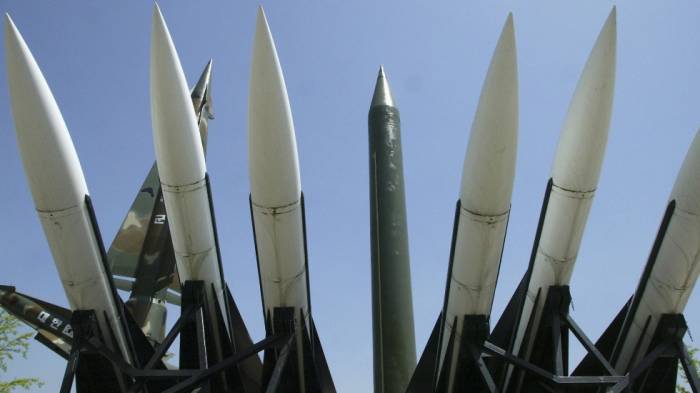
Photo: Getty Images
By Tural Heybatov
In a dramatic and controversial move, Ukrainian President Volodymyr Zelenskiy recently suggested that Ukraine might consider reviving its nuclear weapons program if NATO membership remains elusive. This declaration, made during an EU summit and reiterated in a subsequent conversation with incoming U.S. President Donald Trump, underscores Kyiv’s frustration with NATO’s reluctance and its quest for robust security guarantees. However, the implications of such a step are far-reaching, potentially reshaping global nuclear politics and escalating already heightened tensions.
Ukraine relinquished its nuclear arsenal in 1996 under the Budapest Memorandum, securing guarantees for its territorial integrity from major powers, including Russia—a promise that Moscow has blatantly violated since its annexation of Crimea in 2014. While Kyiv currently lacks the facilities to enrich uranium or refine plutonium, experts like Professor Jeffrey Lewis argue that it possesses the technical capacity to produce low-yield nuclear weapons using reactor plutonium.Ukraine’s operational nuclear reactors reportedly house approximately seven tonnes of plutonium, which, if refined, could yield hundreds of tactical warheads. Yet, this process requires significant resources, expertise, and time. For instance, constructing a plutonium reprocessing plant akin to one China built in the 1990s would cost billions and take at least a decade—timelines that conflict with Ukraine’s immediate security needs amidst ongoing war.
Even if Ukraine were to clandestinely develop a bomb, such efforts would be fraught with risks, including Russian preemptive strikes on nascent facilities. As Professor Lewis notes, any overt nuclear development could provoke decisive military responses from both Moscow and NATO, jeopardizing Ukraine’s broader security objectives.
Zelenskiy’s remarks resonate beyond Ukraine’s borders, particularly in the Global South, where nations facing perceived Western or regional threats might view nuclear weapons as a deterrent. The war in Ukraine has underscored the strategic advantages enjoyed by nuclear-armed states, as evidenced by the West’s reluctance to escalate military involvement against Russia. This has reinforced the perception that possessing nuclear weapons deters external aggression, spurring debates about proliferation in regions like the Middle East and Asia.
For instance, Iran, with its advanced nuclear infrastructure , appears closer than ever to developing a weapon, despite its public denial of such intentions. Iranian lawmakers have recently urged revisiting the country’s defense doctrine to permit nuclear armament, citing the escalating conflict with Israel and shifting regional dynamics.
Similarly, nations like Saudi Arabia and Turkey, with robust technological and financial capacities, could pursue nuclear ambitions, further destabilizing these volatile regions.
Additionally, the accessibility of nuclear materials and technology complicates non-proliferation efforts. Russia, a key player in global uranium enrichment, continues to export its civilian nuclear technology to developing nations, particularly in Africa. This burgeoning trade not only boosts Moscow’s geopolitical influence but also raises concerns about the diversion of nuclear materials for military purposes.
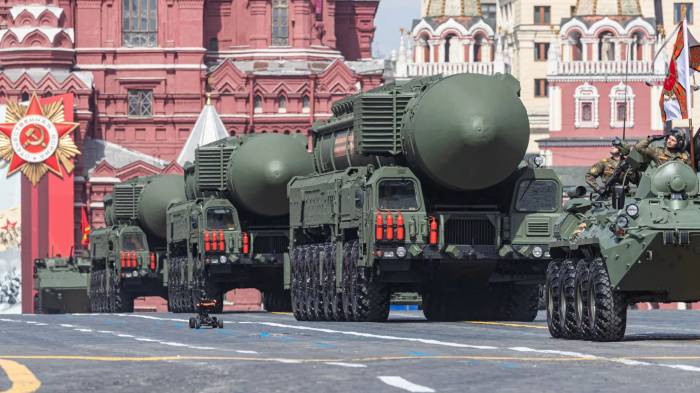
the Yars RS-24 is a Russian-made mobile nuclear intercontinental ballistic missile. Photo: Getty Images
Both Zelenskiy and Russian President Vladimir Putin have wielded nuclear threats as part of their strategic arsenal, albeit for different purposes. Putin’s repeated nuclear saber-rattling, including moving missiles into Belarus and conducting exercises, aims to deter Western intervention and solidify Russia’s strategic dominance. Conversely, Zelenskiy’s nuclear rhetoric appears to be a high-stakes gambit to pressure NATO into action, rather than a concrete policy shift.
By threatening to reconsider its non-nuclear stance, Ukraine seeks to highlight the inadequacy of existing security guarantees and the existential threat posed by Russian aggression. However, Bankova (Ukraine’s presidential office) quickly walked back from Zelenskiy’s comments, clarifying that Kyiv remains committed to the Treaty on the Non-Proliferation of Nuclear Weapons (NPT). This dual messaging suggests a calculated strategy to provoke international debate without crossing red lines that could isolate Ukraine diplomatically.
Despite the rhetoric, the hurdles to actual nuclear armament remain formidable for Ukraine. The country lacks the technical infrastructure, financial resources, and geopolitical cover required to develop a nuclear arsenal, particularly amidst ongoing conflict. Furthermore, such a move would alienate key allies and risk provoking direct military responses from Russia or the U.S., effectively undermining Ukraine’s broader strategic objectives.
Iran, by contrast, is better positioned to achieve nuclear capability, with its six heavily defended facilities already operational. However, Tehran has similarly refrained from weaponization, recognizing the potential for devastating retaliation from Israel or the U.S. Even so, the possibility of secret nuclear programs by countries like Iran, Saudi Arabia, or others in the Global South remains a looming threat.
The likelihood of Ukraine or Iran openly pursuing nuclear weapons remains low in the short term, given the significant technical and political barriers involved. However, the strategic logic underpinning their nuclear aspirations highlights the broader failures of the global security architecture. For Ukraine, the perceived inadequacy of the Budapest Memorandum underscores the need for more robust and enforceable security guarantees. For Iran, persistent Western hostility and regional threats fuel its nuclear ambitions, despite the risks of escalation.
The broader lesson of the Ukraine war is that nuclear deterrence remains a potent, albeit dangerous, tool in the arsenal of statecraft. As geopolitical rivalries intensify, the allure of nuclear weapons for both established powers and emerging players could spark a new wave of proliferation, challenging the effectiveness of the NPT and other arms control mechanisms.
Zelenskiy’s nuclear rhetoric underscores Ukraine’s desperation for security in the face of Russian aggression and Western indecision. While unlikely to materialize, the mere suggestion of a nuclear Ukraine has reignited global debates about the role of nuclear weapons in modern geopolitics. For the international community, the challenge lies in addressing the root causes of proliferation—regional insecurity, great power rivalries, and the erosion of multilateral arms control regimes. Failure to do so risks plunging the world into a new era of nuclear brinkmanship, with devastating consequences for global peace and stability.


Similar news