What is behind the extension of the EU mission in Armenia? - EXPERT OPINIONS


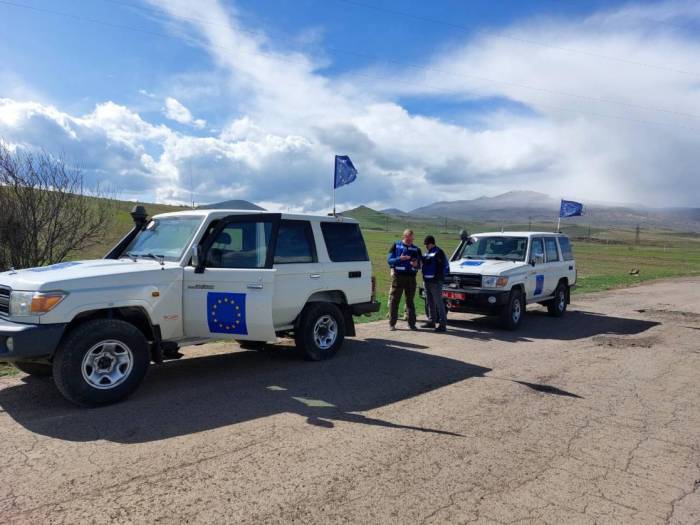
Recent developments in Armenia have reignited debates over geopolitical realignments in the South Caucasus. Footage has surfaced of European Union Mission in Armenia (EUMA) observers conducting surveillance along the Armenia-Azerbaijan border. The mission, originally deployed in February 2023 with a mandate expiring in 2025, has now been extended for an additional two years—prompting speculation about its evolving role.
This decision raises critical questions: Is the EU mission transitioning from a monitoring role to a more active Western military presence? How will Russia react, particularly in light of Armenia’s recent decision to withdraw Russian border troops from the Armenia-Iran frontier? If Yerevan insists on defending its borders independently, why does it continue to rely on a Western mission to oversee the region? Could the extension of EUMA’s mandate signal a gradual substitution of Russian forces with Western security structures?
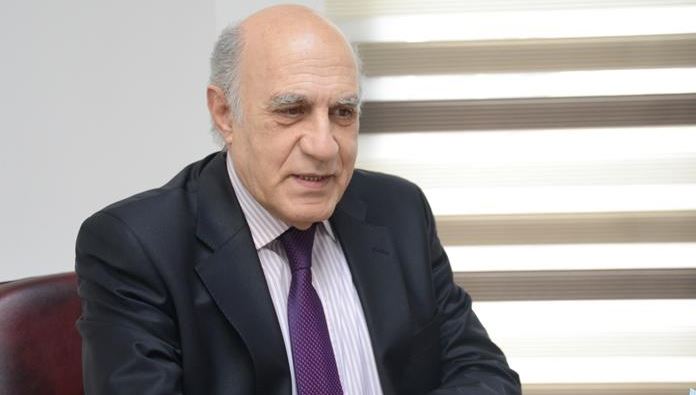
To assess the implications of this shift, News.az spoke with Professor Fikret Sadikhov, a distinguished political scientist and diplomat.
Professor Sadikhov challenges the fundamental premise of the European mission’s presence on the border . "What is the actual purpose of this mission? Who does it protect, and from whom?" he asks, emphasizing that Azerbaijan has no territorial claims against Armenia. "We have consistently stated this, and Armenia, along with the EU, is fully aware of it."
Sadikhov also expresses skepticism regarding the mission’s prolonged mandate and growing operational footprint. "Why extend the mission? To better observe Azerbaijani facilities? What exactly is their task?" he asks. Reports that the mission may be armed further raise concerns. "We initially agreed to their presence in 2023, strictly rejecting their deployment on Azerbaijani territory. But if this presence evolves into something beyond observation, it risks escalating tensions."
According to Sadikhov, the dissolution of the OSCE Minsk Group—a key diplomatic mechanism for the Armenia-Azerbaijan conflict—may have prompted the EU to increase its footprint in the region. "It seems that the disbandment of the OSCE Minsk Group left a void that the EU is now filling, using EUMA to monitor Azerbaijani facilities under the pretext of border security." He warns that such actions not only irritate Azerbaijan but also undermine trust in Brussels' intentions. "This mission is not neutral. Its continued presence raises serious geopolitical concerns that the EU must address transparently."
To further analyze the geopolitical dimension.

Russian political analyst Daria Grevtsova argues that the EU mission is not primarily designed for peacekeeping but rather as a strategic tool to exert influence over Armenia’s military and political apparatus. "This mission was not created to ensure regional stability. Instead, it aims to infiltrate key decision-making circles and influence military strategies," she explains.
She also highlights the presence of intelligence operatives and military personnel within the mission. "Many of these so-called observers come from intelligence backgrounds, with experience in military operations and classified projects."
According to Grevtsova, Armenia’s growing reliance on the West is part of a broader pattern aimed at reducing Russian influence in the South Caucasus. "We see a gradual erosion of Russian influence on Armenia’s border security. There are even discussions about shutting down Russian military bases, in Georgia signaling a regional shift toward Western alignment."
She warns that Armenia’s pivot toward the West could lead to destabilization. "Western powers—particularly the U.S. and France—seek to turn Armenia into a strategic outpost, arming it with modern weaponry and installing pro-Western leadership. This follows a familiar pattern in global geopolitics, where Western-backed governments often become tools for larger geopolitical confrontations."
Grevtsova also questions whether the EU mission is being leveraged for intelligence gathering. " Extending the mission ’s mandate is not about the withdrawal of Russian troops; it serves Western geopolitical interests. This presence enables intelligence collection, shapes public discourse, and exerts pressure on local leadership."
She draws historical parallels, warning that Armenia’s leadership may be overestimating Western guarantees. "Many nations have relied on Western promises, only to find themselves isolated when their strategic utility diminishes."
Both experts argue that regional security should be managed through direct negotiations between neighboring countries rather than external actors. "For stability, Armenia should focus on resolving issues with Azerbaijan and other regional players rather than becoming a pawn in broader Western strategic maneuvers," Grevtsova asserts.
As geopolitical fault lines shift, the question remains: Is Armenia charting a new course toward Western integration, or is it becoming a battleground for competing global powers? The answer may determine not just Armenia’s future, but the balance of power in the South Caucasus.


Similar news