Why tourism has become a strategic priority in Azerbaijan’s state policy


.png)

Editor's note: Faig Mahmudov is a journalist based in Azerbaijan. The views expressed in this article are his own and do not necessarily reflect those of News.Az.
Azerbaijan has in recent years ranked among the countries that have consistently expanded their tourism potential at both the regional and global levels. The tourism sector, designated as one of the priority areas of state policy, plays a significant role in diversifying the economy and strengthening the country’s international image. Having emerged as one of the leading non-oil sectors, tourism serves as a key instrument of sustainable economic growth within Azerbaijan’s long-term development strategy.
A secure and stable environment, a favorable geographical location, rich historical and cultural heritage, and natural and climatic diversity constitute the main pillars of Azerbaijan’s tourism sector. These advantages ensure that tourist flows are not limited solely to the capital city of Baku, while also enabling the regions, particularly the liberated territories, to be integrated into the country’s tourism map.
The development dynamics of Azerbaijan’s tourism sector over the past three years clearly demonstrate the stages the sector has undergone. The years 2023, 2024, and 2025 represent a significant period encompassing post-pandemic recovery, rapid growth, and a phase of relative stabilization. In 2023, approximately 2.09 million foreign citizens visited Azerbaijan, signaling the revival of the tourism sector in the post-pandemic period. The main objectives that year were market recovery, the restoration of international confidence, and the full reactivation of infrastructure.
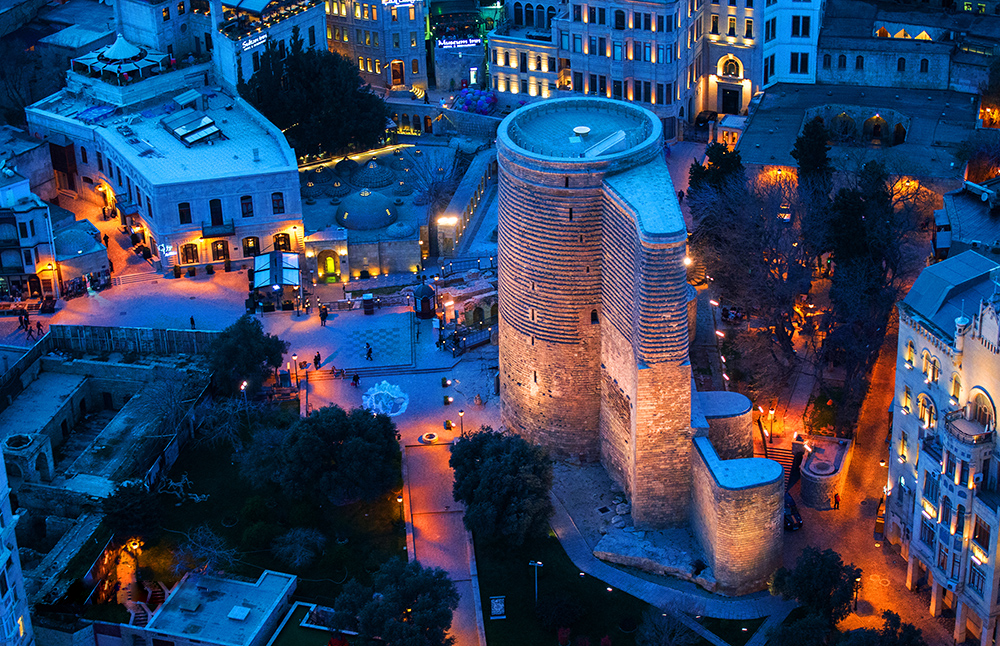
Source: APA / Baku, Maiden Tower
The year 2024 was marked as a phase of growth and expansion for the tourism sector. The number of foreign visitors reached 2.62 million, representing an increase of approximately 25–26 percent compared to the previous year. This dynamic led to heightened tourism activity both in the capital and in the regions. In particular, higher hotel occupancy rates, increased turnover in the service sector, and the launch of new tourism facilities in the regions confirmed that 2024 was a peak year for tourism. During this period, tourism was no longer merely a recovering sector but emerged as one making a tangible contribution to economic growth.
Indicators for 2025 show that Azerbaijan’s tourism sector entered a phase of relative stability. Throughout the year, the number of foreign visitors stood at approximately 2.3–2.4 million. The slowdown in growth compared to the previous year is attributed to global economic trends, fluctuations in the international travel market, and regional geopolitical risks. Nevertheless, the preservation of a high overall tourist flow demonstrates that the sector has transitioned to a sustainable development model.
At this stage, the main priority is no longer quantity, but improving quality indicators, increasing visitors’ length of stay, and raising their spending levels. The development of the tourism sector is also clearly reflected in hotel and accommodation infrastructure.
In 2023, the number of overnight stays in hotels and similar accommodation facilities amounted to approximately 3.4 million, characterizing the infrastructure recovery phase. In 2024, overnight stays increased to 4.28 million, showing growth of around 25 percent.
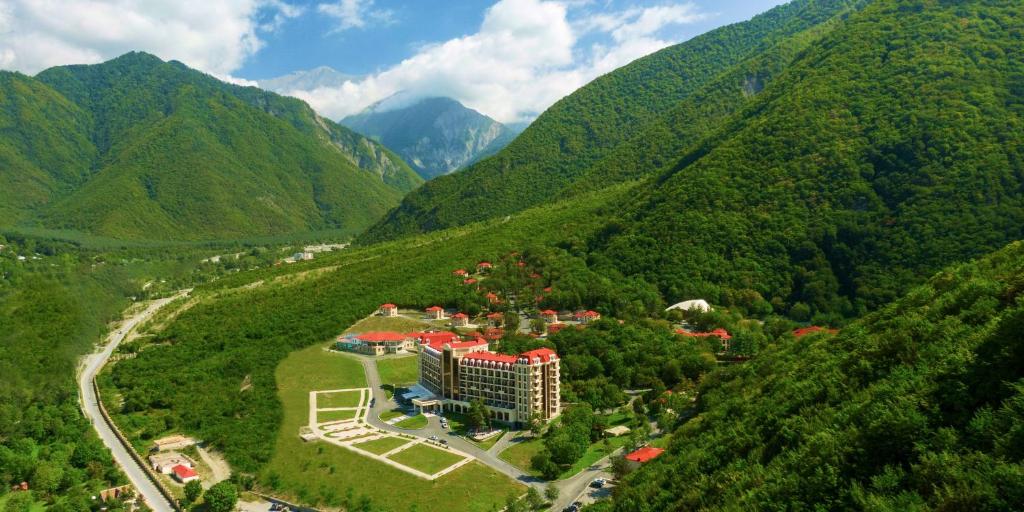
Phoito: Marxal Resort & Spa, Sheki
This indicator reflects rising hotel occupancy rates as well as growing demand for tourism services. In 2025, the number of overnight stays stood at close to 4 million. Despite the slowdown in growth, this figure confirms stable demand in the tourism market and indicates that the service infrastructure has entered a more established phase.
Tourist spending and the economic impact of tourism have followed an upward trend over the past three years. In 2023, foreign visitors spent an estimated $4.2–4.4 billion in the country. In 2024, this figure exceeded $5 billion, demonstrating that tourism has become one of the leading non-oil sectors of the economy. Tourism’s contribution to GDP, approaching approximately 4.5 percent, increased the sector’s macroeconomic significance. In 2025, tourist spending amounted to roughly 5–5.5 billion manats. Despite a relative slowdown in growth, this indicates that tourism has maintained its position as a sector providing a stable and sustainable contribution to the economy.
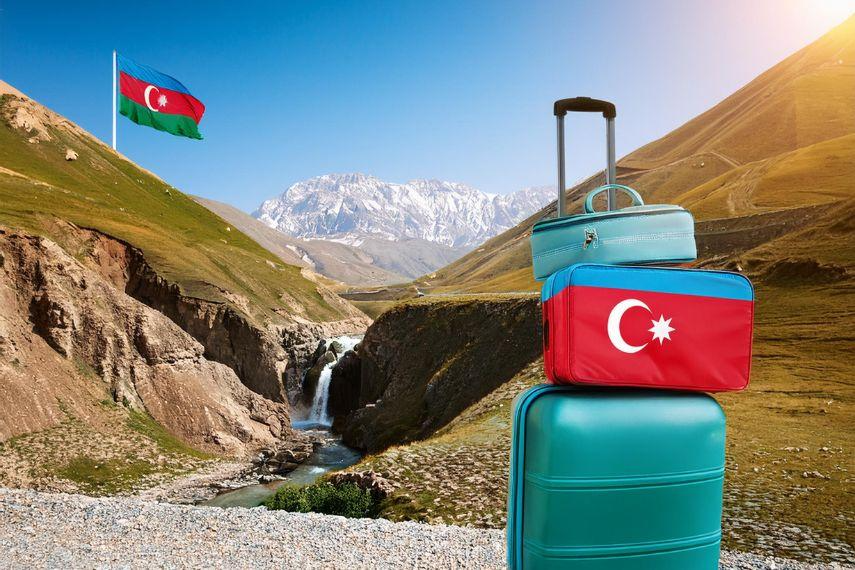
Security remains one of the decisive factors in the development of Azerbaijan’s tourism sector. Amid ongoing complex geopolitical processes in the region, the country’s internal stability and high level of public security create a reliable environment for visitors. This factor makes Azerbaijan more attractive compared to many alternative destinations and facilitates the growth of family, individual, and business travel. It also enables the successful hosting of international events, sports competitions, and mass gatherings.
Source: Trend
Geographical location is another key element strengthening Azerbaijan’s tourism advantages. Situated between Europe and Asia, the country serves as an important transit and logistics hub. Short flight distances, transport accessibility, and the expansion of air connections integrate Azerbaijan into regional and global travel routes. This creates additional opportunities for both short-term city tourism and transit tourism.
Rich culture and centuries-old history are among the core components of Azerbaijan’s tourism offering. Historical sites such as Icherisheher, Gobustan, Sheki, and Ganja, along with architectural monuments and cultural heritage landmarks, shape the country’s cultural tourism potential. National cuisine, folklore, music, and traditions provide visitors with a distinctive and authentic experience. Cultural events, festivals, and international forums help keep this potential active year-round.
The capital city of Baku has long strengthened its position as one of the region’s leading tourism centers. The synthesis of modern architecture with a historic urban environment, along with international exhibitions, conferences, and sporting events, makes Baku attractive for both leisure and business tourism. At the same time, the gradual restoration of the liberated territories brings the Karabakh and East Zangezur regions to the forefront as emerging tourism destinations, laying a solid foundation for the future development of regional tourism.
The Sea Breeze project is regarded as a unique urban development in the region and a rare initiative globally in terms of its scale, scope, and aesthetic concept. Implemented along the Caspian Sea coastline, this large-scale project goes beyond traditional residential development by integrating modern urban planning with contemporary resort culture within a unified concept. It encompasses not only residential buildings, but also hotels, public beaches, green spaces, commercial and entertainment venues, sports facilities, and cultural leisure areas.
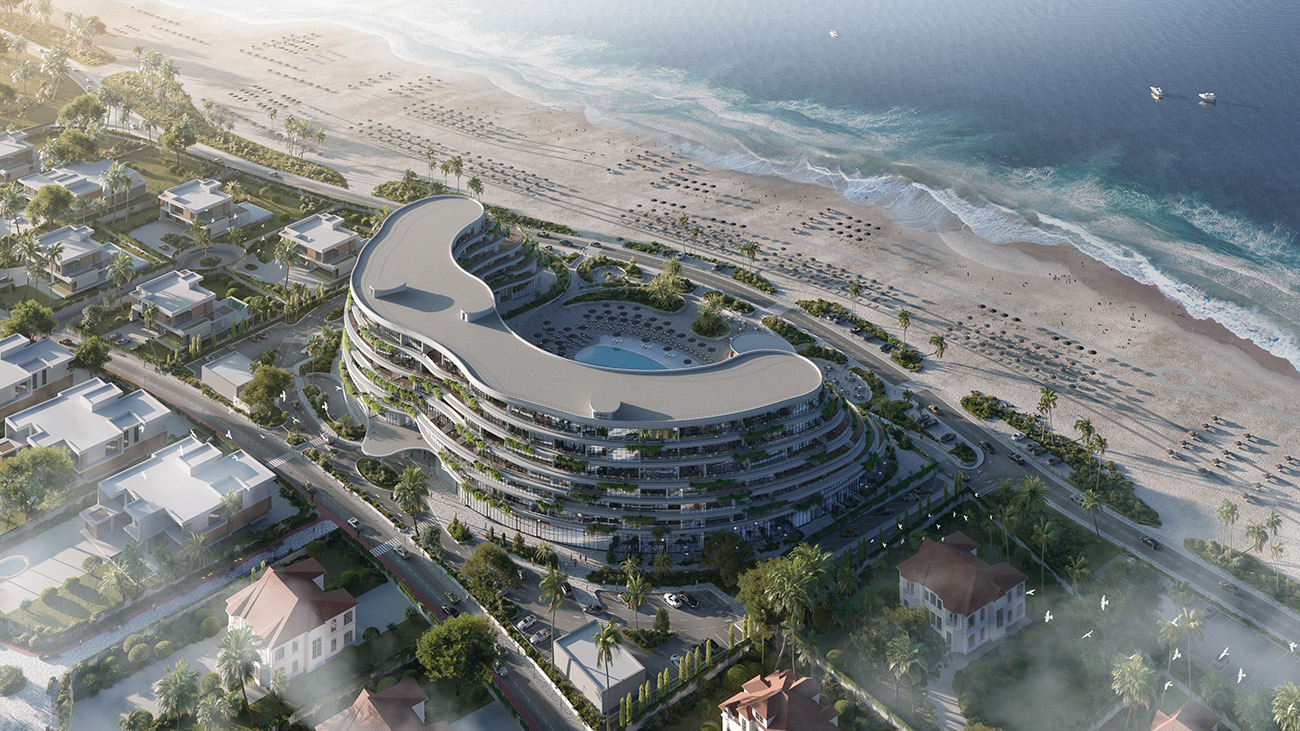
Source: seabreeze.az
One of Sea Breeze’s distinguishing features is its comprehensive and long-term planning approach. Human comfort, functionality, and architectural harmony are defined as core principles throughout the development. Environmental balance, efficient use of the coastal zone, and sustainable development standards form the project’s strategic foundation. The application of modern architectural styles and innovative technologies positions Sea Breeze not merely as a residential area, but as an international-level tourism and investment hub.
Ultimately, Sea Breeze represents a new stage in Azerbaijan’s urban development experience. It is a strategic project that makes a significant contribution to enhancing the country’s tourism potential, strengthening its investment attractiveness, and reinforcing its image as a destination for large-scale, forward-looking development initiatives.
A comparative analysis of the period from 2023 to 2025 shows that 2023 was a year of recovery and transition, 2024 a year of rapid growth and expansion, and 2025 a phase in which high indicators were maintained, the market stabilized, and development became increasingly quality-oriented.
Strategies implemented through cooperation between the public and private sectors create a strong and sustainable foundation for Azerbaijan to emerge as one of the region’s leading tourism centers in the coming years.
(If you possess specialized knowledge and wish to contribute, please reach out to us at opinions@news.az).


Similar news