Abu Dhabi Ports and Romania sign deal to transform Constanta Port


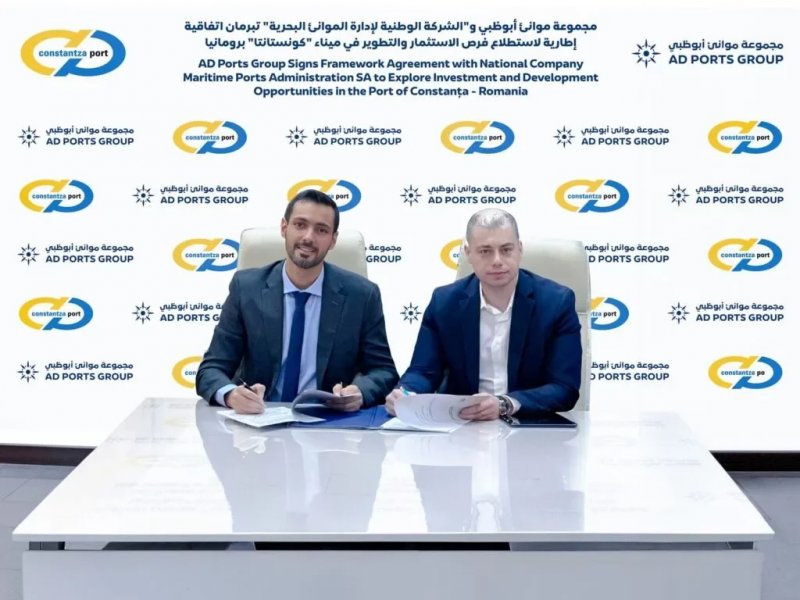
Abu Dhabi Ports Group has reached a major milestone in its global expansion by signing a framework agreement with Romania's National Seaport Management Company to develop the Port of Constanta.
As the largest commercial gateway on the Black Sea, Constanta serves as a vital link between Eastern Europe and global shipping routes, News.Az reports, citing Voice of Emirates.
This strategic partnership focuses on exploring investment opportunities, modernizing existing infrastructure, and implementing advanced digital solutions to streamline trade flows. Beyond physical construction, the agreement emphasizes long-term sustainability through green energy initiatives, waste management, and significant emission reductions.
RECOMMENDED STORIES
The Port of Constanta plays a critical role in international commerce, acting as a multimodal hub that connects maritime, rail, road, and river networks. In 2025 alone, the port handled a staggering 88 million tons of cargo and roughly one million TEU, proving its capacity as a primary exit point for agricultural products and grains from Central Asia. Its location at the entrance of the Danube-Black Sea Canal makes it an indispensable bridge for trade moving into the heart of the European continent.
This move into Romania is part of a broader strategy by Abu Dhabi Ports Group to revitalize the Middle Corridor, a trade route connecting China to Europe with a lower environmental footprint than traditional paths. Over the last several years, the group has aggressively expanded its footprint across Central Asia and the Caspian region.
Notable projects include the Gulflink logistics venture with Kazakhstan, a new multimodal center in Tbilisi, Georgia, and specialized grain terminals in Kazakh ports. By integrating the Port of Constanta into this network, the group is effectively linking Kazakh oil and Central Asian harvests directly to Western markets, solidifying its position as a leader in global logistics and regional connectivity.
By Leyla Şirinova


Similar news