Azerbaijan and Iran: a new stage in bilateral relations?


.png)
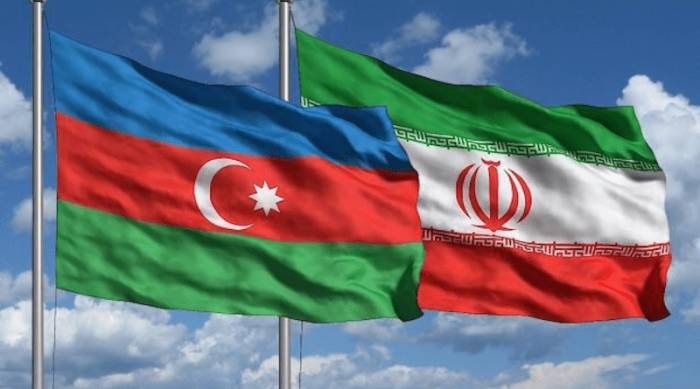
Hikmet Hajiyev, Assistant to the President of Azerbaijan and Head of the Department of Foreign Policy of the Presidential Administration, visited Iran on February 1 for high-level discussions with Iranian President Masoud Pezeshkian and other senior officials.
To explore the significance of this visit, News.az consulted Sadraddin Soltan, Head of the Middle East Research Center, who provided insights into the evolving dynamics between the two neighboring countries.
According to Soltan, Azerbaijan-Iran relations have historically experienced both cooperation and challenges, shaped by a complex interplay of political, cultural, and economic factors. “The two countries share deep historical ties, and while there have been periods of tension, both sides have also demonstrated a willingness to engage in dialogue and collaboration,” he noted.
One of the key areas of Azerbaijan-Iran engagement is energy cooperation, which has gained momentum in recent years. Soltan highlighted the comprehensive strategic alliance agreement between Russia and Iran, which includes provisions for energy collaboration.
“Under this agreement, Russian natural gas is expected to transit through Azerbaijani territory en route to Iran, with Tehran and Moscow already reaching a formal understanding on the matter,” he explained. Additionally, he recalled last year’s meeting between Azerbaijani President Ilham Aliyev and the late Iranian President Ebrahim Raisi, in which the two leaders discussed the construction of hydroelectric power stations on the Araz River and the potential transmission of Turkmen natural gas via Azerbaijan to Iran.
Economic relations have been a priority for both governments, with Iranian officials consistently emphasizing the importance of strengthening cooperation with regional partners. “Iran’s First Vice President Mammadreza Arif recently reiterated that economic relations with neighboring countries remain a key focus of Iran’s foreign policy,” Soltan noted. “Given this context, Hajiyev’s visit to Tehran is likely aimed at expanding trade and energy partnerships while also fostering diplomatic engagement.”
In addition to economic cooperation, Azerbaijan and Iran have maintained active diplomatic channels, underscoring the importance of regional stability. Soltan pointed out that Baku has extended an invitation to President Pezeshkian to visit Azerbaijan, signaling a commitment to constructive engagement.
“This invitation reflects Azerbaijan’s readiness to enhance cooperation with Iran across multiple sectors,” Soltan said. “While differences exist, both sides have an interest in fostering dialogue and strengthening mutual understanding.”
As the region continues to evolve, diplomatic efforts such as Hajiyev’s visit underscore the shared commitment of Azerbaijan and Iran to maintaining open communication and expanding opportunities for collaboration.


Similar news