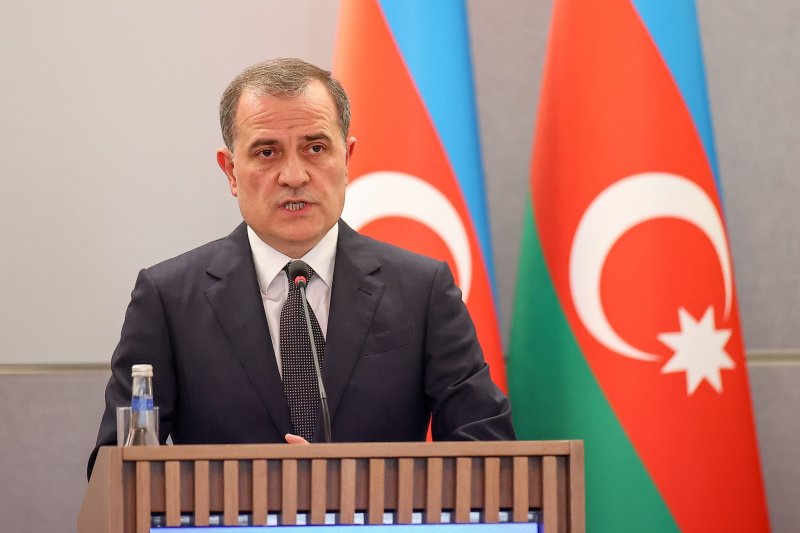
In an interview with China’s Global Times, Bayramov stressed that Azerbaijan sees the alignment of the Belt and Road Initiative with its national development strategy as a strategic partnership designed to deliver tangible economic results. According to him, the cooperation framework is expected to strengthen trade routes, attract investment and enhance regional transport efficiency, News.Az reports.
The minister noted that Baku is focusing on integrating major regional transport projects to build a stronger Eurasian connectivity network. In particular, Azerbaijan is positioning the Middle Corridor and the Zangezur Corridor as complementary routes that can accelerate cargo movement across the region while diversifying supply chains between East and West.
Officials believe these projects will help cement Azerbaijan’s role as a major logistics hub, supporting faster transit between Asian and European markets. At the same time, the initiatives are expected to contribute to broader regional stability by encouraging economic interdependence and long-term cooperation among partner countries.
Bayramov also underlined the importance of strengthening economic ties with China within this framework. He said deeper transport and trade integration could create new opportunities for industrial cooperation, infrastructure investment and cross-border business development.
Azerbaijan has been actively investing in modern transport infrastructure, including railways, ports and digital logistics systems, to increase its competitiveness along major Eurasian trade routes. The country’s geographic location on the Caspian Sea, combined with its expanding multimodal transport network, continues to position it as a critical link in global supply chains.
As global trade routes continue to evolve due to geopolitical shifts and supply chain diversification, Azerbaijani officials say the country is aiming to turn connectivity into a long-term economic advantage. By strengthening transport corridors and deepening international partnerships, Baku is seeking to increase transit volumes, boost non-oil revenues and reinforce its role in regional and global trade architecture.