China uses education as soft power in Central Asia


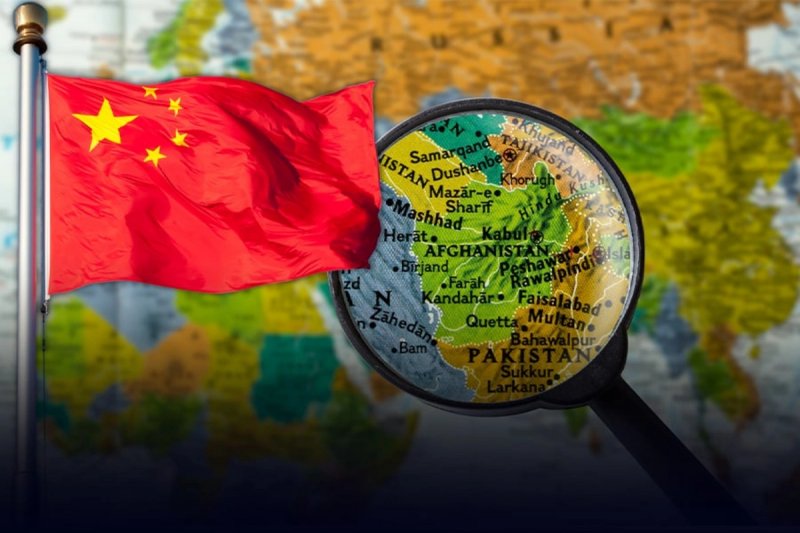
China is expanding its use of higher education as a tool of soft power. Turkmenistan's Ministry of Education and Kyrgyzstan's Ministry of Science, Higher Education, and Innovation have announced competitions for Beijing-funded scholarships for the 2026-27 academic year to study at Chinese universities.
In addition, Chinese embassies in Central Asia are promoting a program for Central Asian mid-career government officials and business executives to undertake graduate studies in the PRC under the Youth of Excellence Scheme of China, News.Az reports, citing Eurasianet.
Elsewhere, a delegation from the Tajik State University of Commerce visited Xi’an University of Technology to discuss educational exchanges.
Educational exchanges aren’t entirely one-sided. Kazakhstan’s Ministry of Science and Higher Education reported that Chinese students account for 3,367 out of the 35,075 international students currently hosted in the Central Asian state.
In the sphere of security cooperation, member states of the Shanghai Cooperation Organization (SCO), which includes Belarus, China, India, Iran, Kazakhstan, Kyrgyzstan, Pakistan, Russia, Tajikistan, and Uzbekistan, participated in the Sahand 2025 military and anti-terrorism exercises in Iran. The maneuvers were held under the SCO’s Regional Anti-Terrorist Structure (RATS). Sahand marks the first Iranian-hosted military exercises within the SCO framework. A report published by RFE/RL, citing experts, stated that “the exercise’s military significance is limited; it is small in scale, lightly attended, and unlikely to meaningfully advance joint operational capability.”
The Tianshan Forum for Central Asia Economic Cooperation held on December 2-3 in Urumqi, China, produced limited results. The chief accomplishment was an announcement on the establishment of a Central Asia RegionalFinancial CooperationResearch Center, with the goal of “supporting smarter policies, building stronger partnerships, and deepening regional integration in Central Asia.”
Kazakhstan
Underscoring China’s messaging capabilities, the Chinese ambassador to Kazakhstan, Han Chunlin, arranged for his article on China’s efforts to combat poverty to be placed in at least 16 Kazakh mass media outlets, including Kursiv, DKN and InBusiness.kz. In an effort to further boost China’s clout, Han offered Kazakh authorities Beijing’s help in formulating poverty-reduction strategies.
The Chamber of International Commerce of Kazakhstan signed a memorandum of understanding with China’s Council for the Promotion of International Trade, outlining plans to establish a joint Committee on Commercial and Legal Cooperation. The entity is intended to help “resolve trade and economic disputes through consultations, dialogue, mediation and negotiations.” The two sides are also discussing efforts to harmonize approaches on “improving export-import administration mechanisms [and] certification and documentary support.”
The Kazakh government approved an investment agreement with Chinese company Xinjiang Lihua to set up a new cotton agro-complex in Kazakhstan’s Turkestan Region. Initially, Xinjiang Lihua is expected to invest 58 billion tenge (about $111 million), with the ultimate investment target of 200 billion (around $383 million). The initiative is projected to create more than 1,400 full-time and 300 temporary jobs.
Kazakhstan’s national oil and gas company, KazMunaiGas (KMG), has acquired a 50-percent stake in Astana-based LLP Akkaiyn Operating as reported by KASE. Akkaiyn was created and registered on the same day that KMG acquired the half of it, according to a report published by Ulysmedia. The other half belongs to an offshore subsidiary of the Chinese corporation Sinopec. The LLP’s declared purpose is geological exploration.
Air China announced the opening of direct flights from Almaty and Chengdu, connecting Kazakhstan’s business capital to the SichuanProvince in late December 2025, as reported by Aeroroutes.
Uzbekistan
Uzbekistan’s Ministry of Investment, Industry and Trade and China’s National Development and Reform Commission launched a joint program enabling Uzbekistan to copy China’s blueprints for economic reforms and industrial development. If implemented as intended, the program will further expand China’s influence over the Central Asian state’s economic development. This can have critical importance for the direction Uzbekistan takes in the emerging IT and AI sectors.
Uzbek President Shavkat Mirziyoyev held talks on energy cooperation in Tashkent with the heads of leading Chinese companies. State media reported that over 30 projects with a total capacity of almost 10 gigawatts, worth over $9 billion, are being implemented in Uzbekistan with Chinese partners, with 14 additional projects worth nearly $2 billion launched on the same day as the meeting.
It was also reported that Mirziyoyev, as well as his daughter and top aide, Saida Mirziyoyeva, met with the chairman of the China International Cultural Communication Center (CICCC), Long Yuxiang. No specific agreements were announced after the meetings, but the center seeks to promote China’s influence via mass media projects, as well as cultural and educational exchanges.
Kyrgyzstan
Anti-Chinese sentiment in Kyrgyzstan continues to simmer, prompting Kyrgyz government officials to increase efforts to tamp down complaints about a “Chinese invasion.” Kyrgyzstan’s State Committee for National Security recently felt compelled to deny social media reports of mass marriages between Kyrgyz and Chinese citizens, stating that the official number of registered marriages from 2020-2025 is 129 and does not affect the country’s demographic situation. In a clear recognition of heightening Kyrgyz sensitivities, a Chinese entity, Han Liang Co., organized an informal meeting in Bishkek between Kyrgyz government agencies and Chinese investors to discuss measures to enhance “trust, security, and friendship between Kyrgyz and Chinese citizens working and living” in both nations, according to a statement published by the Kyrgyz Association of Lawyers.
China’s assessment of Kyrgyzstan’s November 30 snap parliamentary elections contrasted sharply with that offered by the Organization for Security and Cooperation in Europe. A Chinese Foreign Ministry spokesman described the Kyrgyz vote as “democratic, open and transparent.” Meanwhile, an OSCE observation mission found that overly restrictive campaign rules, a continuing crackdown on independent media and a lack of transparency limited choice and stifled voter engagement.
Kyrgyz Prime Minister Adylbek Kasymaliev made an inspection tour of the Tosh-Kutchu section of China-Kyrgyzstan-Uzbekistan railway, noting that work has begun on 18 of 29 tunnels, 17 of 50 bridges and 28 of 602 culverts.
Bishkek is lobbying Beijing for five new sanitary, veterinary, and inspection protocols that will open the Chinese market for new categories of Kyrgyz agricultural products, including heat-treated beef, horse meat and by-products, horse hides, and live equines, Kyrgyz media reports.
Tajikistan
China’s Days of Culture took place in Dushanbe on December 2-7. During this time, Tajikistan’s Minister of Culture, Matlubakhon Sattoriyon, met with the PRC’s Deputy Minister of Culture and Tourism, Lu Yingchun, to discuss strengthening bilateral cultural and tourism exchanges.
Turkmenistan
Turkmenistan is increasing natural gas production at its Uzynada field. Three new wells were drilled using advanced Chinese equipment, and they will help feed the pipeline to China, the primary export destination for Turkmen gas.
China also supplied equipment to Turkmenistan’s government water-management agency, including heavy haulers, refuellers and excavators. President Serdar Berdymukhamedov personally examined the equipment during a December 1 visit to one of the agency’s locations.


Similar news