Did the U.S. soften its stance on chip restrictions during Trump Xi talks?


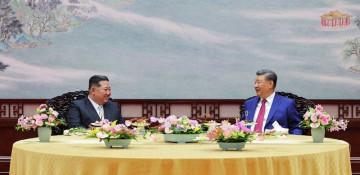
The latest high level talks between the United States and China in Beijing have drawn significant global attention after U.S. Trade Representative Jamieson Greer stated that Washington’s strict chip export controls against China were not discussed in depth during bilateral meetings between Donald Trump and Xi Jinping.
The comments surprised many analysts because semiconductor restrictions have become one of the most sensitive and strategically important issues in U.S. China relations.
RECOMMENDED STORIES
For years, advanced chips and artificial intelligence technologies have stood at the center of an escalating technological and geopolitical rivalry between the world’s two largest economies.
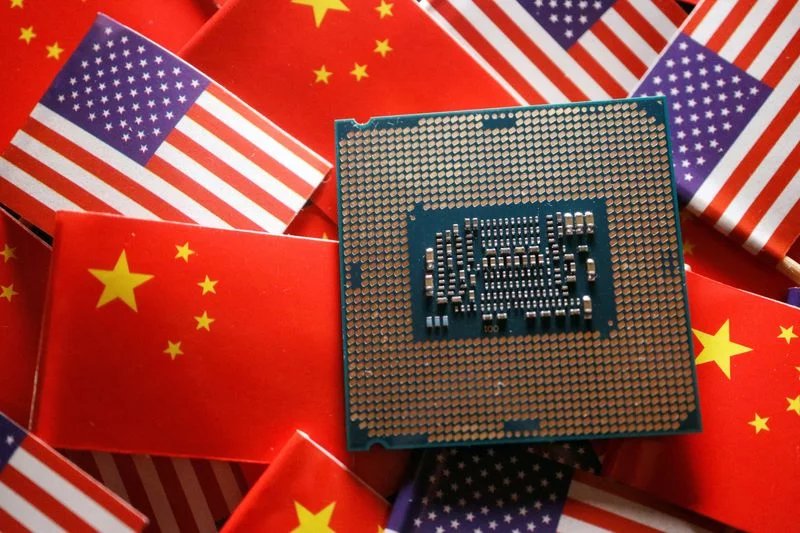
Washington has repeatedly tightened restrictions on exports of advanced AI chips and semiconductor technologies to China, arguing the measures are necessary for national security and to prevent military applications.
China, meanwhile, views the controls as an attempt to contain its technological rise and slow the country’s progress in artificial intelligence, supercomputing, and advanced manufacturing.
The absence of detailed discussions on the issue during the summit suggests both sides may currently be prioritizing broader economic stabilization and trade management over direct confrontation on semiconductors.
At the same time, the presence of major American technology executives in Beijing has fueled speculation that the United States could eventually soften at least some restrictions.
What exactly did Jamieson Greer say?
Jamieson Greer told Bloomberg TV that semiconductor export controls were not a major topic during bilateral discussions.
According to Greer, “This was not a major topic of discussion at the bilateral meeting. We did not talk about chip export controls at the meeting.”
His comments suggest the summit focused more heavily on broader trade, economic cooperation, agriculture, and strategic stability rather than detailed semiconductor policy negotiations.
Greer also noted that Jensen Huang discussed Nvidia’s relationship with China during the trip, although he did not provide details.
Greer further emphasized that China itself would decide whether to purchase Nvidia chips.
The statements indicate that while semiconductors remain highly important, the summit may have been structured to avoid direct confrontation over the issue publicly.
Why are chip export controls such a major issue?
Semiconductors have become one of the most strategically important technologies in the modern world.
Advanced chips power artificial intelligence systems, data centers, military technologies, autonomous systems, smartphones, cloud computing, and supercomputers.
The United States has imposed increasingly strict export controls on advanced chip technology to China because Washington fears Beijing could use cutting edge AI systems for military modernization, cyber capabilities, surveillance systems, and strategic competition.
The restrictions particularly target high performance AI chips produced by companies such as NVIDIA Corporation.
These chips are considered essential for training advanced AI models.
The Biden administration initially introduced several major rounds of restrictions, and the Trump administration later maintained and expanded pressure in certain areas.
China has repeatedly condemned the controls, arguing they represent economic coercion and technological containment.
Beijing says the restrictions violate principles of fair trade and disrupt global supply chains.
The semiconductor conflict has therefore become one of the central battlegrounds in the broader U.S. China rivalry.
Why is Nvidia at the center of the controversy?
NVIDIA Corporation has become one of the world’s most influential technology companies because its graphics processing units, or GPUs, are critical for artificial intelligence development.
Modern AI systems require enormous computational power, and Nvidia chips currently dominate the global AI hardware market.
As artificial intelligence became strategically important, Nvidia effectively found itself at the center of geopolitical competition between Washington and Beijing.
The United States restricted exports of Nvidia’s most advanced chips to China in order to slow Chinese progress in advanced AI systems.
In response, Nvidia created modified versions of some chips specifically designed to comply with U.S. export regulations while still serving Chinese customers.
According to recent reports, Nvidia was approved to sell its H200 AI chips, considered the company’s second most powerful AI chip, to several Chinese firms.
However, reports also indicated that no actual sales had yet taken place.
The situation illustrates the delicate balance Nvidia must maintain between regulatory compliance and preserving access to one of the world’s largest technology markets.
Why was Jensen Huang in Beijing with Trump?
The presence of Jensen Huang alongside Donald Trump in Beijing attracted enormous attention because it suggested semiconductors and AI technology remained central to U.S. China economic relations even if not formally emphasized during official talks.
Huang has become one of the most influential figures in the global technology industry due to Nvidia’s dominance in AI hardware.
His participation fueled speculation that American business leaders were lobbying for a more flexible approach toward China related chip exports.
Major technology companies continue earning substantial revenue from Chinese customers and generally prefer stable commercial relations between the two countries.
Restrictive export policies create challenges for companies seeking to balance geopolitical realities with business interests.
Huang’s presence also reflected the broader role technology executives increasingly play in international diplomacy and economic negotiations.
Which other American business leaders attended the trip?
Several high profile American corporate leaders reportedly accompanied Trump during the Beijing visit.
These included Elon Musk, Jensen Huang, and Tim Cook.
The participation of such executives demonstrates how deeply intertwined business interests have become with U.S. China diplomacy.
China remains critically important for many American multinational corporations because it serves both as a major manufacturing base and a massive consumer market.
Technology firms in particular maintain significant exposure to Chinese supply chains, factories, and customers.
The presence of business leaders also suggested economic cooperation and trade stabilization were major themes of the visit.
Many companies hope reduced tensions could improve predictability for global markets and supply chains.
Did the U.S. soften its stance on chip restrictions?
At this stage, there is no official indication that Washington plans to fully reverse or remove semiconductor export controls.
However, the approval for potential H200 chip sales to certain Chinese companies has fueled speculation that the U.S. may be selectively relaxing restrictions in limited areas.
The Biden and Trump administrations both maintained that the goal of export controls is not to block all trade with China but specifically to restrict access to the most advanced technologies with potential national security implications.
This means some lower tier or modified chips may still receive approval for export.
The challenge for policymakers involves balancing economic interests with security concerns.
Completely cutting China off from all semiconductor access would significantly affect American technology companies financially.
At the same time, allowing unrestricted access to advanced AI chips could accelerate Chinese technological and military capabilities.
Washington therefore appears to be attempting a targeted containment strategy rather than a complete technological separation.
How has China responded to the restrictions?
China has strongly criticized American semiconductor restrictions and accelerated efforts to build domestic technological independence.
Beijing increasingly views self sufficiency in semiconductors and artificial intelligence as a national priority.
Chinese companies and state institutions have dramatically increased investment into domestic chip manufacturing, AI development, and semiconductor research.
Firms such as Huawei Technologies have become central players in this effort.
Recent Chinese AI models, including systems developed by DeepSeek, reportedly relied heavily on Huawei chips rather than Nvidia hardware.
This demonstrates how export controls may be accelerating China’s efforts to create alternative technology ecosystems independent of American suppliers.
Many analysts believe the restrictions could ultimately strengthen China’s long term determination to develop fully domestic semiconductor industries.
Why is Taiwan connected to the chip dispute?
Taiwan occupies a uniquely important position in the global semiconductor industry because it hosts Taiwan Semiconductor Manufacturing Company, commonly known as TSMC.
TSMC produces many of the world’s most advanced chips, including processors used by companies such as Nvidia, Apple, and AMD.
Because of this, Taiwan has become strategically central to global technology supply chains.
China considers Taiwan part of its territory, while the United States maintains strong unofficial support for the island.
Tensions surrounding Taiwan therefore carry enormous implications for the global technology industry.
During the Beijing discussions, China reportedly emphasized Taiwan as one of its most important concerns.
However, Jamieson Greer stated he did not expect the Taiwan issue to “bleed into board of trade.”
This suggests both sides may currently be trying to compartmentalize trade negotiations and geopolitical tensions.
Nevertheless, Taiwan remains deeply intertwined with semiconductor strategy and U.S. China competition.
What role does agriculture play in the talks?
While semiconductors dominated headlines, agriculture appears to have remained an important practical issue during discussions.
Greer stated he expected China to increase purchases of American agricultural products.
He also said Beijing was continuing to meet soybean purchase commitments.
Agricultural trade has long been a central component of U.S. China economic relations.
American farmers rely heavily on Chinese demand for products such as soybeans, corn, and meat exports.
Trade tensions during previous tariff disputes significantly affected U.S. agricultural sectors.
As a result, agricultural purchases often become politically important during trade negotiations.
In some cases, agriculture serves as a stabilizing element in broader economic relations because both sides benefit from continued trade.
Why are semiconductors considered the “new oil”?
Semiconductors are increasingly described as the “new oil” because they power nearly every modern technology sector.
Advanced chips influence artificial intelligence, telecommunications, defense systems, cloud computing, automobiles, consumer electronics, and industrial automation.
Countries that dominate semiconductor design and production gain enormous economic and strategic advantages.
This is why semiconductor policy increasingly overlaps with national security strategy.
Control over advanced chips can influence military competitiveness, technological leadership, and economic power.
The semiconductor industry also requires highly complex supply chains involving rare materials, manufacturing equipment, software, and specialized production facilities.
Only a handful of countries possess capabilities to manufacture the most advanced chips.
This scarcity increases the geopolitical importance of semiconductor access and production capacity.
Could U.S. China tensions over AI worsen further?
Yes. Artificial intelligence is expected to become one of the most important strategic competition areas between the United States and China during the coming decade.
Both countries view AI leadership as economically and militarily critical.
The United States currently leads in many advanced AI technologies, software ecosystems, and semiconductor design.
China, however, possesses enormous data resources, large domestic markets, strong state support, and rapidly improving technological capabilities.
Export controls represent one method Washington uses to slow Chinese AI progress.
China meanwhile continues investing aggressively in domestic alternatives.
Competition is likely to intensify further in areas including semiconductors, cloud infrastructure, quantum computing, autonomous systems, and military AI applications.
At the same time, both countries remain economically interconnected, making full technological separation extremely difficult.
This creates a complex relationship involving simultaneous competition, cooperation, and interdependence.
What does the summit signal for global markets?
The summit between Trump and Xi appears to have temporarily reassured markets that both countries remain interested in avoiding uncontrolled economic escalation.
Trump reportedly struck an optimistic tone regarding bilateral relations.
The absence of major public confrontation over semiconductors may also have reduced immediate fears of additional restrictions or retaliatory measures.
Technology investors particularly watch U.S. China relations closely because semiconductor companies depend heavily on global supply chains and international customers.
Any changes involving export controls can dramatically affect valuations, manufacturing plans, and investment strategies.
The participation of major CEOs additionally signaled ongoing efforts to preserve commercial engagement despite geopolitical tensions.
However, the underlying strategic rivalry remains unresolved.
Semiconductors, artificial intelligence, Taiwan, and technological leadership will likely continue shaping U.S. China relations for years to come.
Even if immediate tensions ease temporarily, the broader competition over future technologies is unlikely to disappear anytime soon.
By Faig Mahmudov


Similar news