Ford shares gain on earnings beat, hints at 2026 production recovery


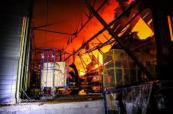
Ford Motor Co. (F) reported stronger-than-expected third-quarter earnings but warned of a significant financial impact from an aluminum plant fire that has disrupted production of its popular F-150 pickups and SUVs.
The automaker said the Novelis plant fire in New York would create a headwind of $1.5 billion to $2.0 billion in adjusted EBIT for 2025, also weighing on full-year cash flow, News.Az reports, citing foreign media.
Ford expects to recover at least $1 billion of that impact in 2026, when it plans to ramp up production.
As a result, Ford lowered its full-year guidance, now projecting adjusted EBIT between $6 billion and $6.5 billion, down from a previous range of $6.5 billion to $7.5 billion. Adjusted free cash flow is expected to fall between $2 billion and $3 billion, compared with earlier guidance of $3.5 billion to $4.5 billion.
CFO Sherry House said the company would have raised its outlook “to $8 billion-plus” in adjusted EBIT if not for the Novelis disruption. COO Kumar Galhotra added that F-150 production will face temporary “disruptions” in the coming weeks.
Ford shares rose 3% in premarket trading Friday following a Wall Street Journal report that Novelis could restart its plant later this year — much earlier than previously expected in 2026.
To recover lost output, Ford plans to increase F-150 and Super Duty truck production by more than 50,000 units in 2026, though production of the all-electric F-150 Lightning will remain paused to prioritize gas and hybrid models.
For the third quarter, Ford reported automotive revenue of $47.19 billion, exceeding Bloomberg’s estimate of $43.7 billion. Adjusted EPS came in at $0.45, topping expectations of $0.36, with adjusted EBIT of $2.6 billion versus $2.02 billion expected.
Ford also said new auto tariffs imposed by the Trump administration cost the company $700 million in Q3, with a projected full-year net impact of $1 billion. However, recent tariff-related price offsets introduced by the White House are expected to reduce that impact by about $1 billion.


Similar news