Four years of the invasion of Ukraine – A war that reshaped Europe and the world


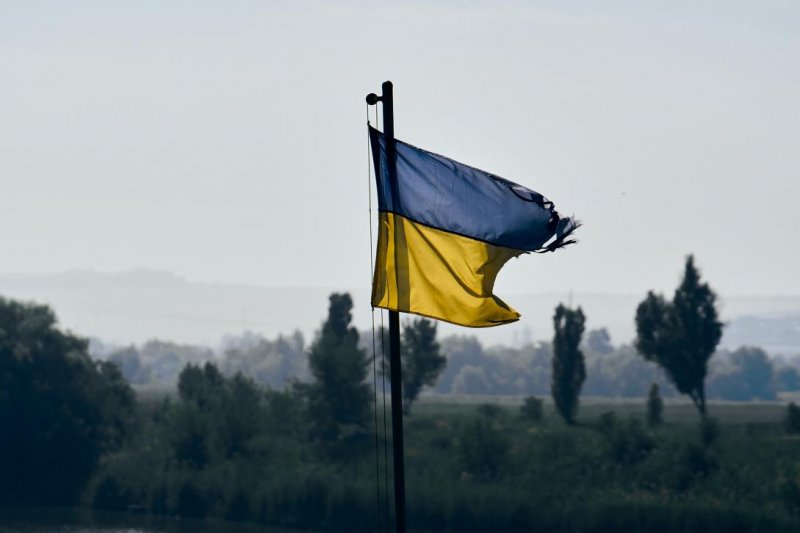
Four years have passed since Russia launched its full scale invasion of Ukraine in February 2022.
What was initially framed by the Kremlin as a swift military operation turned into the largest and most destructive war in Europe since World War II.
RECOMMENDED STORIES
The invasion did not simply redraw battle lines across Ukrainian territory. It transformed European security architecture, accelerated geopolitical fragmentation, reshaped energy markets and redefined the meaning of sovereignty in the twenty first century.
This anniversary is not just a marker of time. It is a moment to assess how a war that many believed would last weeks became a grinding, attritional conflict that altered global politics.
From blitzkrieg expectations to protracted war
When Russian forces crossed into Ukraine from multiple directions in February 2022, many analysts expected Kyiv to fall quickly. The scale of the assault – from the north via Belarus, from the east in Donbas and from the south toward Kherson – suggested a classic decapitation strategy aimed at regime change.
Instead, Ukraine mounted a fierce and highly coordinated defense. The government remained in Kyiv. Civil society mobilized. Western states, initially cautious, rapidly increased military assistance. What followed was not collapse but consolidation.
By late 2022, Ukrainian forces had reclaimed significant territory around Kharkiv and Kherson. However, as the war entered its third and fourth years, the frontlines hardened. The conflict evolved into an artillery heavy, drone saturated war of attrition reminiscent of earlier industrial age conflicts but powered by modern technology.
The early illusion of a short war disappeared. In its place emerged a protracted confrontation with no decisive breakthrough.
Ukraine’s transformation under fire
Four years of invasion have reshaped Ukraine internally as much as externally. The country has undergone a rapid militarization of society. Defense production expanded. Civilian infrastructure was repeatedly targeted, forcing energy decentralization and rapid adaptation.
The war also accelerated Ukraine’s geopolitical pivot westward. In 2022, Ukraine received candidate status for membership in the European Union. Over the following years, reform processes intensified despite the ongoing conflict. The war, paradoxically, strengthened Ukraine’s institutional alignment with Europe.
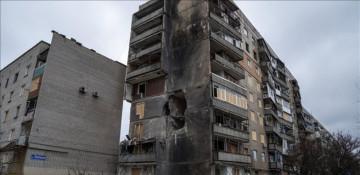
At the same time, the human cost has been immense. Millions were displaced internally and externally. Entire cities such as Mariupol were devastated. Generational trauma will likely outlast the battlefield dynamics.
Yet Ukraine did not disintegrate. Instead, national identity consolidated. The invasion, intended to undermine Ukrainian statehood, appears to have reinforced it.
Russia’s strategic gamble
For Russia, the invasion represented a strategic gamble rooted in the belief that NATO expansion and Western influence posed existential threats. Moscow sought to halt Ukraine’s westward trajectory and reassert its sphere of influence.
Four years on, the results are mixed at best from a Russian strategic perspective. While Russia retains control over parts of eastern and southern Ukraine, it faces long term economic isolation from much of the West. Sanctions have restructured trade patterns toward Asia, particularly China and India. Energy exports were redirected, but often at discounted rates.
Militarily, Russia adapted over time, expanding domestic drone production and fortifying defensive lines. However, the cost in personnel, equipment and international reputation has been substantial.
Instead of weakening NATO, the invasion revitalized it. Finland joined the alliance, and Sweden followed. NATO’s eastern flank was reinforced. What Moscow framed as a defensive necessity resulted in the expansion of the very alliance it sought to contain.
Europe’s strategic awakening
Perhaps the most profound transformation occurred within Europe. The invasion shattered assumptions that large scale interstate war on the continent was obsolete. Defense spending surged across EU member states. Germany announced a historic shift in its security posture, increasing military investment after decades of restraint.
Energy policy was also revolutionized. Europe rapidly reduced dependence on Russian gas, diversifying suppliers and accelerating renewable energy investments. The war forced a painful but decisive strategic recalibration.
The European Union emerged more geopolitically assertive. Financial packages for Ukraine, joint arms procurement discussions and debates over long term security guarantees signaled a new phase in European integration focused on defense and resilience.
The conflict reintroduced hard power into European political discourse. Concepts such as deterrence, resilience and strategic autonomy moved from academic discussions into urgent policy frameworks.
The global south and geopolitical fragmentation
Beyond Europe, the war exposed and deepened global divisions. Many countries in Africa, Latin America and Asia refrained from unequivocally condemning Russia. Some viewed the conflict through the lens of great power rivalry rather than normative international law.
Sanctions regimes created parallel economic channels. The fragmentation of global finance and trade accelerated. Energy markets became more volatile. Food security crises emerged as grain exports from the Black Sea were disrupted, affecting vulnerable economies far from the battlefield.
The invasion thus did not remain a regional war. It became a catalyst for systemic global realignment.
Technology, drones and the future of warfare
Four years of combat in Ukraine produced a laboratory of modern warfare. The battlefield saw unprecedented use of commercial drones, satellite intelligence, cyber operations and real time open source analysis.
Low cost unmanned systems altered tactical calculations. Precision artillery guided by digital reconnaissance increased lethality. Civilian technologies were rapidly militarized.
The war demonstrated that twenty first century conflict is hybrid in nature. Kinetic operations coexist with information warfare, cyber disruption and economic coercion. The frontlines are physical, but the battlespace extends into digital and financial domains.
Future military planners worldwide will study Ukraine not only for its strategic implications but for its operational lessons.
Negotiation fatigue and the dilemma of peace
As the war entered its fourth year, questions about negotiations intensified. Calls for ceasefire agreements, frozen conflicts or territorial compromises surfaced periodically. However, both Kyiv and Moscow maintained maximalist positions at various stages, reflecting deep mistrust and incompatible end states.
The dilemma is stark. A frozen conflict could stabilize frontlines but institutionalize instability. A negotiated settlement might halt bloodshed but risk legitimizing territorial conquest. Continued war risks further destruction without guarantee of decisive victory.
The invasion has exposed the limits of coercive diplomacy in an era of entrenched geopolitical rivalry. It also underscores the enduring relevance of sovereignty as a core principle of the international order.
The psychological dimension
Four years of war reshape not only borders but mental landscapes. In Ukraine, resilience coexists with exhaustion. In Russia, the conflict became normalized in public discourse, even as casualties mounted. In Europe, a sense of vulnerability replaced complacency.
The war altered the strategic psychology of an entire continent. It revived debates about nuclear deterrence, civil defense and long term preparedness.
It also changed generational perceptions. For young Europeans and Ukrainians, war is no longer a historical abstraction but lived reality.
Conclusion – An unfinished chapter
Four years after the invasion began, the war in Ukraine remains unresolved. It has already redrawn strategic maps, reshaped alliances and altered economic flows. It has tested the durability of Western unity and the resilience of Ukrainian statehood. It has exposed the fragility of international norms when confronted with raw force.
History will judge the invasion not only by territorial outcomes but by its systemic consequences. It may ultimately be seen as the moment when the post Cold War illusion of stable globalization definitively ended.
Whether the next phase brings escalation, stalemate or negotiated settlement, one conclusion is unavoidable. The invasion of Ukraine has redefined the architecture of European security for a generation. The war’s legacy will not be measured solely in square kilometers but in the profound transformation of geopolitics that it unleashed.
By Faig Mahmudov


Similar news