Grigory Trofimchuk: “Baku–Moscow ties will never be the same after AZAL tragedy” - INTERVIEW


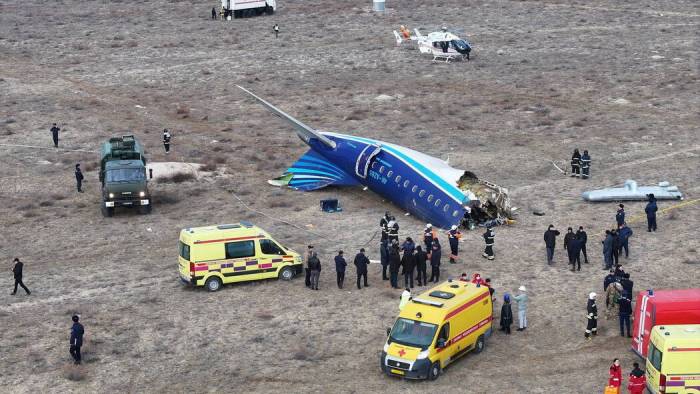
Dozens of people were killed when an Azerbaijan Airlines passenger plane crashed near Aktau, Kazakhstan. At least 29 people survived. Photo: Azamat Sarsenbayev/Reuters
At the same time, it would be naïve to expect Russian–Azerbaijani relations to return even to the format that existed before the disaster. However, a formally allied relationship without excessive hostility remains possible for now. That said, we must remain realistic: the broader global environment, including various conflicts, will impose its own harsh adjustments, and Azerbaijan will have to act in light of those future circumstances.
In my view, the most important point now is this: in recent years, including after its victory in the war, Baku has reached a new level that can no longer be considered purely regional, though not yet fully geopolitical. This is already a significant achievement, as even 20 years ago Azerbaijan was not the leading player even in its own region. It is now acting in accordance with its new image and this informal status.
– In your opinion, how long might it take to remove barriers to the normalisation of relations between Russia and Azerbaijan?
– This now depends largely on Moscow, as Baku has clearly demonstrated its readiness, so to speak, for reconciliation. Although foreign ministry officials have indicated that everything necessary has already been agreed, in reality there are more invisible barriers than may appear. These include not only the aftermath of the AZAL plane tragedy but also issues concerning certain citizens on both sides, towards whom both Moscow and Baku – or, more precisely, their respective law enforcement agencies – still have claims. All of this requires separate work.
It is meaningless to predict timelines here, as we are operating in a period of decline and overall deterioration in the international environment, which does not always depend on us. It is impossible to say what will influence events at any given moment.
However, the positions of both sides have somewhat softened across the full range of bilateral issues, and that is already a positive sign. The South Caucasus is surrounded by multiple challenges – related to Iran, transport corridors, and an unstable Armenia – any of which can affect relations between Baku and Moscow. New factors will also emerge, including developments in the Caspian Sea and links with Central Asia, where Baku has recently established a high level of partnership. Whether all of this can be fully resolved is doubtful, but preventing a further expansion of distrust is both possible and necessary.
– How could the situation around Iran affect Russian–Azerbaijani relations?
– It could have both indirect and direct effects, given the strong ties between Moscow and Tehran and the shared border between Iran and Azerbaijan, which has already made itself felt on more than one occasion.
Moreover, as I mentioned, Baku has reached a higher level of status, and at this level a new set of challenges has immediately emerged – issues that previously affected Azerbaijan to a lesser extent but can no longer be avoided.
Let us consider a hypothetical scenario. Looking at the latest developments in US–Azerbaijani relations, could Washington attempt to use Azerbaijan in the Iranian context? This cannot be ruled out. However, what matters is how Baku itself behaves in its new and unfamiliar international role, especially given its participation in peace-related frameworks. Refusal could lead to unpredictable consequences affecting not only politics but also the economy.
Here again, the issue of the Caspian arises, where, as we recall, Israeli strikes targeted Iranian port infrastructure. So far there has been no continuation, but it is likely.
Another pressing issue is the potential flow of refugees from northern Iran – possibly in numbers exceeding Azerbaijan’s own population. Or would Donald Trump offer to “contain” the problem, invoking the so-called “South Azerbaijan”, and intervene directly? I believe the humanitarian dimension alone is so significant that it currently prevents the United States from launching a ground operation, as tens of millions of displaced people would need to be supported – this is not the Gaza Strip.
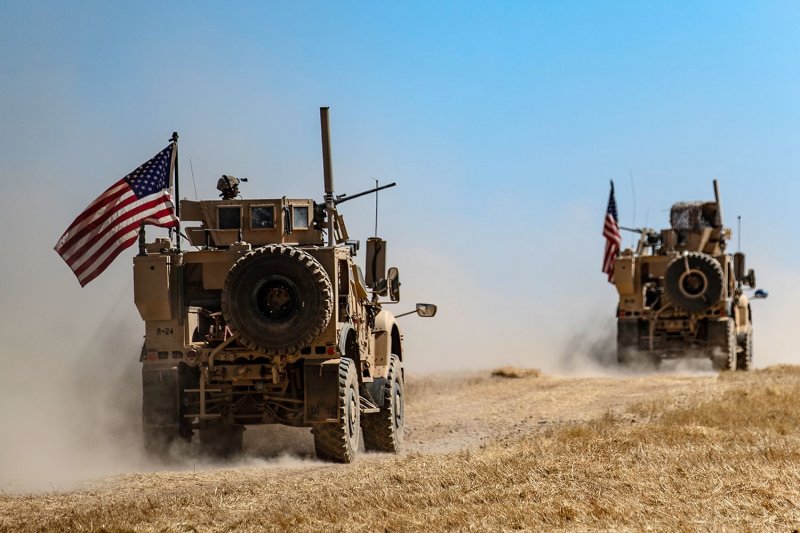
Source: Reuters
Additional complications may arise from religious – more precisely, clerical extremist – dynamics, with which Baku has historically sought to avoid involvement, given its unique status as the first secular state in the South Caucasus. Azerbaijan could be “tested” in this regard as well. Finally, such destabilisation could be exploited by Armenian radicals, raising serious concerns about a potential revival of revanchist tendencies.
At the same time, there is no doubt that President Ilham Aliyev keeps everything under control, including the less visible aspects of this spectrum, in order to anticipate all challenges and risks in advance.
– How do you assess the pre-election situation in Armenia? What are your forecasts for the parliamentary election results?
– As always, it resembles a storm – a nuclear explosion “in a glass of water”. If anyone hopes to remove Nikol Pashinyan – certainly not Azerbaijan – that is practically impossible, at least with the methods used so far. The “velvet” Nikol Vovayevich has been in power for eight years, if anyone has forgotten, having initially come to power with the backing of former president Serzh Sargsyan, and he remains firmly in place.
This says a great deal, as neither mass protests, ineffective demonstrations, nor even religious or quasi-sacred scandals have succeeded in removing him.
Pashinyan also behaved very confidently during his meeting at the Kremlin, as if to say: “So what can you do to me now?” The reason is the same – confidence at home in Yerevan, further reinforced by positions in both Baku and Washington. It does not matter to him who is mobilised against him during the election campaign.
He and his team remain a political reality in Armenia that cannot currently be changed, even taking into account Russia’s recently adopted law on direct military support for its citizens abroad. There are such individuals in Armenia as well, including opponents of Pashinyan who have already faced consequences.
Another key point is that the majority of Armenians do not want war, while nearly all of Pashinyan’s political opponents promote revanchism and conflict, which in turn strengthens his position. In effect, only Pashinyan and his Civil Contract party are prolonging peaceful coexistence with Azerbaijan.
Therefore, in my view, polls, ratings, and figures are of limited importance, although they generally place his camp in the lead.


Similar news