Hassan Nasrallah’s biography: Who was the leader of Hezbollah?


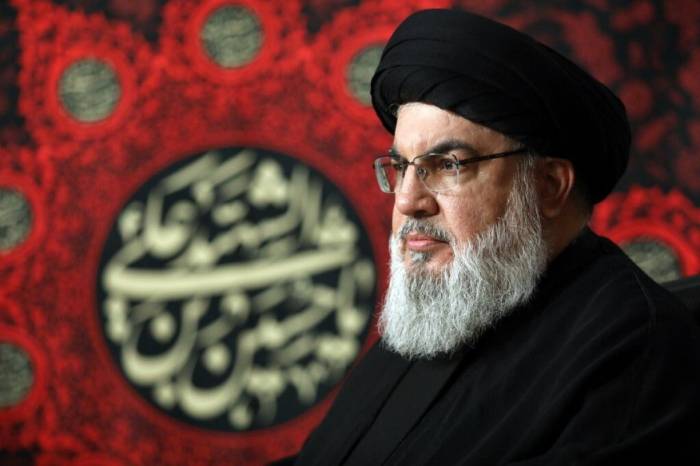
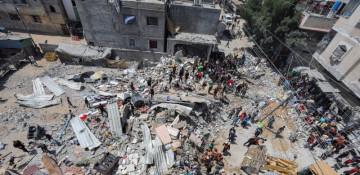
On September 28, 2024, the Shiite movement Hezbollah confirmed the death of its leader, Hassan Nasrallah, as a result of an Israeli Air Force strike on the organization's underground headquarters in southern Beirut. This attack marked the culmination of years of conflict between Hezbollah and Israel, escalating into an open front in southern Lebanon to support the Palestinian resistance.
Early life and backgroundHassan Nasrallah was born on August 31, 1960, in the Burj Hammoud district of eastern Beirut. He was raised in a Shiite family of merchants and showed an early interest in religious studies. Nasrallah received his initial education at a private school in Beirut, but in 1975, when Lebanon's civil war broke out, his family relocated to the village of Al-Bazuriyah in southern Lebanon. It was there that Nasrallah joined the Amal Movement, the military wing of the Shiite "Movement of the Deprived."
From 1976 to 1978, Nasrallah studied at the Shiite seminary in Najaf, Iraq, where he met the radical cleric Abbas al-Musawi, an encounter that proved pivotal to his future. In 1978, both returned to Lebanon, where al-Musawi established a seminary in Baalbek, and Nasrallah continued his education and began delivering sermons.
Political career
In 1979, Hassan Nasrallah was appointed head of Amal's political bureau in the Bekaa Valley, overseeing the defense of Shiite interests. However, in 1982, he joined the newly formed Hezbollah, which united Shiite guerrilla groups to resist Israeli occupation. In 1987, Nasrallah left for the city of Qom, Iran, to further his religious education, and until 1991, he served as Hezbollah's representative in Iran. Upon his return to Lebanon, he took on more significant roles within the movement, ultimately rising to leadership.
Secretary-General of Hezbollah
After Abbas al-Musawi was killed in an Israeli airstrike in 1992, Hassan Nasrallah was elected Secretary-General of Hezbollah. Under his leadership, Hezbollah expanded its military capabilities and developed close ties with the governments of Syria and Iran. Nasrallah also gained widespread popular support by implementing a broad social welfare program that included building schools and hospitals in Shiite areas of Lebanon.
From 1992, Hezbollah's representatives entered the Lebanese Parliament, and by 2005, they had begun holding ministerial positions. Nasrallah's reputation as a formidable leader was cemented during the 2006 Lebanon War, which many of the movement's supporters and experts viewed as a victory for Hezbollah over the invading Israeli forces.
Anti-Israel stance and conflicts
Nasrallah was known for his uncompromising stance against Israel and the United States, where Hezbollah has been designated a terrorist organization (also by the European Union in 2013 and by members of the Gulf Cooperation Council and the Arab League in 2016). Israeli intelligence services made numerous attempts to assassinate him, leading Nasrallah to take extraordinary measures for his security, rarely appearing in public.
Following Israel’s military operation in Gaza in response to the October 7, 2023, attack by Hamas militants on Israeli territory—which resulted in the killing and kidnapping of hundreds of Israelis—Nasrallah announced the opening of a front against Israel in southern Lebanon in support of the Palestinian resistance. Under his orders, Hezbollah launched rocket attacks on northern Israel, prompting retaliatory airstrikes by the Israeli Defense Forces (IDF) on Hezbollah targets in Lebanon.
Personal life
Hassan Nasrallah was married and had three sons and one daughter. His eldest son, Muhammad Hadi, was killed in 1997 during clashes with Israeli forces. His daughter Zainab was killed on September 27, 2024, in an Israeli airstrike on Beirut.
Nasrallah was often seen wearing a black turban, symbolizing his descent from the Prophet Muhammad. He remained one of the most influential figures in the Shiite world until his death.
Nasrallah’s death has dealt a significant blow to Hezbollah, leaving a leadership vacuum in one of the Middle East’s most powerful anti-Israel resistance movements.


Similar news