How AI is eating professions and reshaping the global workforce


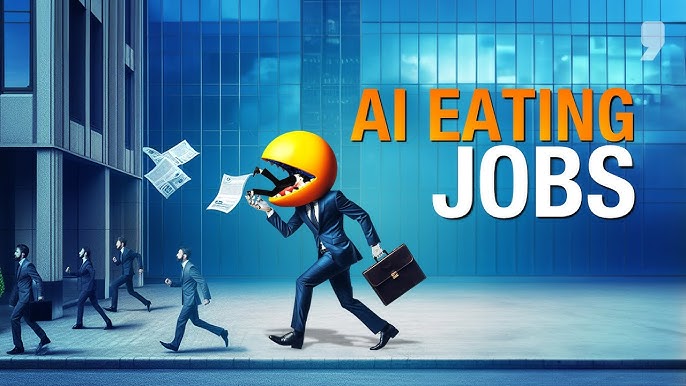
Artificial intelligence has moved from the margins of digital innovation to the center of global economic transformation. Once seen as a futuristic concept, AI now quietly performs tasks that were traditionally reserved for humans, from data processing and customer service to writing, diagnostics, legal analysis, and software development. As AI systems grow more capable, the question is no longer whether jobs will change but how deeply.
Across industries, AI is not simply assisting human workers. It is absorbing tasks, automating processes, and sometimes replacing entire job categories. This sweeping shift is reshaping the global workforce in ways that are unprecedented, complex, and irreversible. Understanding how AI is eating professions is essential for governments, businesses, and workers navigating an uncertain future.
The rise of AI powered automation: faster, cheaper, and more accurate
AI automation expands far beyond traditional robotics. Modern AI systems can understand natural language, interpret images, generate complex content, and learn from massive datasets. These abilities allow AI to perform tasks once thought immune to automation.
Key drivers behind AI’s acceleration include:
• exponential growth in computing power
• access to large scale training data
• improvements in machine learning models
• widespread adoption of cloud based AI platforms
These technologies enable AI to outperform humans in speed, consistency, and cost in many routine and knowledge based tasks. As companies face pressure to increase productivity and reduce labor expenses, AI adoption becomes not just an option but a competitive necessity.
Professions most affected by AI: from offices to creative industries
AI is spreading across industries at different speeds. Some professions are being transformed, while others risk partial or full displacement.
1. Administrative and office work
Tasks like document preparation, scheduling, compliance reporting, and customer communication are increasingly automated. AI powered chatbots handle millions of customer service interactions daily, reducing the need for large call centers. Digital assistants generate reports, summarize emails, and process workflows that once required human staff.
2. Media, journalism, and content creation
AI can now write articles, draft scripts, generate images, edit videos, and even compose music. While human storytelling remains essential, AI covers routine news updates, financial reports, and marketing content at scale. Creative professionals now compete with automated systems that produce fast and inexpensive content.
3. Legal and financial analysis
In law and finance, AI reviews documents, scans contracts, analyzes risks, and identifies inconsistencies with unprecedented accuracy. Paralegals and junior analysts face the greatest disruption, as AI reduces the need for manual document review and basic advisory tasks.
4. Healthcare diagnostics
AI systems detect patterns in medical imaging, predict patient risks, assist with early disease identification, and support decision making. Radiology, pathology, and some diagnostic roles face heavy AI integration, although human oversight remains crucial.
5. Software development and IT support
Generative AI tools write code, test applications, debug systems, and optimize infrastructure. Developers are becoming supervisors rather than pure coders, while routine programming tasks are being automated.
6. Manufacturing and logistics
Although automation in factories is not new, AI enabled robotics enhances flexibility, precision, and real time decision making. Warehousing systems powered by AI coordinate inventory, route shipments, and manage supply chains more efficiently than human operators.
7. Retail, marketing, and sales
AI personalizes advertising, predicts buying behavior, automates order processing, and assists with dynamic pricing. Physical retail jobs face pressure from automated checkout systems and customer analytics tools.
The result is a world where AI quietly absorbs segments of nearly every profession, not through a sudden revolution but a steady process of task erosion.
The changing shape of work: augmentation vs replacement
AI does not eliminate jobs in a uniform way. Instead, it transforms them by dividing tasks into two categories:
• tasks AI performs better
• tasks that humans continue to dominate
Most professions contain both. For example:
In journalism
AI can quickly process data, generate summaries, or rewrite press releases, but human journalists provide investigative depth, context, ethics, and field reporting.
In law
AI can scan millions of documents instantly, but human lawyers apply judgment, negotiation skills, and court advocacy.
In software development
AI generates code, but humans define product goals, architecture, and creative problem solving.
This blending of human and machine capabilities creates a new kind of worker: one who supervises AI systems rather than performs every task manually. The rise of “AI augmented professions” is one of the most significant workforce shifts of the century.
Why some jobs are more vulnerable than others
AI is most effective at tasks that are:
• repetitive
• predictable
• rules based
• data heavy
• easily codified into algorithms
Professions with these characteristics face higher automation risks. Meanwhile, roles that rely on:
• emotional intelligence
• ethical judgment
• leadership and strategic decision making
• complex physical interaction
• creativity involving human experience
are more resilient. For example:
Less vulnerable jobs include:
education, psychology, social work, diplomacy, advanced engineering, research science, and high level management.
More vulnerable jobs include:
data entry, bookkeeping, telemarketing, basic customer support, routine coding, and simple administrative roles.
Understanding this difference allows individuals and businesses to adapt before AI disruption accelerates further.
The new skills economy: what humans must learn to stay relevant
As AI eats professions, the labor market is shifting toward high value human skills that machines cannot easily replicate. These include:
1. critical thinking and problem solving
2. creativity and original idea generation
3. interpersonal communication and negotiation
4. emotional intelligence and leadership
5. adaptability and digital literacy
6. complex analytical reasoning
7. strategic planning and decision making
Workers who combine domain knowledge with AI fluency will be the most competitive. Rather than compete with AI, they will use it as a tool to increase productivity and expand their capabilities.
The rise of new professions created by AI
While some jobs disappear, new roles emerge, including:
• AI ethics specialists
• prompt engineers
• AI model trainers and evaluators
• robotics coordinators
• digital workflow designers
• cybersecurity analysts for AI driven systems
• data governance professionals
• human AI interaction experts
In many cases, these new jobs did not exist five years ago. This demonstrates a core reality: AI destroys certain tasks, but it also creates a new economic ecosystem around automation and digital transformation.
The global workforce divide: countries that adapt vs countries that lag behind
AI’s impact is not uniform across the world. Nations with strong technology sectors, research investment, and innovation policies benefit early. Countries that lack digital infrastructure risk falling behind, widening global inequality.
Leaders in AI adoption
United States, China, South Korea, Germany, United Kingdom, Singapore, and Canada are rapidly integrating AI into industry and public services.
Emerging adopters
Türkiye, Azerbaijan, India, UAE, Kazakhstan, and Brazil invest heavily in AI education, cloud technology, and innovation ecosystems.
Slow adopters
Countries with limited resources, digital skills, or industrial capacity may face job losses without equivalent job creation.
This divergence highlights the importance of national AI strategies and workforce retraining programs.
Ethical questions: how much automation is too much
The rise of AI brings moral and societal challenges:
• who is responsible when AI makes a mistake
• how to protect privacy and data security
• how to regulate AI generated misinformation
• how to ensure fair access to future jobs
• how to prevent AI systems from amplifying bias or discrimination
Governments and institutions are still debating these questions. The balance between innovation and regulation will determine how smoothly societies transition into an AI driven economy.
The long term outlook: AI as a permanent force in the evolution of work
AI will continue eating professions, but the outcome is not predetermined. It depends on how societies adapt. The most successful workers will be those who embrace lifelong learning, develop advanced cognitive and interpersonal skills, and collaborate with AI rather than compete with it.
Businesses that adopt AI responsibly will gain productivity and creativity advantages. Governments that invest in digital education and re skilling will protect their workforce from displacement.
The story of AI and work is not a story of replacement, but of transformation. The global workforce is entering a new era where human creativity, ethics, strategy, and emotional intelligence are more valuable than ever.
AI will continue to reshape economies, redefine professions, and challenge traditional career models. The key question is not whether AI will eat professions, but whether humans will evolve fast enough to shape the future alongside it.


Similar news