Impact of sanctions on global economy: basic principles


Economic sanctions have become one of the most powerful instruments of international politics in the modern era.
Instead of using military force, countries now rely on financial, trade, and technological restrictions to pressure governments, punish violations of international norms, or influence political decisions. Yet sanctions affect not only their targets but also the entire global economy — reshaping trade flows, financial systems, and even the balance of power among nations.
To understand their true impact, it’s important to examine how sanctions work, what mechanisms they rely on, and how they influence both targeted and non-targeted states.
What sanctions are and how they function
Sanctions are restrictive measures imposed by one country or a group of countries to limit another nation’s access to markets, capital, and technology. Their ultimate goal is to force political or behavioral change by creating economic hardship.
There are several main types of sanctions:
- Trade sanctions — bans on the export or import of certain goods (such as oil, weapons, or high-tech equipment).
- Financial sanctions — freezing of assets, exclusion from international banking systems, or prohibition of transactions.
- Individual sanctions — asset freezes and travel bans targeting politicians, businesspeople, and officials.
- Sectoral sanctions — restrictions on key industries like energy, defense, banking, or aviation.
Sanctions can be unilateral (imposed by one country, such as the U.S.) or multilateral (imposed by international organizations like the United Nations or the European Union).
Examples of sanctions in practice
- Russia has been under extensive Western sanctions since 2014, following the annexation of Crimea, and especially after the escalation of the conflict in Ukraine in 2022. The measures include bans on technology exports, freezing of central bank reserves, restrictions on energy exports, and the exclusion of Russian banks from the SWIFT system. These sanctions led to significant restructuring of global energy markets and accelerated economic ties between Russia, China, and India.
- Iran has faced sanctions for decades due to its nuclear program. U.S. and EU restrictions have cut off Tehran from international banking, limited its oil exports, and severely weakened its currency. However, Iran adapted by building trade relations with China, Russia, and some neighboring countries, relying increasingly on informal and barter-based transactions.
- North Korea is one of the most heavily sanctioned countries in the world. The United Nations, the U.S., and other partners have imposed strict restrictions on its trade, particularly in coal, weapons, and luxury goods, in response to nuclear tests. These measures have isolated Pyongyang economically, forcing it to rely on limited trade with China and illegal networks.
- Venezuela has suffered from both economic mismanagement and U.S. sanctions, which target its oil industry and financial institutions. This has led to hyperinflation, a collapse of the national currency, and mass emigration, profoundly impacting South America’s regional stability.
- Cuba remains under a U.S. embargo that dates back to 1960. While some restrictions were briefly lifted during the Obama administration, the embargo continues to limit Cuba’s access to U.S. markets, technology, and finance, slowing its economic modernization.
- Syria has been under international sanctions since the civil war began in 2011. These include restrictions on oil exports, financial transactions, and access to reconstruction funds. As a result, the Syrian economy has faced severe shortages and isolation from global trade.
These examples illustrate how sanctions affect not only the targeted nations but also regional economies and global markets — from oil prices to food supply chains.
How sanctions influence economies
The immediate effects of sanctions include:
- Currency depreciation and inflation. When foreign currency inflows are blocked, the local currency loses value, and prices for imported goods skyrocket.
- Reduced investment and capital flight. Foreign investors withdraw from sanctioned countries, while local businesses lose access to loans, credit, and foreign markets.
- Disrupted supply chains. When imports of technology, machinery, or raw materials are blocked, entire industries can grind to a halt.
- Falling living standards. As goods become scarce and prices rise, ordinary citizens bear the heaviest burden.
However, many sanctioned countries find ways to adapt — by turning to new trade partners, developing domestic industries, and creating parallel financial systems.
Global side effects of sanctions
Sanctions ripple far beyond their targets:
- Global supply chain disruptions. Restrictions on energy and raw materials can cause shortages and price spikes worldwide — as seen when European gas prices surged after the sanctions on Russian exports.
- Higher global inflation. Energy and food prices rise when major producers are cut off from markets, putting pressure on economies from Africa to Southeast Asia.
- Geopolitical fragmentation. Sanctions push countries to form alternative economic alliances — for example, through BRICS or regional trade blocs — reducing Western dominance in global finance.
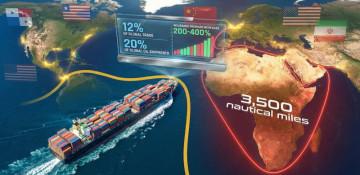
- Shift in trade routes. Countries like Türkiye, the UAE, Kazakhstan, and India have become intermediaries for goods once shipped directly to sanctioned states, creating new commercial corridors.
The global winners and losers
Sanctions can create unexpected winners. For instance:
- Energy-exporting countries like Saudi Arabia, Qatar, and the United States have benefited from higher global oil and gas prices.
- China and India have secured discounted energy imports from sanctioned Russia, strengthening their positions in global trade.
- Neutral states such as Türkiye and the UAE have become logistical and financial hubs for re-exporting goods, earning significant revenue from new trade flows.
Meanwhile, ordinary consumers in both sanctioned and sanctioning countries pay the price — through higher inflation, slower growth, and shrinking purchasing power.
Sanctions and the transformation of global finance
Modern sanctions rely heavily on the dominance of the U.S. dollar and Western financial institutions. By restricting access to SWIFT or freezing assets held in U.S. and European banks, sanctioning nations can paralyze financial systems in targeted states.
Yet this power has also accelerated the de-dollarization trend. Countries like China, Russia, Iran, and even some developing economies are creating alternative payment systems and trading in local currencies. The growth of digital currencies and blockchain-based settlements further challenges Western control over international finance.
Can sanctions achieve their goals?
The effectiveness of sanctions varies. They tend to work best when:
- They are multilateral, with wide international support.
- Their objectives are clear and achievable.
- They are accompanied by diplomacy, offering the targeted country an incentive to change behavior.
However, sanctions can also backfire. Instead of weakening governments, they may strengthen them domestically, fueling nationalism and allowing leaders to blame economic problems on foreign pressure.
In conclusion
Sanctions have become a defining feature of modern geopolitics — an alternative to war, but one that carries deep economic consequences. They reshape trade networks, drive inflation, and accelerate the shift toward a multipolar global economy.
The experience of countries like Russia, Iran, and Venezuela shows that sanctions can slow growth and isolate economies — but rarely force political change on their own. Meanwhile, their global impact is felt far beyond the intended targets, influencing everything from energy markets to food prices.
Ultimately, sanctions are both a weapon and a catalyst — one that highlights the fragility of globalization and the growing struggle for economic independence in a rapidly changing world.


Similar news