Iran amid growing political uncertainty


Editor’s note: Vladimir Bekish is a Russian military-political analyst specializing in strategic security, with a focus on the Middle East and Africa. The views expressed in this article are the author’s own and do not necessarily reflect the position of News.Az.
Few would dispute that Venezuela has become one of the central subjects of today’s global agenda — a primary focus of international attention and a constant source of breaking news. What is happening in and around the country is no longer a purely regional matter.
It is reshaping the global landscape, altering power balances, and influencing the future trajectories of entire regions. This impact now extends far beyond Latin America or the Western Hemisphere. Paradoxically, its consequences are increasingly being felt in regions geographically distant from the Americas.
First and foremost, I am referring to the Middle East.
The Middle East and the Persian Gulf have long been zones of persistent tension and conflict. Religious, territorial, ideological, and economic factors have intertwined here for decades, fueling chronic instability. Much has been written about these dynamics. Yet today, it is not the classical explanations that deserve primary attention, but rather new circumstances that may decisively influence the region’s balance of power, above all, developments in Iran.

Source: Reuters
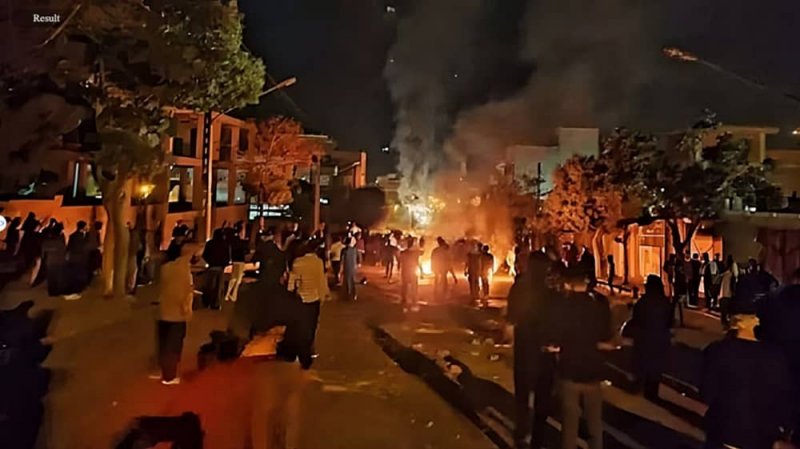
Since late December last year, Iran has been gripped by widespread protests, demonstrations, and unrest. Their root causes are clear: economic decline, soaring inflation, the rising cost of living, and the dramatic collapse of the national currency have pushed large segments of the population to the brink. In recent months, the Iranian rial has fallen to historically low levels. One euro now costs around 20,000 rials. Food inflation has reached 64 percent. Only South Sudan currently fares worse by this measure.
According to available information, protests have occurred in at least 88 cities across 27 of Iran’s 31 provinces. At a certain point, security forces resorted to harsh measures, particularly in smaller towns. Instead of restoring calm, however, these actions triggered a new wave of protests in major cities, including Mashhad and Tehran.
Students have joined the demonstrations at no fewer than 17 universities nationwide. According to student-run social media accounts, security forces have conducted raids directly on university campuses. This is a particularly sensitive development in a society where universities have historically played a central role in political mobilization.
The position of the Iranian authorities appears internally contradictory. Supreme Leader Ayatollah Ali Khamenei has declared that the regime will not yield to its enemies and that protesters must be “put in their place.” Representatives of Iran’s judiciary have explicitly stated that there will be no leniency toward those detained during the unrest. These statements come amid reports of at least 35 deaths and more than 1,200 arrests.
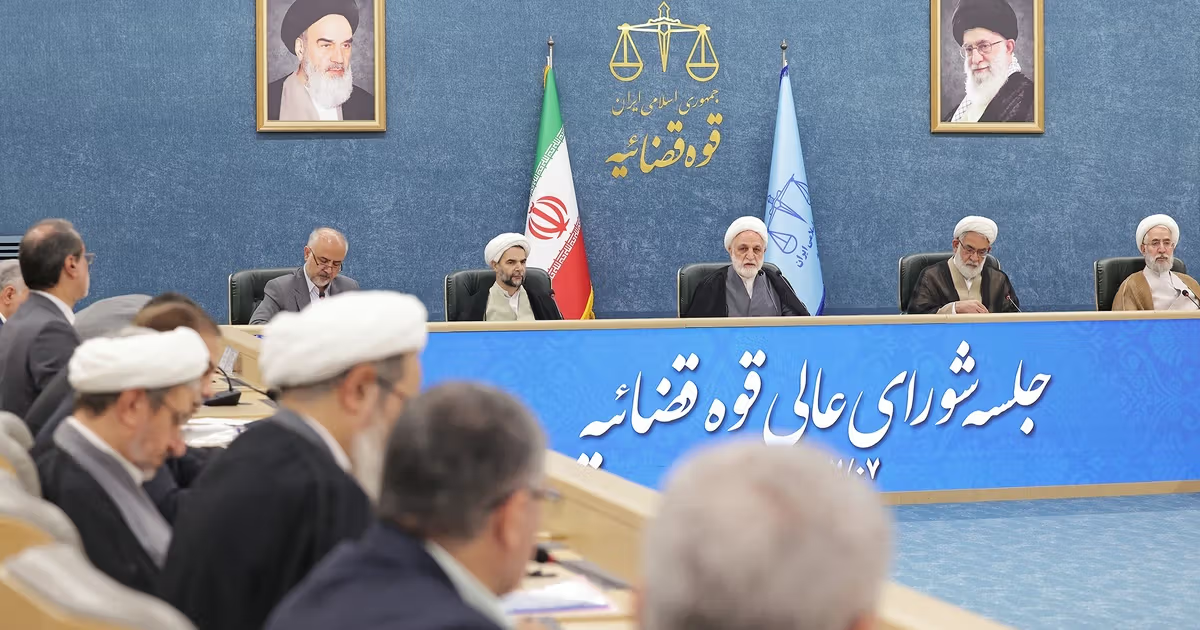
At the same time, President Masoud Pezeshkian has spoken of the government’s obligation to listen to legitimate demands and maintain dialogue. This contrast between the hardline stance of the security establishment and the conciliatory rhetoric of the executive branch only deepens the sense of uncertainty and instability.
There is no mystery in the fact that economic conditions and living standards strongly shape public attitudes toward power. This holds true even in states where authority is traditionally rigid and protests emerge only under extreme pressure. Iran has experienced protests before, but previous waves were not driven primarily by economic despair. This time, the economy lies at the core, and that distinction may prove decisive.
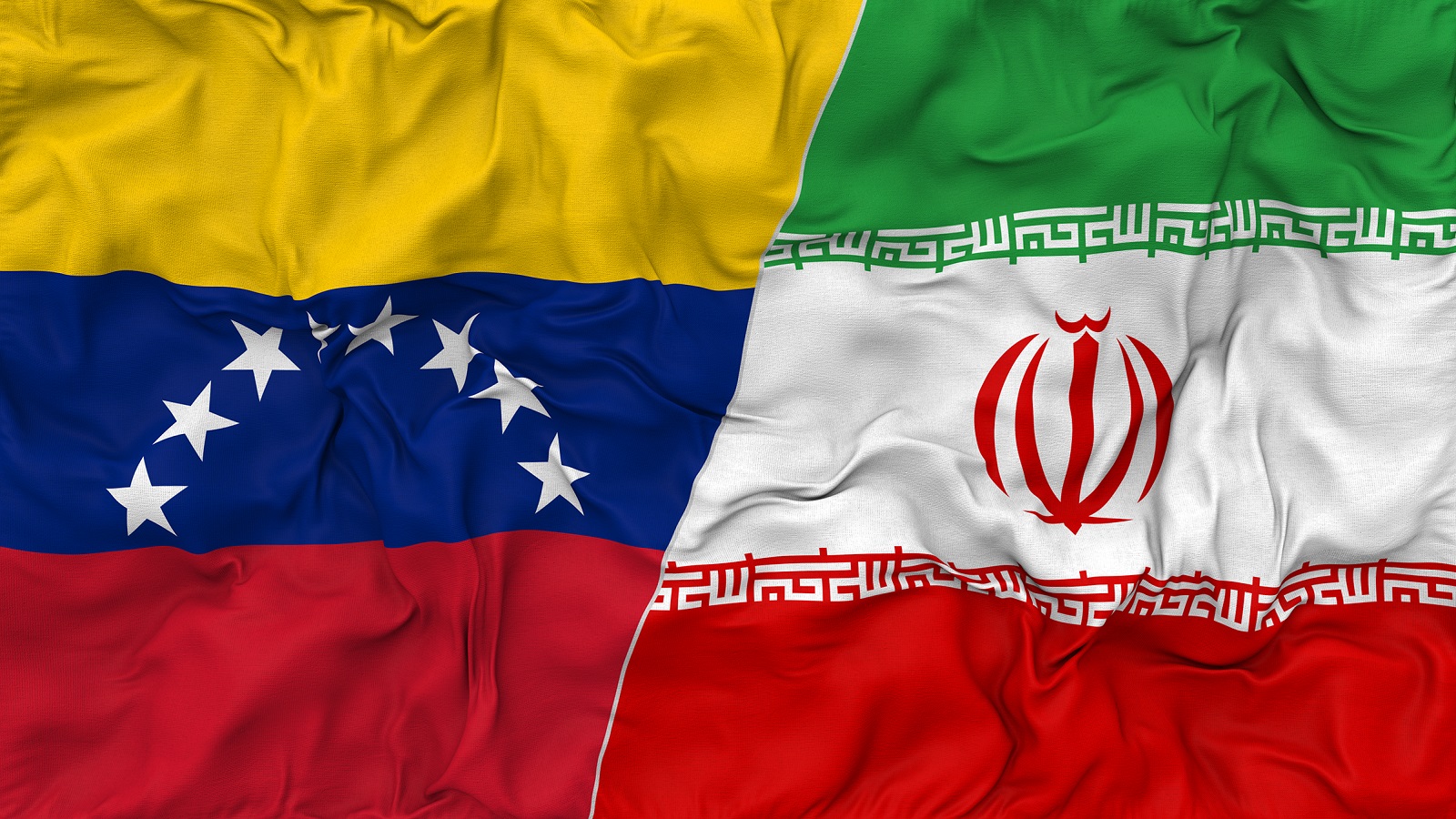
At first glance, linking Iran’s situation to developments in Venezuela may seem unusual. Yet the connection is both real and significant. It is not merely that both countries are oil-rich states whose revenues depend heavily on hydrocarbons.
Source: Reuters
Iran and Venezuela have enjoyed close relations in recent years. The foundation of this partnership was their shared confrontation with the United States, sustained sanctions pressure, and the search for alternative alliances. Venezuela has also maintained close ties with Russia, particularly in military cooperation. Moscow supplied Caracas with weapons, military equipment, instructors, and intelligence support. Bilateral defense agreements were signed, and the presidents of both countries regularly affirmed mutual support in the face of perceived threats to sovereignty.
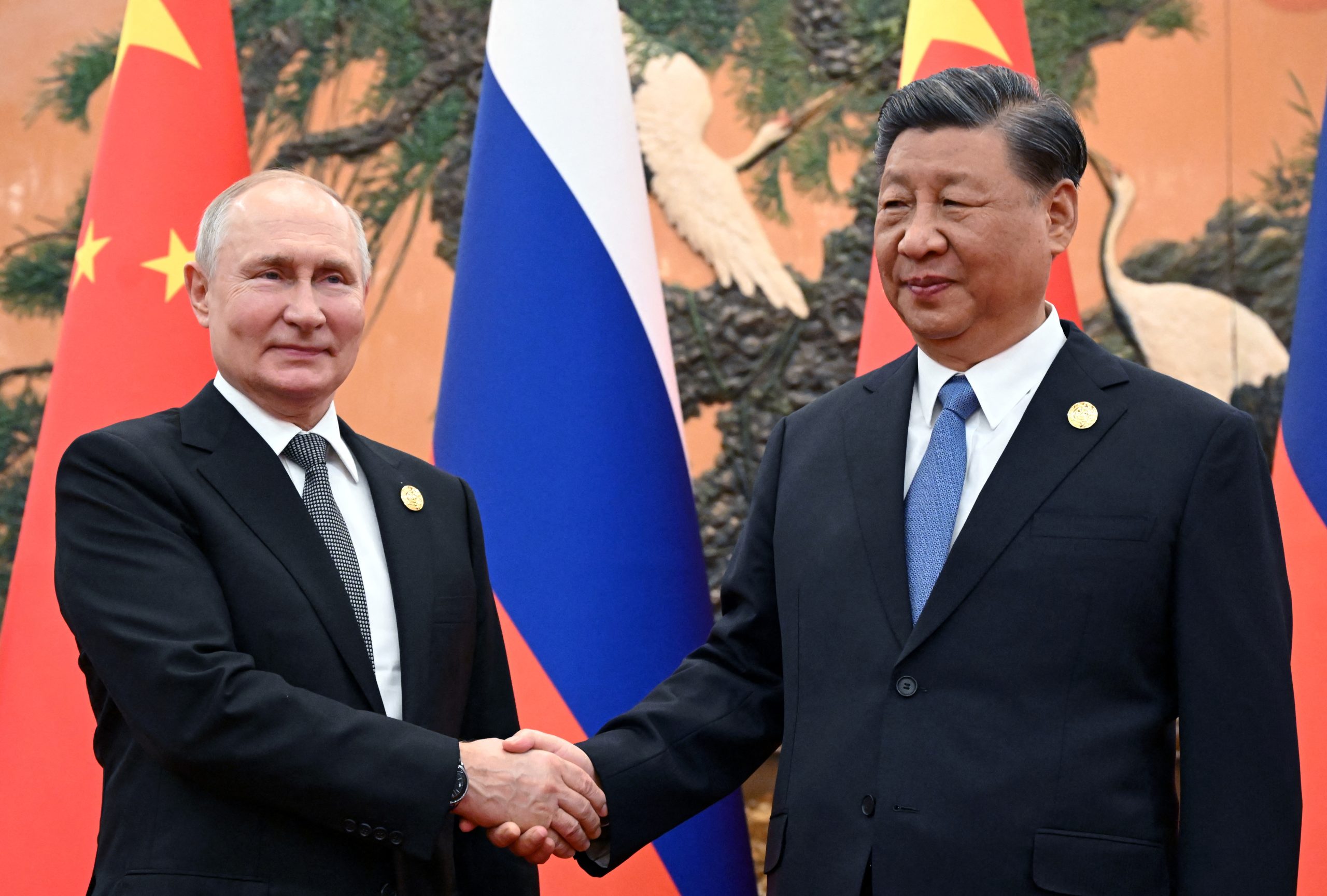
Russia, in turn, has long been regarded as a partner of Iran. This relationship has extended beyond shared hostility toward Washington and included concrete cooperation in defense and military technology. Iran not only produces missiles and drones for its own use in regional conflicts, but has also supplied certain weapons systems to Russia and Venezuela.
That chapter, however, appears to be closing. One of the Trump administration’s categorical demands to Venezuela’s new authorities is the immediate and complete termination of cooperation with Iran, Russia, and China. This demand is expected to be met. As a result, Iran stands to lose one of its very few remaining allies.
Even more importantly, the Venezuelan precedent sends Tehran a stark message: if domestic unrest escalates, external rescue should not be expected. Russia and China were unable or unwilling to save the Maduro regime, despite years of strategic partnership. The United States prevailed.
Source: Atlantic Council
This reality lends new weight to Donald Trump’s statements about supporting protesters in Iran. What until recently sounded like rhetoric could now translate into policy. Should that happen, opponents of the current Iranian leadership would receive substantial backing, with potentially catastrophic consequences for the regime. It is therefore hardly surprising that reports have emerged suggesting that Khamenei has prepared contingency plans to leave Tehran with family members and close aides, along with measures to secure foreign assets. There are also reports of an emergency nighttime meeting of Iran’s Supreme National Security Council to discuss survival strategies in the event of failed repression or direct US intervention.
Where does this leave Iran? Protests continue to grow rather than subside, despite the announcement of monthly cash payments to citizens amounting to seven dollars. Reports have surfaced claiming that protesters have taken full control of certain cities, claims promptly denied by Iranian state media. Yet experience suggests that official confirmation comes only when concealment is no longer possible.
Should the current Iranian leadership — Ayatollah Khamenei and his inner circle — fall, the aftermath would be deeply uncertain. It is unclear who would assume power or how the military and the Islamic Revolutionary Guard Corps would respond. One view holds that the most effective and progressive outcome for Iran would be the return of the Pahlavi family, a long-standing aspiration among many Iranians.

Source: IRNA
Another scenario appears increasingly plausible: a US-led effort, with minimal Israeli involvement, to place Iran under indirect control by installing a friendly leadership. This approach would rely on the same narrative now being promoted in Venezuela — the promise that a resource-rich nation can finally prosper under new management. Venezuela, the argument goes, was rich in oil and natural resources but governed by leaders unable or unwilling to convert that wealth into prosperity for their people. Under American guidance, everything will change.
Iran, too, is rich in oil and natural resources. Yet its citizens have lived modestly for decades under successive governments.
The analogy is impossible to miss.
(If you possess specialized knowledge and wish to contribute, please reach out to us at opinions@news.az).


Similar news