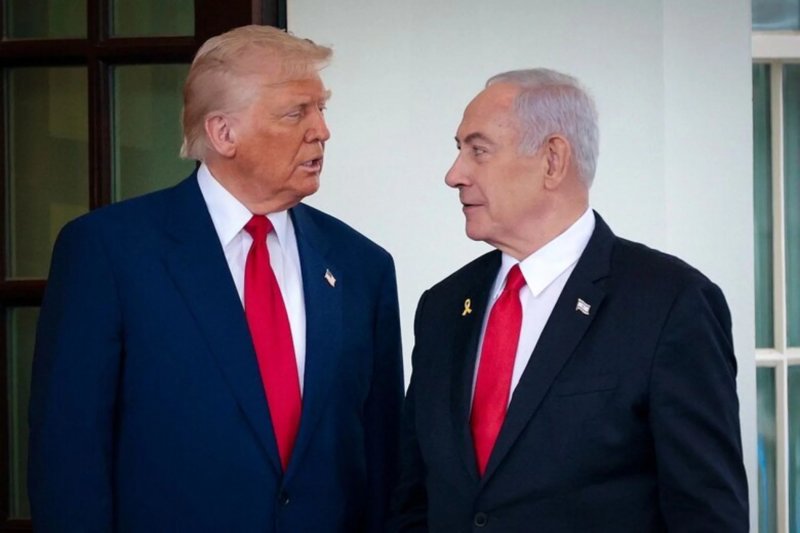
On February 11, 2026, Israel’s Prime Minister Benjamin Netanyahu unexpectedly visited Washington, advancing a meeting originally scheduled for February 18. This marked the seventh time the Israeli leader had visited the White House.
No other foreign leader has done so as frequently. In 2025, on the eve of the 12-day war, Netanyahu also made an unscheduled visit. The significance of these visits remains unclear. Notably, no journalists were present at the February 11 meeting, which took place entirely behind closed doors.
RECOMMENDED STORIES
The conversation between the two leaders lasted about three hours, according to CNN. Reports indicated that the Israeli prime minister did not enter the White House through the main entrance, where journalists were waiting. There was also no customary interaction with the press before or after the meeting, suggesting that preparations for significant developments were underway.
The main topic of the talks was the prospect of a new war with Iran. Following the meeting, the U.S. president said no final decision had been made on the matter. At the same time, it was reported that the Pentagon had begun preparations to deploy a second aircraft carrier strike group to the Middle East, led by the USS George H. W. Bush, though some reports cited the USS Gerald Ford instead.
According to media reports, the United States and Israel are taking steps to strengthen missile defense in the region. The U.S. has deployed additional THAAD systems, including in Jordan, and has redeployed existing systems in response to potential threats from Iran. These measures are being viewed as both deterrence and preparation for a possible response from Tehran in the event of escalation.
At the same time, the White House has not ruled out signing a deal with Iran, explaining the military buildup as a demonstration that the Islamic Republic responds only to force. “No final decisions have been made, except that I insisted on continuing negotiations with Iran to see whether a deal can be reached,” Donald Trump said. “I informed Prime Minister Netanyahu that this would be the preferred option. If not, we will simply have to see what the outcome will be.” Trump recalled that in 2025 Tehran “decided that it was better not to make a deal,” and as a result, on the night of June 22, it faced the U.S. air operation “Midnight Hammer,” targeting Iran’s underground nuclear facilities. “I hope this time it will be more reasonable and responsible,” he added.
In other words, unprecedented pressure is being exerted on Tehran. The question now is who will lose their nerve first. For Iran, nuclear and missile programs are closely tied to national prestige. Abandoning them would mean losing face, influence, and ultimately power.

Source: Ynet
In addition to Iran, the Gaza Strip and regional developments were also discussed, according to a statement from the office of the Israeli prime minister. Netanyahu emphasized the need to ensure Israel’s security. Both leaders agreed to continue coordination and close cooperation. According to Israel’s Channel 12, the discussions focused on developing a coordinated course of action should U.S.–Iran negotiations fail. In Washington, skepticism remains about the possibility of reaching a deal, even one focused exclusively on the nuclear program without addressing missile issues.
During the visit, Netanyahu’s office reported that Israel’s concerns “were heard” and that the sides reached “full understanding” regarding the future contours of action in the Middle East. In other words, Israel agreed to wait before taking military action against Iran, allowing Trump to exhaust all options for coercing the regime into a peaceful resolution. This is reflected in increased U.S. military activity in the region, which has affected the operations of reconnaissance aircraft and UAVs near Iran’s borders.
The concentration of strike assets has increased significantly. Recent estimates suggest that around 150 Tomahawk missiles on various platforms are positioned near Iran — five times more than were used during Operation Midnight Hammer in June 2025.
As CNN reported, citing Israeli sources, during the talks Netanyahu planned to discuss possible options for military pressure on Iran if diplomatic efforts fail. Israel is preparing for “unforeseen circumstances” should U.S.–Iran negotiations not yield results.
According to Roman Yanushevsky, editor-in-chief of Israel’s Channel 9 website, moving Netanyahu’s visit forward indicates the urgency of the Iranian issue. He suggests the prime minister may have had multiple motives: preventing U.S. concessions on Iran’s missile program and support for regional allies, and coordinating actions in the event of a military scenario.
“The purpose of Netanyahu’s trip was to influence the White House, which is under pressure from various groups, and either secure the toughest possible agreement with Tehran or ensure coordination between the U.S. and Israel in the event of escalation. An additional concern is satellite imagery showing preparatory work at Iran’s nuclear facility in Isfahan, similar to what was observed before previous strikes,” Yanushevsky told Izvestia.
Netanyahu aimed not only to convey his assessment of threats but also to establish “red lines” that Israel believes the U.S. should not cross in negotiations with Iran. While details of the meeting were not disclosed, the high-level contact underscores that the Iranian dossier remains central to U.S.–Israel relations and regional security.
According to Netanyahu, Trump assured him that the current pressure on Tehran is having an effect. “The president believes the Iranians already understand who they are dealing with,” the Israeli prime minister said. “I think the conditions he is setting, combined with their awareness of past mistakes that blocked an agreement, could lead Iran to accept terms for a satisfactory deal.”
Nevertheless, Netanyahu stressed he remains highly skeptical about reaching any agreement with Iran. He emphasized that Israel would not be satisfied with restrictions on the nuclear program alone — any future deal must also include a complete halt to the ballistic missile program, containment of Iranian proxies across the Middle East, and strict oversight of Iran’s nuclear capabilities.
In addition to the Iranian issue, the discussions covered the situation in Gaza and plans to stabilize the broader region. “It was an excellent conversation with a great friend of the State of Israel,” Netanyahu said of his talks with Trump.
Given the secrecy surrounding the visit and the lack of reliable public information, it is likely that deeper issues, potentially related to restructuring Iran’s political system, were also discussed, but for now, these remain speculative.