One of F1’s greatest races happened 15 years ago today—or did it?


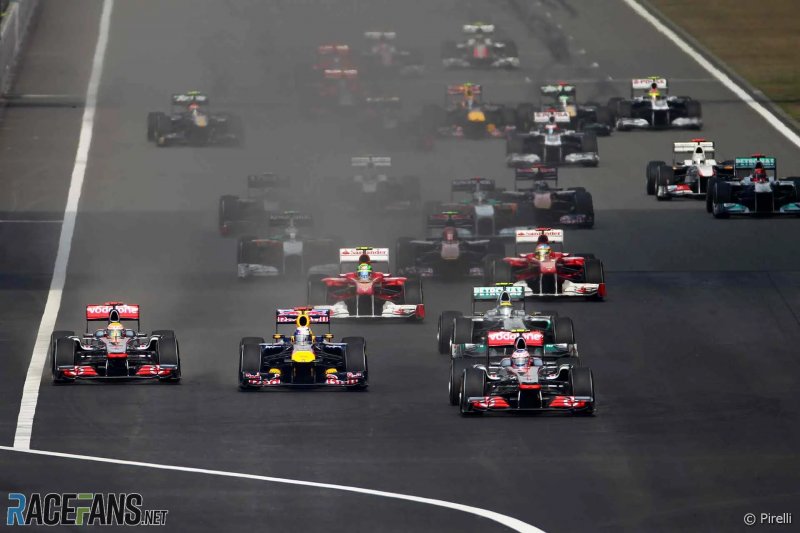
The 2011 Chinese Grand Prix, held on April 17, 2011, remains a landmark event in Formula 1 history, often cited as the race that validated the sport's controversial shift toward high-degradation tyres and the Drs (Drag Reduction System).
Fifteen years later, the event is remembered for its strategic complexity and a frantic final ten laps that saw Lewis Hamilton hunt down and overtake Sebastian Vettel for a dramatic victory, News.Az reports, citing Race Fans.
The race was defined by a stark contrast in pit strategies. Vettel, the reigning world champion, attempted a risky two-stop strategy, while Hamilton and the McLaren team opted for three stops.
RECOMMENDED STORIES
This created a high-stakes pursuit in the closing stages as Hamilton, on fresher rubber, sliced through a field of cars that were struggling for grip. The spectacle was further enhanced by Mark Webber, who started 18th on the grid but utilized an aggressive strategy to storm through the field and join the leaders on the podium in 3rd place.
Beyond the immediate excitement, the 2011 Chinese Grand Prix sparked a lasting debate about the "artificial" nature of modern racing. Critics argued that the combination of Pirelli's fast-wearing tyres and the Drs overtaking aid made passing too easy, potentially devaluing the skill of the drivers. However, supporters pointed to the sheer number of overtakes and the strategic tension as proof that the changes had successfully fixed the "processional" racing common in the previous decade.
Fifteen years on, as Formula 1 continues to evolve with even more advanced aerodynamics and hybrid power units in the 2026 season, the Shanghai race of 2011 stands as the definitive blueprint for the entertainment-focused era of the sport. Whether viewed as a masterclass in strategy or the beginning of "artificial" racing, its impact on how fans consume and evaluate Grand Prix racing remains undeniable.
By Leyla Şirinova


Similar news