Russia–Ukraine War: Key developments in the past week


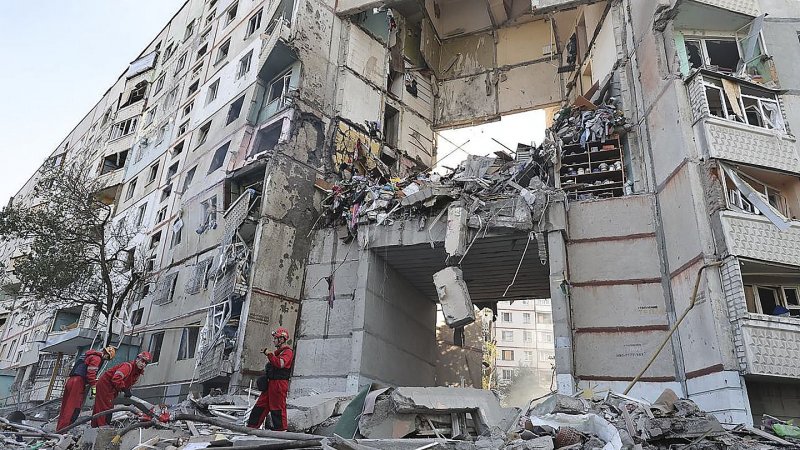
The Russia–Ukraine war entered a critical new phase over the past week, marked by Russia’s largest aerial assaults in months, a sweeping military conscription campaign, and deepening geopolitical tensions, News.az reports.
As winter approaches, Moscow is intensifying its focus on Ukraine’s energy infrastructure, signaling a shift toward a sustained “winter energy war,” while Ukraine is responding with strategic strikes inside Russian territory and urgent appeals for advanced air defense support.
Monday, September 29 — Opening Salvo: Russia Targets Gas Infrastructure
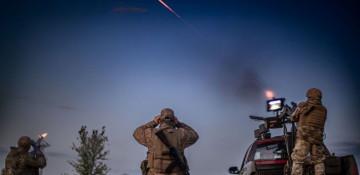
The week began with a powerful overnight missile and drone barrage targeting Ukraine’s critical energy infrastructure. More than 100 aerial objects were launched, including cruise missiles and Iranian-designed Shahed drones.
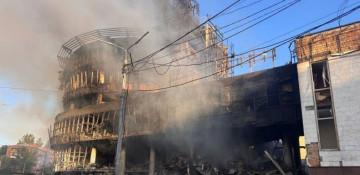
The strikes focused on gas extraction and processing facilities in the Kharkiv and Poltava regions — hubs essential for Ukraine’s domestic heating and electricity supply. Ukrainian air defenses intercepted a large share of incoming threats, but several critical installations were struck, resulting in blackouts across multiple towns and regions.
Energy experts described the operation as a clear attempt to undermine Ukraine’s resilience ahead of the heating season, mirroring the Kremlin’s winter bombardment campaign of 2022–2023. Repair crews were deployed immediately, but officials warned of “significant damage” to underground pipelines and compressor stations.
On the same day, the Kremlin confirmed plans for its largest autumn conscription in a decade, preparing to draft 135,000 men between 18 and 30 years old, starting October 1.
Tuesday, September 30 — Kyiv Strikes Back Inside Russia
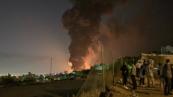
Ukraine responded swiftly with deep drone strikes on Russian territory. Overnight, Ukrainian long-range drones targeted a major oil refinery in Orsk, Orenburg region, igniting a large blaze that took hours to extinguish. Another drone strike temporarily halted operations at a chemical plant, underscoring Ukraine’s increasing capability to hit strategic economic targets far from the frontline.
Kyiv described the strikes as a “mirror response” to Moscow’s attacks on Ukrainian energy facilities. Russian media reported no casualties but confirmed damage and emergency evacuations near the refinery.
Meanwhile, on the eastern front, Russian ground assaults intensified near Kupyansk and Avdiivka, but Ukrainian forces repelled multiple attacks, inflicting notable personnel and equipment losses. President Volodymyr Zelenskyy used the day to urge allies to accelerate delivery of air defense systems, warning of a sustained Russian aerial campaign through winter.
Wednesday, October 1 — Mobilization and Propaganda Surge
President Vladimir Putin formally signed the conscription decree, initiating the draft of 135,000 men. The Kremlin’s media apparatus launched an extensive propaganda campaign portraying the war as a civilizational struggle against the West. Russian state television described the draft as “defending the motherland against foreign aggression.”
Western analysts noted that, although conscripts are officially not sent directly into combat, many are pressured to sign short-term contracts shortly after induction — a process that has repeatedly led to their rapid deployment to frontline units.
On the battlefield, Russian forces attempted to push through Ukrainian defenses along the Kreminna–Siversk axis. Ukrainian officials reported “limited advances” and heavy Russian casualties.
Thursday, October 2 — Largest Air Assault of the Year
Russia unleashed its largest single air attack of 2025, launching over 100 drones and missiles in a coordinated overnight operation.
Targets included Lviv, Sumy, Zaporizhzhia, Kharkiv, and Poltava.
-
In Lviv, four members of a single family were killed when their residential house was struck.
-
In Shostka (Sumy region), a Russian drone struck the railway station twice in quick succession — a “double-tap” attack — killing one person and injuring more than 30, including several children.
-
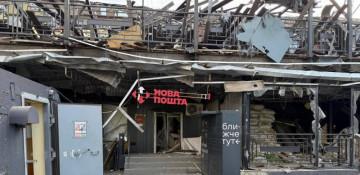
Power lines, transformer substations, and gas compressor stations were damaged, causing temporary disruptions for tens of thousands of residents.
Poland and Slovakia raised their air defense alert levels as drones approached their borders. While no direct airspace violations were initially reported, the incident underscored the growing regional security risks of Russian strikes near NATO territory.
Military analysts described the attack as part of a coherent winter strategy, aiming to overwhelm Ukrainian air defenses and cripple energy distribution networks ahead of the heating season.
Friday, October 3 — Repair Efforts and Western Appeals
Ukraine’s Energy Ministry announced that the previous night’s bombardment had caused “the most severe damage to gas infrastructure since 2022.” Emergency teams worked around the clock to restore service in Kharkiv and Poltava, as citizens prepared for the possibility of rolling blackouts.
President Zelenskyy made a direct appeal to Western allies for Patriot, NASAMS, and IRIS-T air defense systems, warning that Ukraine’s current air defenses were stretched thin across multiple fronts.
“Russia’s goal is to freeze our cities,” he said in a televised address. “We will not allow darkness to defeat Ukraine.”
At the front, Russia launched renewed attacks near Chasiv Yar and Robotyne but achieved no meaningful breakthroughs.
Saturday, October 4 — Annexation Anniversary and Strategic Messaging
Marking the anniversary of the 2022 illegal annexation of four Ukrainian regions, Putin delivered a nationally televised speech, declaring that the territories were “forever part of Russia” and announcing that negotiations with Kyiv were “suspended indefinitely.”
He issued stern warnings to Western countries against supplying Ukraine with long-range Tomahawk-style missiles, saying such a move would trigger “grave consequences” for U.S.–Russia relations.
Meanwhile, Polish fighter jets were scrambled after Russian drones approached its airspace once again, demonstrating the persistent threat of spillover incidents.
Ukrainian military intelligence reported growing evidence of logistical strain on Russian units, including ammunition shortages and delayed reinforcements in some sectors.
Sunday, October 5 — Civilian Deaths and Slowing Russian Advances
Russia launched another large-scale overnight assault, killing five civilians, including four in Lviv.
For the first time this week, Poland confirmed that several Russian missiles briefly violated its airspace, triggering a diplomatic protest in Warsaw.
Ukraine’s Air Force reported an interception rate of 82%, but officials warned that stocks of interceptor missiles were running low due to the sustained tempo of attacks.
According to independent military analysis by Russia Matters, Russia’s territorial gains had slowed sharply, with only 13 square miles captured over the week — a 54% drop compared to the previous week. Experts attribute the slowdown to Ukrainian defensive resilience, supply challenges, and high Russian attrition rates.
Monday, October 6 — Strategic Assessment and Humanitarian Preparations
Ukrainian authorities warned that continued Russian strikes on gas and power infrastructure could cause significant energy disruptions in the coming weeks.
Humanitarian agencies began scaling up winterization programs, including heaters, blankets, mobile generators, and emergency shelters.
Military officials expect Russia to sustain high-intensity aerial operations through the winter, focusing on energy and civilian infrastructure, while maintaining only limited ground offensives due to manpower and logistics constraints.
Strategic Outlook
The week’s developments indicate a strategic recalibration by Moscow. Rather than seeking rapid battlefield breakthroughs, Russia is intensifying efforts to erode Ukraine’s civilian and energy resilience over the winter months. By striking gas and electricity facilities, Moscow aims to sap morale, strain resources, and potentially complicate Western support.
At the same time, Ukraine’s ability to strike deep inside Russia signals a growing sophistication in its drone and long-range strike capabilities, intended to impose costs on Russian territory and disrupt its war economy.
Diplomatically, NATO countries remain on alert, with Polish and Slovak airspace increasingly threatened by spillover from Russian operations. Western leaders face renewed pressure to accelerate arms deliveries as the “winter war” phase begins.
Conclusion
As October begins, the war has entered a new strategic phase. Russia is doubling down on airpower and energy warfare, while Ukraine is relying on defensive resilience and targeted counter-strikes to withstand the pressure. Both sides are positioning for what analysts predict will be a gruelling winter campaign, with infrastructure, energy, and air defense at the heart of the conflict.


Similar news