Sirens ring out in Kyiv as Putin orders a 32-hour pause for Easter


Reaction in Ukraine to Putin’s decree ordering a ceasefire from 4 p.m. Saturday until the end of Sunday was cautious.
Just minutes after the announcement, air raid alerts and drone sightings were reported over Kyiv, reinforcing the skepticism that also surrounded last year’s failed truce, News.Az reports, citing KyivPost.
Speaking from his apartment in Kyiv, Elkhan Nuriyev of Ukraine’s Officers’ Union told that air raid sirens could be heard outside as the news broke in Ukraine.The Kremlin’s so-called “humanitarian” gesture, he said, came amid continuing attacks.
RECOMMENDED STORIES
- Bill Gates set to face US Congress questioning over Epstein ties
- Ukrainian missiles and drones hit Russian oil and industrial sites in long-range strikes
- Contacts with Tehran and publications against Baku: Whose interests is Eldar Mamedov defending?
- Ukrainian drone strike hits historic museum in Crimea
Still, with several hours remaining before the declared ceasefire was due to take effect, Nuriyev added: “Let’s see.”
President Volodymyr Zelensky first proposed an Orthodox Easter ceasefire on March 30 during a conversation with journalists, saying Ukraine was open to any form of truce – whether a full ceasefire or one limited to energy infrastructure – as long as it did not compromise the country’s “dignity and sovereignty.”Kremlin spokesman Dmitry Peskov dismissed the proposal on March 31. He argued that Zelensky’s remarks did not amount to a “clearly formulated” or “articulated” initiative and said Russia was seeking a lasting “peace,” not a temporary “ceasefire” or “truce.”Nuriyev said he would not describe Putin’s move as a genuine ceasefire. At best, he said, it could be seen as a temporary pause. In his view, Moscow is trying to present itself on the same level as Washington.
“There is a ceasefire between Iran and the US, and Putin wants to be seen as doing the same,” Nuriyev said. “It is an effort to equate Russia with the US. It is nothing but a PR stunt.”
32-Hour Silence?
The Kremlin statement announcing the ceasefire said that “orders have been issued for this period to cease hostilities in all directions,” adding that “troops are to be prepared to counter any possible provocations by the enemy, as well as any aggressive actions.”Earlier on Thursday, Zelensky said the de-escalation in the Middle East had created a rare opening for Ukraine. While skeptical of any breakthrough, he said it offered a “glimmer of hope” and a “small window of diplomacy” following the fragile two-week ceasefire between the US, Israel, and Iran.
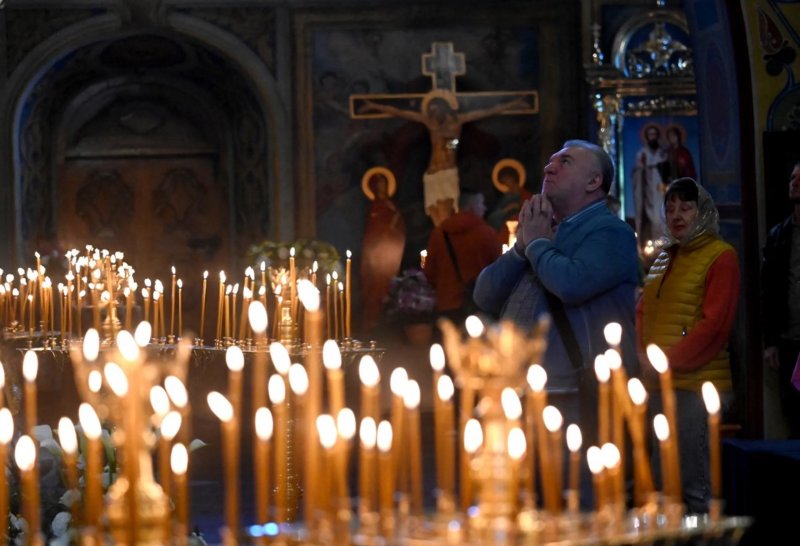
In Ukraine, Orthodox Easter is a time of deep tradition, marked by the chime of cathedral bells and the blessing of painted pysanky eggs and sweet paska bread. Now in the fifth year of full-scale war, these rituals remain a vital lifeline of normalcy. Families still gather in candlelit churches to exchange the centuries-old greeting, “Khrystos Voskres” (“Christ is Risen”).
For soldiers in the trenches, however, “holiday silence” rarely lasts. Troops remain on high alert, knowing that past ceasefires have often been broken before Easter celebrations even begin.
By Leyla Şirinova


Similar news