Ten days to decide: Trump’s Iran gamble


.jpg)
Editor’s note: Nijat Babayev is an Azerbaijan-based journalist. The article reflects the author’s personal views and may not necessarily represent the position of News.Az.
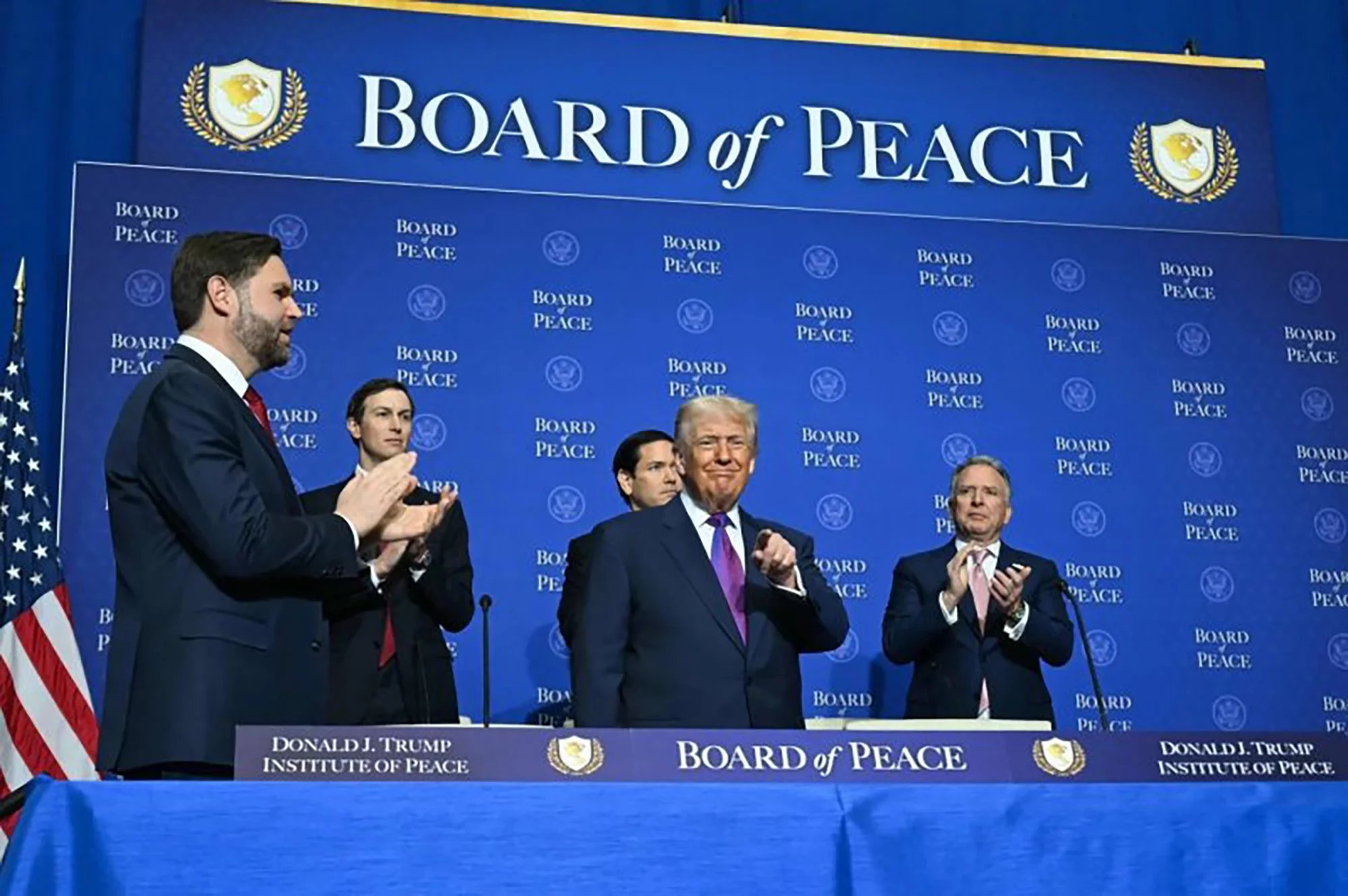
As Washington weighs the possibility of launching a military offensive against Iran, President Donald Trump has moved forward with a strategy that blends public diplomacy with unmistakable military signaling. Speaking during a gathering of international leaders at the inaugural session of his newly formed Board of Peace, a forum primarily focused on reconstruction efforts in Gaza, Trump delivered a message that resonated far beyond the conference room.
“We may have to take it a step further, or we may not. Maybe we're going to make a deal,” he said, setting a 10-day timeline for Tehran to determine whether negotiations would continue or whether Washington would consider military action.
The ultimatum, though framed as conditional, reflects a White House increasingly convinced that diplomacy without pressure yields few results. For Iran, the countdown is both a warning and an opportunity. For the broader Middle East, it represents another moment of acute uncertainty in a region already strained by overlapping crises.
Military buildup and visible deterrence
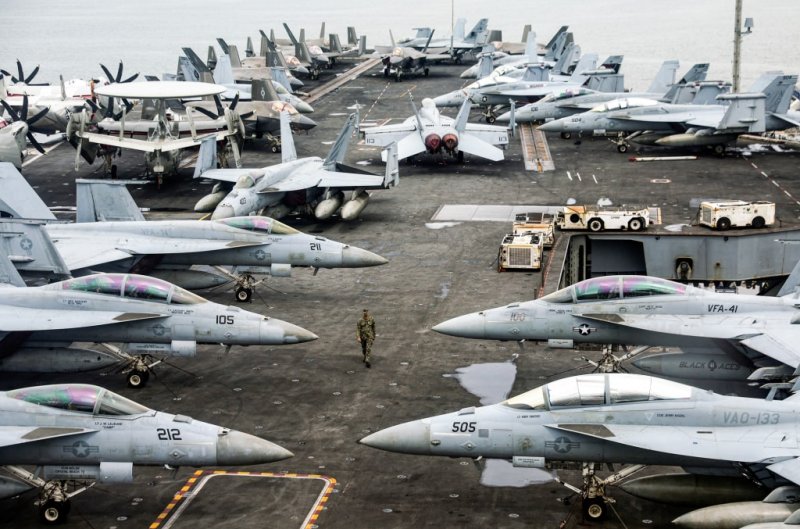
The credibility of Trump’s deadline rests heavily on the scale of the U.S. military posture now taking shape across the Middle East. The Pentagon has deployed two aircraft carrier strike groups to the region — a rare concentration of naval power. Each carrier functions as a floating airbase, capable of launching sustained air operations and precision strikes.
RECOMMENDED STORIES
In addition to the carriers, advanced fighter aircraft, including F-22 and F-35 stealth jets, have been repositioned to regional bases. Long-range bombers remain within operational reach, while additional missile defense systems have been deployed to protect American personnel and allied infrastructure. U.S. naval assets continue to patrol key maritime chokepoints, particularly near the Strait of Hormuz, through which roughly a fifth of global oil trade transits.
These deployments are not merely precautionary. They are strategic signals designed to shape Iranian calculations. The administration appears intent on demonstrating that any strike, should it be ordered, would be swift and technologically overwhelming. At the same time, such a buildup increases the margin for miscalculation. In crowded airspace and tense maritime corridors, small incidents can escalate quickly.
Recent weeks have seen heightened militia activity in Iraq and Syria, along with sporadic maritime confrontations involving Iranian vessels and Western naval patrols. While none of these incidents has crossed the threshold into open warfare, they contribute to an atmosphere of volatility.
 Source: Getty Images
Iran’s calibrated resistance
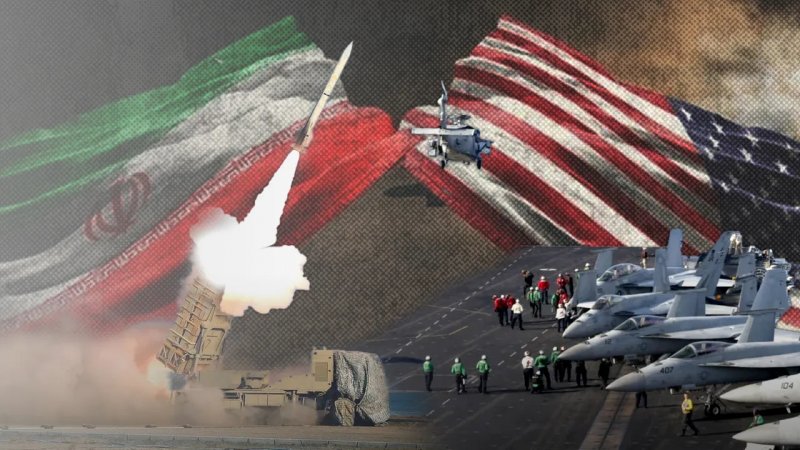
Iran’s leadership now faces a strategic dilemma. Historically, Tehran has responded to pressure with calibrated resistance rather than direct confrontation. Rather than meeting force head-on, it often relies on regional networks and indirect pressure points.
Any potential retaliation to U.S. military action could unfold across multiple theaters — from maritime disruptions to cyber operations or proxy engagements. Iranian officials have repeatedly emphasized that while they do not seek direct war, they will not negotiate under threat.
Complicating the picture further are Iran’s deepening defense ties with Moscow. In recent months, Iran and Russia conducted joint naval drills in the northern Indian Ocean and the Caspian region, underscoring growing military coordination.
Beyond bilateral exercises, Iran has announced plans for expanded trilateral naval drills with Russia and China. These exercises are intended to signal that Tehran is not isolated and that it retains strategic partnerships capable of projecting maritime presence beyond its immediate coastline. While these drills do not constitute a formal alliance, they complicate the strategic calculus for Washington by introducing broader geopolitical dynamics.
Russia, already deeply engaged in Ukraine, benefits from maintaining pressure on the United States in multiple theaters. China, meanwhile, views stability in energy corridors as vital to its economic interests but has also sought to strengthen ties with Iran through security and infrastructure cooperation. The optics of coordinated naval maneuvers involving all three powers send a message of multipolar resistance to Western dominance.
Energy markets on edge
Energy markets are reacting cautiously to the rising rhetoric. Oil prices have shown volatility amid concerns that even limited hostilities could disrupt shipping lanes. The Strait of Hormuz remains a critical artery for global energy flows. Any perceived threat to tanker traffic or port infrastructure can trigger immediate price spikes.
For Gulf states, the stakes are immense. While many share Washington’s concerns regarding Iran’s regional posture, they are equally wary of open conflict that could jeopardize economic diversification efforts and critical infrastructure. Some regional capitals are quietly encouraging de-escalation while preparing contingency plans.
 Source: TRT World
Countdown to choice
For now, the 10-day window remains open. Diplomatic channels are reportedly active, though neither side has disclosed substantive breakthroughs. Trump’s remarks at the Board of Peace meeting underscored that negotiations remain possible, but only within the defined timeframe.
Whether this approach produces leverage or escalation will depend on how each actor interprets the other’s resolve. Washington believes that credible force enhances bargaining power. Tehran calculates that endurance and strategic patience can outlast external pressure.
The Middle East thus stands on a knife’s edge. Aircraft carriers patrol contested waters. Fighter jets sit ready on regional runways. Naval drills unfold in distant seas involving powers with their own strategic ambitions.
The next phase will reveal whether the countdown leads to compromise or confrontation. In either case, the implications will extend well beyond Washington and Tehran, shaping energy markets, alliance structures, and the broader balance of power in an increasingly interconnected global landscape.
(If you possess specialized knowledge and wish to contribute, please reach out to us at opinions@news.az).


Similar news