Terrible thirst hits Gaza amid polluted water and broken infrastructure


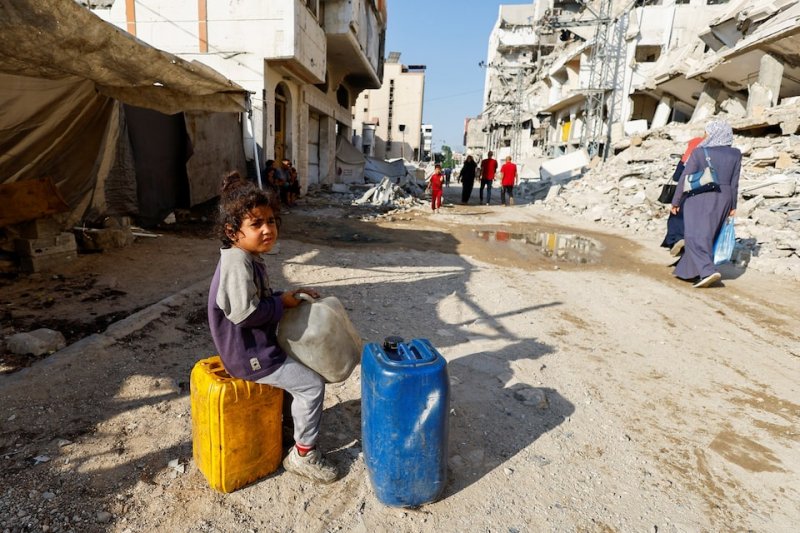
A severe water crisis is gripping Gaza, where nearly all residents struggle daily to access safe drinking water. With aquifers contaminated by sewage and chemicals, and key water pipelines destroyed, many Gazans must trek long distances, carrying heavy loads of water just to survive.
While global focus remains on hunger in Gaza after nearly two years of devastating conflict, aid agencies warn the water situation is equally dire. Most of Gaza’s water comes from wells drawing from a brackish, polluted aquifer, leading to outbreaks of diarrhea and hepatitis. Israeli pipelines that once supplied clean water have been cut off or damaged amid the ongoing war, News.Az reports, citing Reuters.
Water infrastructure is largely destroyed, and pumps often run on scarce fuel-powered generators. Gazans face long queues, with some waiting hours daily to fill containers with heavily brackish water used mostly for cleaning, alongside smaller quantities of cleaner water for drinking.
Moaz Mukhaimar, a 23-year-old university student before the war, describes walking over a kilometer and queuing for two hours to collect water, often making multiple trips a day to supply his family of 20 living in tents.
“The children keep coming and going and it is hot. They keep wanting to drink. Who knows if tomorrow we will be able to fill up again,” says his mother, Umm Moaz.
The UN recommends a minimum of 15 liters of water per person daily for drinking, cooking, and hygiene. Gaza’s average consumption is just 3-5 liters — a fraction of this minimum — compared to about 247 liters per person daily in Israel.
Waterborne diseases are soaring, with rates increasing by nearly 150% over three months, according to Oxfam. Many children, forced to collect water, have lost their childhood to this struggle, often running long distances or queuing for hours.
The United Arab Emirates is funding a new pipeline from a desalination plant in Egypt to supply 600,000 people in southern Gaza, but connection could take weeks. Meanwhile, aid agencies stress that only a ceasefire and unrestricted humanitarian access can prevent further deaths from preventable diseases.
UNICEF warns that starvation and dehydration are no longer side effects but front-line consequences of the conflict. Without urgent action, Gazans face a worsening crisis of thirst and disease.


Similar news