Wall Street mixed as Fed signals steady policy amid tensions


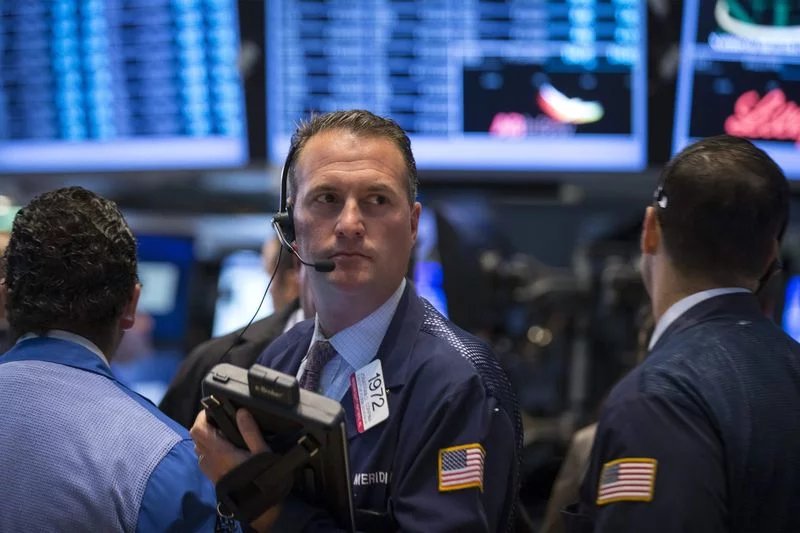
Wall Street ended Monday on a mixed note, as early gains faded and investor sentiment remained fragile against a backdrop of geopolitical uncertainty and shifting monetary policy expectations.
The S&P 500 slipped 0.3% to 6,348.00 after earlier rising nearly 1%, while the tech-heavy NASDAQ Composite dropped 0.7% to 20,799.11. In contrast, the Dow Jones Industrial Average managed to hold modest gains, advancing 0.3% to 45,282.42, News.Az reports, citing Reuters.
Markets initially attempted a rebound following heavy losses last week, but the recovery lost momentum as investors remained cautious about ongoing risks tied to the Middle East conflict and economic uncertainty in the United States.
Weak sentiment after sharp market correction
Last week marked a turning point for U.S. equities, with both the NASDAQ and Dow entering correction territory, falling more than 10% from their recent peaks. The broader S&P 500 also remains significantly below its record high, reflecting continued volatility.
Market analysts noted that the brief rally on Monday appeared largely technical rather than driven by improving fundamentals. Automated trading strategies and dip-buying behavior contributed to early gains, but underlying concerns about economic growth, inflation, and geopolitical instability persisted.
Investor sentiment has been particularly sensitive to developments in the Middle East, where conflicting signals regarding potential negotiations between Washington and Tehran have added to uncertainty.
Fed signals patience despite inflation risks
Attention also turned to Jerome Powell, who reiterated that the Federal Reserve is adopting a cautious, “wait and see” approach to monetary policy.
Speaking at a public event, Powell emphasized that long-term inflation expectations remain stable despite recent increases in oil prices. He suggested that the central bank is unlikely to react hastily to energy-driven price shocks, indicating that interest rate policy is currently well-positioned.
This reassured investors to some extent, helping to stabilize markets after a recent surge in bond yields. The earlier spike in U.S. Treasury yields had pressured equities, particularly growth stocks, by increasing borrowing costs and reducing the attractiveness of future earnings.
However, not all economists share Powell’s optimism. Some warn that inflation could remain persistent, especially if energy prices continue to rise due to geopolitical disruptions.
Oil surge raises global inflation concerns
The conflict in the Middle East has triggered a sharp rise in oil prices since late February, reviving fears of renewed inflationary pressure across global economies.
Brent crude briefly surged above $115 per barrel before easing slightly to around $111.73. Elevated energy costs are expected to impact consumer prices, corporate margins, and overall economic growth.
Higher oil prices also complicate the outlook for central banks worldwide, as policymakers must balance the need to control inflation with the risk of slowing economic activity.
Geopolitical tensions dominate market outlook
The geopolitical situation remains a key driver of market volatility. Donald Trump stated that the United States is engaged in “serious discussions” aimed at ending military operations involving Iran, though messaging from both sides has been inconsistent.
While Washington has suggested progress in talks, Iranian officials have largely denied direct negotiations and rejected U.S. demands, calling them excessive. This divergence has created uncertainty over whether a diplomatic resolution is achievable in the near term.
At the same time, military tensions continue to escalate. Reports indicate that U.S. forces have strengthened their presence in the region, while Iran has warned of strong retaliation against any ground incursion.
Risk of broader conflict and market spillovers
Concerns are growing that the conflict could expand further, particularly if key maritime routes are disrupted. Strategic chokepoints such as the Strait of Hormuz and the Bab al Mandab remain critical for global energy and trade flows.
Any escalation affecting these routes could significantly disrupt global supply chains and drive energy prices even higher, amplifying inflationary pressures and weighing on financial markets.
Recent attacks involving regional actors, including Iran aligned groups, have heightened fears of a broader confrontation that could have far-reaching economic consequences.
Outlook remains uncertain but opportunities emerge
Despite the current volatility, some market participants see potential opportunities. Analysts suggest that recent declines have made equity valuations more attractive, particularly for long term investors.
Historically, market corrections often reflect worst case scenarios that do not fully materialize. As a result, periods of uncertainty can create entry points for investors willing to tolerate short term risk.
Nevertheless, the near term outlook remains highly dependent on two key factors: the trajectory of the Middle East conflict and the Federal Reserve’s response to evolving inflation dynamics.
For now, markets appear caught between cautious optimism and persistent uncertainty, with investors closely monitoring both geopolitical developments and economic indicators for clearer direction.
By Faig Mahmudov


Similar news