What does the US-Iran ceasefire really mean?
Editor’s note: Nurlan Umudov is an independent political researcher and strategic analyst specialising in national security, geopolitical forecasting, and regional infrastructure. The views expressed in this article are those of the author and do not necessarily reflect the position of News.Az.
While expectations based on Donald Trump’s recent statements suggested that last night would be one of the most devastating for the region, the agreement on a two-week ceasefire came as a surprise to many. Trump’s recent threats regarding the “erasure of a civilisation” have, at least temporarily, given way to the negotiating table. The key issue now is determining which side gained a real advantage during the operations, who suffered losses, and what the eventual outcome of the negotiations will be.
When assessing the victors and losers of the conflict, it can be said that both sides have experienced their own gains and setbacks.
Strategic assessment: coalition setbacks vs Iranian resilience
Source: Reuters
For the United States, the gains fell short of expectations. Although the planned operations anticipated regime change in Iran, the unconditional surrender of uranium, and large-scale protests leading to internal instability, none of these materialised. On the contrary, the US faced significant resistance in the region. Iran’s defiance and pressure prevented many US and Israeli objectives from being achieved and obstructed their intended outcomes.
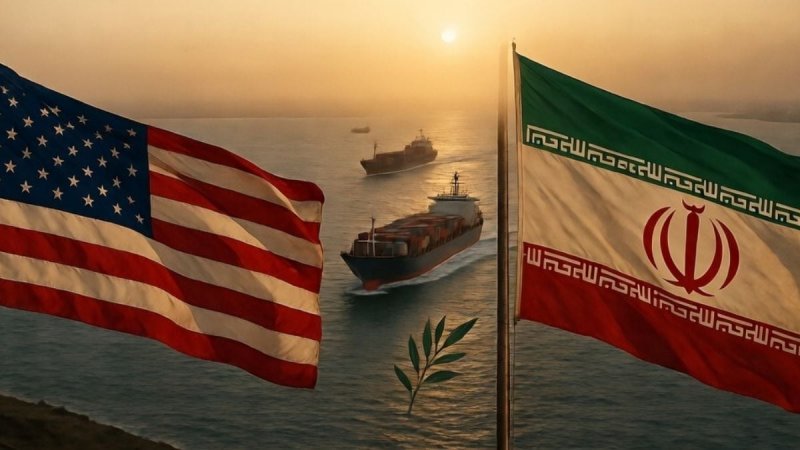
Furthermore, the shift in control over the Strait of Hormuz — previously open but now effectively used by Iran as a strategic lever — resulted in serious disruption to US and Israeli plans. Donald Trump’s inability to secure broader support from allies, particularly within NATO and other partners, also influenced developments. Ultimately, these factors contributed to the coalition’s failure to achieve meaningful strategic gains.
The only tangible successes for the coalition were strikes that inflicted damage on Iran’s military capabilities and infrastructure. However, as Iranian officials have noted, much of this damage is considered repairable over time. Overall, it can be argued that the coalition has failed to achieve its core objectives and has instead suffered reputational damage, alongside domestic political pressure. During the conflict, it incurred significant financial costs and lost advanced military systems, including air defence assets, fighter jets, and helicopters. Restoring these capabilities will be both costly and time-consuming for the United States.
On the other hand, Iran’s gains and losses present a more complex picture. Despite sustaining heavy strikes, it is argued that Tehran currently holds the upper hand. First, the US objective of regime change was thwarted, and US and Israeli forces have not been able to launch ground operations. Iran has therefore maintained its sovereign integrity.
Furthermore, Iran demonstrated a level of resistance and counterattacks that US and Israeli forces had not anticipated. This not only damaged their standing but also contributed to tensions among their Arab allies in the region. Iran also exerted pressure on regional economic rivals during the fighting. Disruptions affecting infrastructure and maritime routes, along with control over the Strait of Hormuz, were not only political and military gains but also carried economic and strategic significance. Revenues generated through these measures are expected to support national reconstruction and the restoration of military capabilities, helping Iran recover strength through its strategic position.
Internal crises and the ascendancy of the IRGC

Source: TASS
Alongside an enhanced regional standing, support from allies, and an assertive posture, Iran has also suffered significant losses. The assassination of Supreme Leader Ali Khamemeni on the first day of the conflict, along with the deaths of dozens of senior officers and officials, has created gaps within both the government and the military. The Islamic Revolutionary Guard Corps (IRGC), in particular, has expanded its influence during the crisis, consolidating control — directly and indirectly — over domestic affairs, raising long-term concerns for governance and stability.
The IRGC’s hardline stance and overt threats could fuel periodic tensions across the Middle East, the South Caucasus, and beyond, representing a significant source of regional instability.
In terms of domestic damage, the most severe impacts of the conflict include the destruction of bridges and other infrastructure, damage to airports and urban areas, civilian casualties, and the depletion of military reserves. Restoring these assets will require significant time, resources, and labour.
In light of these factors, the temporary ceasefire and resumption of talks bring several key issues to the forefront.
Negotiation deadlock: genuine diplomacy or a tactical reset?
The fact that the United States took such a step following recent heightened rhetoric has raised questions among observers. The failure to achieve its stated objectives in the ongoing conflict, the closure of the Strait of Hormuz, and limited support from requested states and organisations have contributed to significant losses and a strategic stalemate for the US. However, some analysts question whether President Trump would scale back at this stage without fully realising his pre-conflict goals. Furthermore, given reported Israeli dissatisfaction with the move, there is a view that the process may represent a tactical pause aimed at gaining time before a potential shift to a more intense phase of the conflict.
The 15-point set of conditions proposed by the United States and the 10-point framework put forward by Iran are in stark contradiction. Reaching common ground from such divergent and far-reaching proposals will likely prove extremely difficult. At a minimum, any agreement would require significant concessions from both sides — or, in a less likely scenario, from one side alone. In the current context, the prospects for such high-level compromises remain highly uncertain.
Iran, for its part, is expected to agree to the reopening of the Strait of Hormuz only on the condition that transit fees are allocated to reconstruction and recovery efforts. However, other key issues, including the dismantling of long-range missile capabilities and the uranium enrichment programme, remain major points of contention. At the same time, it appears unlikely that the United States will readily abandon its own preconditions.
Taking these factors into account — and considering the pre-conflict realities — one of the most plausible scenarios is that the US is using these negotiations as a means of gaining time to plan and potentially execute a subsequent phase of its offensive. The fact that US and Israeli forces launched their initial strikes just as negotiations prior to 28 February were trending towards a positive outcome increases the perceived likelihood of this scenario recurring.
It is also possible that ground operations proposed by Donald Trump in recent weeks could commence following these negotiations. The reported deployment of more than 50,000 personnel to the region, along with the ongoing buildup of military assets, keeps the risk of large-scale conflict elevated. This has led some observers to argue that the current talks may serve primarily as a means of buying time to secure a more advantageous tactical position.
From the Iranian perspective, it is expected that the negotiations will be approached with considerable experience and caution. Given the outcomes of previous rounds of diplomacy, Tehran is unlikely to place full trust in the current process and will remain prepared for a possible resumption of military operations. At the same time, this period may allow Iran to regroup, replenish military reserves, and strengthen strategic coordination.
In conclusion, under the current circumstances, risks remain widespread and significant. The possibility of renewed hostilities cannot be ruled out. If the negotiations fail to produce concrete results, combat operations could resume as the ceasefire approaches its expiration. It is to be hoped that such scenarios do not materialise and that active hostilities come to a definitive end.
(If you possess specialized knowledge and wish to contribute, please reach out to us at opinions@news.az).
News.Az



.jpg)