What effect did the Trump-Xi summit have on Global stock markets?


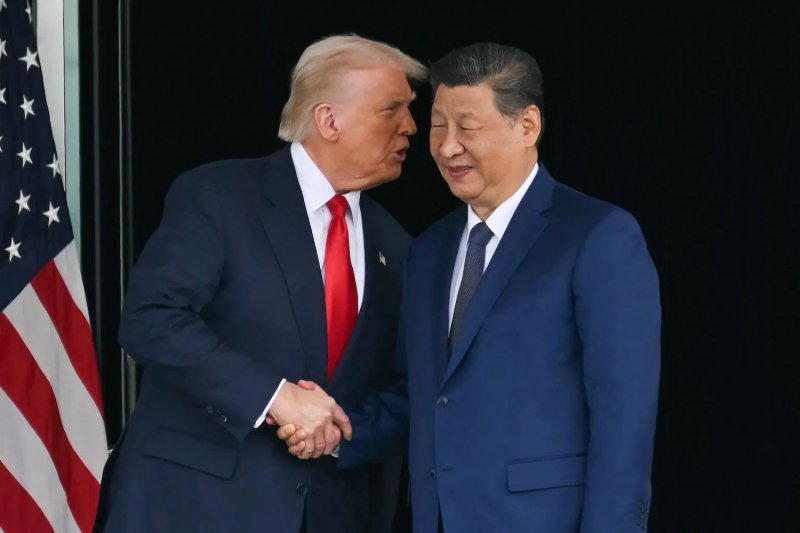
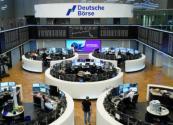
Global stock markets climbed on Thursday as investors continued pouring money into artificial intelligence-related companies, while closely watching a high stakes summit between U.S. President Donald Trump and Chinese President Xi Jinping in Beijing.
The rally was led by technology and semiconductor stocks, especially in Asia, where South Korean chip giant SK Hynix moved close to joining the world’s trillion dollar companies. At the same time, investors remained cautious about geopolitical risks linked to the Middle East conflict, oil prices and global inflation concerns.
RECOMMENDED STORIES
Here is a detailed FAQ explainer on why markets are rising, what investors are watching and how AI is reshaping global financial markets.
Why are stock markets rising?
Global markets are mainly rising because investors remain highly optimistic about artificial intelligence and its impact on corporate earnings and economic growth.
Technology companies connected to:
-
AI chips
-
Data centers
-
Cloud computing
-
Advanced semiconductors
-
AI software
have become the biggest drivers of market gains in 2026.
Investors believe AI could transform industries worldwide and generate enormous profits for companies involved in the sector.
Strong earnings from technology firms have further boosted investor confidence.
Why is AI driving financial markets so strongly?
Artificial intelligence has become the dominant investment theme globally because companies and governments are spending massive amounts on AI infrastructure and computing power.
Demand has surged for:
-
High performance chips
-
AI processors
-
Semiconductor memory
-
Data infrastructure
-
Machine learning systems
Technology companies supplying these products have seen explosive growth in revenues and market value.
Many investors believe the world is entering a long term AI investment cycle similar to previous internet and smartphone revolutions.
Why is SK Hynix attracting so much attention?
South Korean semiconductor company SK Hynix has become one of the biggest winners from the global AI boom.
The company specializes in advanced memory chips used in:
-
AI servers
-
Data centers
-
High performance computing systems
As AI demand surged, SK Hynix stock rose more than 200% this year, pushing the company close to a one trillion dollar market capitalization.
If it reaches that level, SK Hynix would become only the second South Korean company after Samsung to join the trillion dollar club.
Why are Asian stock markets performing strongly?
Asian markets have benefited heavily from AI related optimism because many of the world’s leading semiconductor and electronics companies are based in Asia.
Strong gains were recorded in:
-
South Korea
-
Japan
-
Taiwan
Japan’s Nikkei index reached a new record high, while South Korea’s KOSPI index climbed sharply and became one of the world’s best performing major markets in 2026.
Investors believe Asian companies will remain central suppliers in the global AI supply chain.
What is happening at the Trump Xi summit?
U.S. President Donald Trump traveled to Beijing for talks with Chinese President Xi Jinping during a period of fragile global economic and geopolitical stability.
The meeting is considered extremely important because the United States and China remain the world’s two largest economies and biggest geopolitical rivals.
Key issues expected to be discussed include:
-
Trade relations
-
Technology restrictions
-
Taiwan
-
Global economic stability
-
Middle East tensions
-
Supply chains
-
Tariffs
Financial markets are watching the summit closely because tensions between Washington and Beijing can heavily influence global trade and investment.
Why are expectations from the summit relatively low?
Many analysts believe the meeting is more likely to preserve stability rather than produce major breakthroughs.
Several major disagreements remain unresolved between the two countries, including:
-
Trade disputes
-
Technology restrictions
-
Military tensions around Taiwan
-
Semiconductor competition
-
Geopolitical rivalry
As a result, investors mainly hope the summit prevents further deterioration in relations.
Even maintaining the current fragile trade truce would likely reassure financial markets.
Why are investors still worried despite rising stocks?
Although AI optimism continues driving markets higher, investors remain concerned about several major risks.
These include:
-
Middle East conflict
-
Rising oil prices
-
Inflation
-
Interest rate uncertainty
-
Geopolitical tensions
Some analysts warn markets may currently be underestimating the economic impact of geopolitical instability.
Why are oil prices important for markets?
Oil prices strongly influence global inflation and economic growth.
Brent crude oil remained above $105 per barrel, while U.S. crude prices stayed above $100. These levels are significantly higher than before the recent Middle East conflict.
High oil prices increase:
-
Transportation costs
-
Manufacturing costs
-
Energy bills
-
Consumer inflation
As a result, central banks may keep interest rates high for longer.
This creates risks for financial markets because higher borrowing costs can slow economic growth.
Why are inflation concerns returning?
Recent U.S. inflation data came in hotter than expected, increasing fears that inflation may remain stubbornly high.
Reports showed:
-
Consumer prices rising faster
-
Producer prices posting major gains
-
Labor markets remaining strong
Normally, markets prefer lower inflation because it allows central banks to cut interest rates.
However, persistent inflation could force the U.S. Federal Reserve to keep rates elevated or even consider future rate hikes.
How are interest rates affecting investors?
Interest rates are one of the biggest drivers of global financial markets.
When rates rise:
-
Borrowing becomes more expensive
-
Corporate profits may weaken
-
Economic growth can slow
-
Technology stocks sometimes face pressure
However, AI related companies have remained strong because investors believe their long term growth potential outweighs short term economic risks.
This has created a situation where markets are balancing optimism about AI against fears linked to inflation and geopolitics.
Why is the U.S. dollar strengthening?
The U.S. dollar gained strength because investors increasingly believe the Federal Reserve may keep interest rates high for longer.
Higher interest rates generally strengthen the dollar because global investors seek higher returns in U.S. assets.
The dollar also benefits during periods of geopolitical uncertainty because it is viewed as a safe haven currency.
Why is the Japanese yen under pressure?
The Japanese yen weakened sharply against the U.S. dollar due to the large interest rate gap between Japan and the United States.
Japan continues maintaining relatively loose monetary policy compared to the Federal Reserve.
As a result:
-
Investors sell yen
-
Capital flows toward higher yielding U.S. assets
-
The yen weakens further
Recent sharp currency movements also fueled speculation about possible intervention by Japanese authorities to support the yen.
What role do semiconductors play in the AI boom?
Semiconductors are the foundation of artificial intelligence systems.
AI technologies require enormous computing power, which depends on advanced chips capable of processing huge amounts of data quickly.
This has dramatically increased demand for:
-
AI processors
-
High bandwidth memory
-
Advanced GPUs
-
Server chips
Companies producing these technologies have become some of the most valuable firms globally.
Could the AI market become overheated?
Some analysts warn that enthusiasm surrounding AI stocks may eventually create valuation risks.
Technology shares have surged so rapidly that concerns are growing about:
-
Overvaluation
-
Market bubbles
-
Excessive speculation
However, supporters argue that AI driven growth remains in its early stages and could continue for years.
The debate has become one of the most important discussions in global finance during 2026.
How are geopolitical tensions affecting investors?
Investors are increasingly trying to manage two competing realities simultaneously.
On one side:
-
AI growth
-
Strong corporate earnings
-
Technology investment
continue supporting markets.
On the other side:
-
Wars
-
Trade tensions
-
Inflation
-
Oil shocks
create significant uncertainty.
This explains why markets can rise strongly even while geopolitical risks remain elevated.
Why is the Middle East conflict influencing global markets?
The Middle East remains one of the world’s most important energy producing regions.
Any escalation involving:
-
Iran
-
Gulf shipping routes
-
Oil infrastructure
-
Regional military conflict
can quickly affect global oil supplies and inflation expectations.
Higher oil prices often create problems for stock markets because they increase costs across the global economy.
Why are investors still buying technology stocks despite these risks?
Investors believe AI may fundamentally reshape the global economy over the next decade.
Many see parallels with:
-
The internet revolution
-
Smartphone expansion
-
Cloud computing growth
Large technology companies are spending billions on AI infrastructure, increasing confidence that the sector’s growth remains sustainable.
As a result, many investors continue prioritizing long term AI opportunities over short term geopolitical concerns.
What are analysts warning about now?
Several analysts caution that markets may eventually face a “reality check” if:
-
Inflation worsens
-
Oil prices rise further
-
The Trump Xi summit disappoints
-
Middle East tensions escalate
Markets currently appear heavily focused on AI optimism, but broader economic conditions could become more challenging later in the year.
Why is the Trump Xi relationship so important for markets?
The United States and China dominate global trade, manufacturing and technology.
Relations between the two countries directly affect:
-
Supply chains
-
Semiconductor markets
-
Global growth
-
Commodity prices
-
Investor confidence
A stable relationship between Washington and Beijing generally supports markets, while confrontation creates volatility and uncertainty.
Could global markets continue rising?
Many analysts believe markets could remain strong if:
-
AI earnings continue improving
-
Inflation stabilizes
-
Oil prices stop rising
-
Geopolitical tensions ease
However, risks remain unusually high compared to previous years.
The combination of:
-
AI driven optimism
-
Inflation uncertainty
-
Political tensions
-
High oil prices
means markets may remain volatile even while overall momentum stays positive.
What is the biggest story in financial markets right now?
The biggest story is the growing dominance of artificial intelligence as the main driver of global investment.
AI has transformed:
-
Technology valuations
-
Corporate strategies
-
Semiconductor demand
-
Investor behavior
At the same time, geopolitical tensions and inflation continue creating uncertainty beneath the surface.
This has produced a global financial environment where optimism about future technological growth coexists with fears about economic and political instability.
For now, investors appear willing to continue betting on AI driven growth, even as they closely monitor geopolitical developments and central bank policy decisions worldwide.
By Faig Mahmudov


Similar news