What happened in the Maldives scuba diving tragedy?


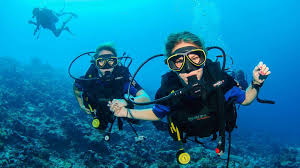
Five Italian nationals died in a tragic scuba diving accident in the Maldives after reportedly becoming trapped while exploring underwater caves near Vaavu Atoll, one of the country’s most popular diving regions.
According to authorities, the divers disappeared after entering the water on Thursday morning and failing to return to the surface.
RECOMMENDED STORIES
The accident occurred roughly 100 kilometers south of the Maldivian capital, Malé.
Officials believe the group was attempting to explore underwater cave systems at depths of approximately 50 meters when the incident occurred.
The Maldives military later confirmed that one body had been located inside a cave roughly 60 meters underwater, while the remaining four victims were also believed to be trapped in the same area.
Recovery efforts have proven extremely difficult because of dangerous underwater conditions, strong currents, and the depth of the cave system.
Authorities described the operation as “very high risk” and deployed divers equipped with specialized technical gear.
The tragedy is believed to be one of the deadliest single scuba diving accidents in the Maldives in recent years.
Who were the victims?
The victims were Italian citizens visiting the Maldives.
According to the University of Genoa, those who died included a marine biology professor, her daughter, and two young researchers connected to the university community.
The identities of all five victims were not immediately fully disclosed publicly in initial reports.
The university later issued a statement expressing “deepest condolences” following confirmation of the deaths.
The involvement of marine researchers and scientists added an especially emotional dimension to the tragedy, particularly within academic and scientific circles in Italy.
Italian authorities and diplomats have been coordinating with Maldivian officials regarding recovery efforts and assistance for the victims’ families.
Where exactly did the accident occur?
The accident happened near Vaavu Atoll, a region in the Maldives famous internationally for scuba diving and marine biodiversity.
Vaavu Atoll is known for coral reefs, underwater caves, strong currents, and abundant marine life including sharks, rays, and tropical fish.
The area attracts both recreational and experienced technical divers from around the world.
However, underwater cave exploration at significant depths is considered extremely dangerous even for highly trained divers.
Authorities indicated the divers entered cave systems at approximately 50 meters below the surface.
At such depths, underwater conditions become much more hazardous due to pressure, reduced visibility, nitrogen absorption risks, and difficult navigation.
The Maldives military later said one body had been discovered at approximately 60 meters underwater.
Why is cave diving considered so dangerous?
Cave diving is regarded as one of the most dangerous forms of scuba diving.
Unlike open water diving, underwater caves create enclosed environments where divers cannot immediately ascend directly to the surface during emergencies.
This increases risks significantly.
Technical cave diving often involves narrow passages, darkness, limited visibility, disorientation, strong currents, and complex navigation.
Divers may also face equipment malfunctions, oxygen management problems, or panic situations in confined spaces.
At depths of 50 to 60 meters, risks become even greater due to pressure related complications and limited bottom time.
Divers operating at such depths usually require specialized technical training, decompression planning, and advanced equipment.
Even experienced divers can become trapped or disoriented underwater.
Emergency rescue operations inside deep cave systems are also extremely difficult and dangerous for recovery teams.
This is why authorities described the Maldives recovery mission as a “very high risk” operation.
Did weather conditions contribute to the accident?
Police indicated that weather conditions in the area were rough at the time of the incident.
A yellow warning had reportedly been issued for fishermen and passenger boats because of unfavorable sea conditions.
Strong currents and rough water can significantly increase risks during diving operations.
In underwater cave systems, changing currents can rapidly alter visibility and navigation conditions.
Divers may become separated, disoriented, or unable to safely exit confined spaces.
Poor surface conditions can also complicate rescue efforts by making boat operations and diver deployment more difficult.
Although authorities have not officially confirmed the exact cause of the accident, weather and sea conditions are expected to form part of the investigation.
How was the emergency discovered?
Local media reports indicated the divers entered the water Thursday morning from a diving vessel.
The crew later reported the group missing after they failed to return to the surface within the expected timeframe.
Search and rescue teams were then deployed to locate the missing divers.
Because cave diving operations can involve planned decompression stops and extended underwater times, crews sometimes face difficulties determining precisely when a situation becomes an emergency.
Once concerns escalated, Maldivian authorities launched underwater search operations.
The military later confirmed locating one body within the cave system.
Efforts to recover the remaining victims remain technically challenging due to the dangerous underwater environment.
How common are diving accidents in the Maldives?
The Maldives is considered one of the world’s premier diving destinations and hosts thousands of divers annually.
Serious diving accidents are relatively uncommon given the scale of tourism activity.
However, fatalities do occur periodically, particularly involving strong currents, medical emergencies, equipment problems, or risky diving conditions.
The Maldives contains complex reef systems, channels, caves, and deep drop offs that can become dangerous even for experienced divers.
Technical diving activities, including cave exploration and deep dives, carry particularly elevated risks.
Recent years have seen several high profile incidents.
In late 2025, an experienced British diver died in a scuba diving accident near Ellaidhoo resort.
Her husband reportedly died days later after falling ill.
In 2024, a Japanese lawmaker died while snorkeling in Lhaviyani Atoll.
Although such incidents remain relatively rare, they highlight the inherent dangers associated with ocean tourism and underwater exploration.
Why is the Maldives so popular for diving tourism?
Maldives is internationally famous for its coral reefs, clear waters, tropical marine ecosystems, and luxury island resorts.
The country consists of hundreds of coral islands and atolls spread across the Indian Ocean.
Its warm waters and exceptional marine biodiversity attract divers, snorkelers, honeymooners, and eco tourists from around the world.
The Maldives is especially known for encounters with whale sharks, manta rays, reef sharks, turtles, and colorful coral formations.
Many dive sites are considered among the best globally.
Tourism forms the backbone of the Maldivian economy, making diving and marine activities economically important.
However, the popularity of adventure tourism also means authorities must regularly manage maritime safety challenges.
How difficult are underwater recovery operations at these depths?
Recovery operations at depths of 50 to 60 meters are highly dangerous and technically demanding.
At such depths, ordinary recreational scuba procedures are insufficient.
Specialized technical divers often require mixed gas systems, decompression planning, and advanced equipment.
Underwater cave recoveries are even more complex because divers must navigate confined spaces with limited visibility while carrying heavy equipment.
Strong currents, entanglement hazards, and psychological stress add further risks.
Operations can take many hours and often involve multiple decompression stops during ascent.
Authorities in the Maldives stated specialized divers were deployed specifically because of the difficult underwater environment.
Such missions are often slow because rescue teams must prioritize diver safety while operating under dangerous conditions.
What are the main risks of deep diving?
Deep diving exposes the human body to several major dangers.
One significant risk is nitrogen narcosis, which can impair judgment and coordination underwater.
Another is decompression sickness, commonly called “the bends,” caused by nitrogen bubbles forming in the bloodstream during ascent.
Oxygen toxicity also becomes a concern at extreme depths.
Additionally, deeper dives consume breathing gas more rapidly, reducing available emergency margins.
Visibility often decreases with depth, and emergency ascents become more complicated.
In cave environments, these dangers combine with navigation difficulties and restricted escape routes.
Because of these factors, technical deep cave diving is considered one of the most advanced and hazardous forms of underwater activity.
Could this tragedy affect tourism in the Maldives?
The Maldives tourism industry will likely continue operating normally despite the tragedy.
Diving accidents, while serious, remain relatively rare compared to the overall scale of tourism activity in the country.
However, high profile incidents sometimes lead authorities and dive operators to review safety procedures, weather protocols, and technical diving regulations.
The tragedy may also prompt discussions about risk management involving deep cave exploration and advanced diving excursions.
Tourism authorities generally seek to reassure visitors while emphasizing the importance of certified operators and safety standards.
The Maldives remains one of the world’s most sought after marine tourism destinations despite occasional accidents.
What happens next?
Maldivian authorities are expected to continue recovery operations and investigate the circumstances surrounding the accident.
Italian diplomats and officials will likely coordinate closely with Maldivian authorities regarding identification procedures, repatriation, and support for relatives.
Investigators will probably examine weather conditions, dive planning, equipment factors, certification levels, and operational procedures.
The tragedy has already deeply affected academic circles connected to the victims and has generated significant attention in Italy.
For now, the focus remains on recovering the remaining bodies and understanding exactly what happened during the fatal dive.
The incident serves as another reminder that while scuba diving offers extraordinary experiences, deep technical cave exploration remains one of the most dangerous activities in marine adventure tourism.
By Faig Mahmudov


Similar news