What is behind Latvian PM resignation?


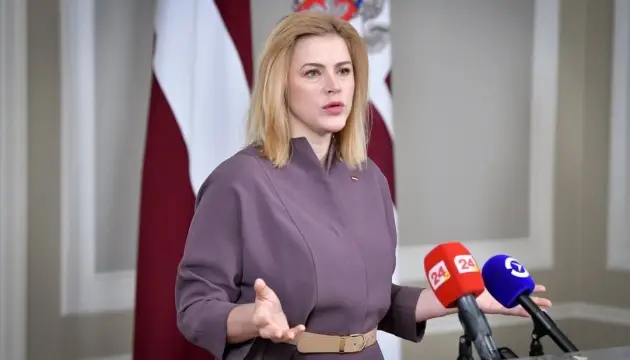
Latvia has entered a new period of political uncertainty after Prime Minister Evika Siliņa announced her resignation following the collapse of the country’s three party coalition government.
The political crisis emerged only months before parliamentary elections and comes amid growing security concerns in the Baltic region, including recent drone incidents linked to critical infrastructure.
RECOMMENDED STORIES
The resignation has raised questions about the future of Latvia’s domestic politics, the stability of the governing coalition, the country’s security policy, and the broader implications for the European Union and NATO’s eastern flank.
Here is a detailed FAQ explainer on what happened, why the coalition collapsed, and what may happen next.
Who is Evika Siliņa?
Evika Siliņa is a Latvian politician from the New Unity party who became prime minister in September 2023. She succeeded former Prime Minister Krišjānis Kariņš and led a coalition government composed of New Unity, the Progressive party, and the Union of Greens and Farmers.
Siliņa built her political profile around issues such as national security, European integration, social policy reforms, and economic modernization. During her time in office, Latvia remained one of the European Union’s strongest supporters of Ukraine following Russia’s invasion.
Her government also focused heavily on defense spending, energy security, and reducing dependence on Russian resources.
However, internal coalition disagreements increasingly weakened the cabinet during 2025 and 2026.
What caused the Latvian government to collapse?
The immediate trigger for the collapse was the withdrawal of support by the Progressive party from the governing coalition.
The Progressives announced that the government led by Siliņa had lost its ability to function effectively and called on President Edgars Rinkēvičs to begin consultations on forming a new government.
According to the party, the coalition no longer had the political cohesion needed to govern. The Progressives argued that either the prime minister had to resign or the government had to face a parliamentary confidence vote.
Once the Progressives withdrew their support, the coalition effectively lost its parliamentary majority.
The Union of Greens and Farmers also stated that the withdrawal of support had effectively ended the government’s mandate and indicated that a new administration would better serve the country.
Facing growing political isolation, Siliņa announced her resignation.
What were the deeper tensions inside the coalition?
The coalition had reportedly experienced tensions for months over policy priorities, leadership style, budget decisions, and personnel disputes.
One major point of conflict involved defense and security management.
Relations between New Unity and the Progressives sharply deteriorated after Siliņa dismissed Defense Minister Andris Sprūds, who belonged to the Progressive party.
The dismissal became politically explosive because it occurred during heightened regional security tensions.
The Progressives interpreted the decision as both a political attack and evidence that coalition cooperation had broken down.
At the same time, disagreements reportedly existed over economic policy, social spending, taxation, and the pace of reforms.
Coalition governments in Latvia often depend on delicate compromises between ideologically different parties. Once trust erodes between partners, governments can become unstable very quickly.
What role did the drone incidents play in the crisis?
The political crisis intensified after two foreign unmanned aerial vehicles reportedly crashed in eastern Latvia near an oil storage facility, damaging an empty oil tank.
Although the full details of the incidents have not been publicly clarified, the events heightened concerns about regional security vulnerabilities and infrastructure protection.
Latvia shares a border with Russia and Belarus and has been increasingly focused on hybrid threats, cyber attacks, espionage, and drone related security risks since the start of the war in Ukraine.
Critics questioned whether the government and defense ministry had responded adequately to the incidents.
The dismissal of Defense Minister Sprūds shortly afterward created the impression of political blame shifting within the coalition.
Because Latvia views national defense as a top strategic priority, any perceived weakness in security management can quickly become politically damaging.
Why are drone incidents such a sensitive issue in Latvia?
Latvia is one of NATO’s frontline states bordering Russia.
Since Russia’s full scale invasion of Ukraine in 2022, Baltic countries including Latvia, Lithuania, and Estonia have significantly increased defense spending and tightened security around strategic infrastructure.
Drone incidents are especially sensitive because they may indicate weaknesses in airspace monitoring, border security, or infrastructure protection.
In recent years, European countries have become increasingly concerned about:
• unidentified drones near military bases
• attacks on energy infrastructure
• hybrid warfare tactics
• sabotage operations
• cyber and surveillance activities
The Baltic region has been considered particularly vulnerable because of its geographic proximity to Russia.
As a result, even relatively small drone incidents can trigger major political and security debates.
How does Latvia’s political system work?
Latvia is a parliamentary republic.
The prime minister leads the government but depends on parliamentary support to remain in office.
The Latvian parliament, known as the Saeima, consists of 100 members elected through proportional representation.
Coalition governments are common because no single party usually wins an outright majority.
This means governments often rely on alliances between multiple parties with different political priorities.
Such coalitions can be fragile, especially when disagreements emerge over key ministries, budgets, or strategic issues.
If coalition partners withdraw support, the government can lose its parliamentary majority and collapse.
What happens after the prime minister resigns?
Following the resignation, President Edgars Rinkēvičs will hold consultations with parliamentary factions to determine whether a new coalition can be formed.
The president plays an important constitutional role during government formation crises.
Typically, the president invites a political figure capable of building parliamentary support to attempt forming a new cabinet.
Several outcomes are possible:
• a reconfigured coalition led by another prime minister
• a minority government supported informally by other parties
• a temporary caretaker administration
• early parliamentary elections
However, because regular parliamentary elections are reportedly only months away, politicians may try to avoid a lengthy political confrontation.
Could Latvia hold early elections?
It is possible, but not guaranteed.
Latvia may prefer to establish a temporary functioning government until scheduled elections take place.
Holding early elections can create political uncertainty and administrative disruption, especially during periods of heightened regional security concerns.
If parties believe they can maintain stability until the scheduled vote, they may avoid pushing for snap elections.
Still, if coalition negotiations fail completely, early elections could become unavoidable.
Who could form the next government?
Several political scenarios are possible.
New Unity may attempt to remain in power under a different prime minister.
Alternatively, opposition forces could try to build a new coalition arrangement.
The final outcome will depend on:
• parliamentary arithmetic
• negotiations between parties
• ideological compatibility
• public pressure
• economic and security priorities
Because Latvia’s parliament is fragmented, coalition building is often complicated and time consuming.
The president’s consultations will therefore be critical.
What is the Progressive party?
The Progressive party is a center left political force in Latvia.
The party generally supports:
• social democratic policies
• stronger welfare protections
• progressive taxation
• environmental policies
• European integration
• support for Ukraine
The Progressives became an important coalition partner for Siliņa’s government but increasingly clashed with New Unity over leadership and policy direction.
Their withdrawal effectively destroyed the coalition’s majority.
What is New Unity?
New Unity is a pro European centrist political alliance that has played a major role in Latvian politics for years.
The party strongly supports:
• NATO cooperation
• European Union integration
• fiscal discipline
• defense spending increases
• strong support for Ukraine
New Unity has often positioned itself as a stability oriented governing force.
However, prolonged coalition tensions weakened its political standing.
What is the Union of Greens and Farmers?
Union of Greens and Farmers is a political alliance representing agrarian, regional, and centrist interests.
The alliance has historically been influential in Latvian politics and often acts as a coalition kingmaker.
Although it initially participated in Siliņa’s coalition, it later indicated that the government had effectively collapsed once the Progressives withdrew support.
Its future role in coalition negotiations may become significant again.
How stable has Latvian politics been historically?
Latvia has experienced relatively frequent government changes since regaining independence from the Soviet Union in 1991.
Coalition politics and fragmented parliamentary representation often produce short lived administrations.
However, despite cabinet changes, Latvia’s broader strategic orientation has remained relatively stable.
Successive governments have consistently supported:
• membership in NATO
• European Union integration
• market oriented reforms
• close cooperation with Western allies
Therefore, while governments may change frequently, core foreign policy directions usually remain consistent.
Will the crisis affect Latvia’s support for Ukraine?
Most analysts expect Latvia’s support for Ukraine to continue regardless of who forms the next government.
Support for Ukraine enjoys broad political consensus across most mainstream Latvian parties.
Latvia has been among the strongest supporters of Kyiv within both NATO and the European Union.
The country has provided military aid, humanitarian support, diplomatic backing, and sanctions support against Russia.
Although domestic political disputes may affect governance, they are unlikely to fundamentally alter Latvia’s geopolitical alignment.
Could Russia benefit from Latvia’s political instability?
Western security analysts often warn that political instability in frontline NATO states can create opportunities for external influence operations, disinformation campaigns, or strategic pressure.
However, Latvia’s institutions remain functional and democratic.
The resignation itself does not indicate a collapse of the state or constitutional order.
Still, periods of political uncertainty may complicate decision making related to defense, budgets, or emergency preparedness.
Because Latvia occupies a strategically important position in the Baltic region, political developments there are closely watched by NATO allies.
What is Latvia’s strategic importance?
Latvia is one of the three Baltic states and a member of both NATO and the European Union.
Its geographic position makes it strategically significant.
Latvia borders Russia and Belarus and lies near key Baltic Sea routes.
Since the war in Ukraine began, the Baltic region has become one of Europe’s most security sensitive areas.
NATO has strengthened its military presence in Latvia as part of broader deterrence efforts aimed at preventing regional escalation.
The country also plays an important role in regional energy security, logistics, and defense cooperation.
How have Baltic states reacted to regional security threats?
The Baltic countries have significantly expanded defense and security measures in recent years.
These steps include:
• increasing military spending
• strengthening border infrastructure
• purchasing advanced air defense systems
• expanding NATO cooperation
• improving cyber defense capabilities
• tightening surveillance of critical infrastructure
Security concerns intensified after sabotage incidents and suspicious drone activity were reported in various parts of Europe.
Governments across the region increasingly view hybrid threats as long term strategic challenges.
What are hybrid threats?
Hybrid threats refer to tactics that combine conventional and unconventional methods to destabilize a country without full scale military confrontation.
Examples include:
• cyber attacks
• drone incursions
• sabotage operations
• disinformation campaigns
• energy disruptions
• espionage
• political interference
European countries have become increasingly concerned about such threats in recent years.
Baltic states are considered especially vulnerable because of their geographic proximity to Russia.
How could the government collapse affect Latvia’s economy?
Political instability can create uncertainty for investors and financial markets, although Latvia’s economy is unlikely to face immediate collapse because of the resignation alone.
Potential concerns include:
• delays in budget decisions
• slower policy implementation
• postponed reforms
• uncertainty regarding economic strategy
However, Latvia remains integrated into the European Union economic system and eurozone financial structures, which provide broader stability mechanisms.
If coalition negotiations proceed smoothly, economic disruption may remain limited.
Could defense policy be affected?
Defense policy continuity is expected because broad political consensus exists around national security priorities.
Latvia has committed to maintaining strong defense spending and close NATO cooperation.
Nevertheless, temporary political instability could complicate:
• procurement decisions
• ministerial leadership transitions
• defense administration coordination
• legislative approvals
Given the regional security environment, Latvian political leaders are likely to prioritize maintaining continuity in defense policy.
What role does President Edgars Rinkēvičs play now?
Edgars Rinkēvičs now becomes a central figure in managing the transition.
As president, he is responsible for facilitating consultations with parliamentary parties and helping identify a viable governing arrangement.
Rinkēvičs is an experienced politician and former foreign minister known internationally for his strong support of Ukraine and NATO cooperation.
His handling of the negotiations may significantly influence whether Latvia achieves a quick political stabilization.
Could the same coalition return in another form?
It is possible.
Sometimes coalition governments collapse formally but later re emerge through renegotiated agreements, leadership changes, or reshuffled ministerial portfolios.
If parties conclude that cooperation remains preferable to elections, they may attempt to rebuild the alliance under revised terms.
However, the personal and political tensions between New Unity and the Progressives appear substantial.
Whether trust can be restored remains uncertain.
Why are coalition governments often unstable?
Coalition governments require constant compromise.
Different parties may disagree on:
• taxes
• social policy
• defense spending
• leadership decisions
• cabinet appointments
• economic priorities
When tensions intensify, smaller parties may withdraw support if they believe remaining in government damages their political standing.
In parliamentary systems with proportional representation, coalition breakdowns are relatively common.
How unusual is this situation in Europe?
Government crises are not uncommon in European parliamentary democracies.
Countries such as Italy, Belgium, Bulgaria, the Netherlands, and others have also experienced coalition collapses in recent years.
Parliamentary systems often allow governments to change without constitutional crises or major institutional breakdowns.
What matters most is whether democratic institutions continue functioning normally.
So far, Latvia’s political transition appears to be unfolding within constitutional procedures.
What should observers watch next?
Several developments will determine Latvia’s political future in the coming weeks:
• consultations between the president and parliamentary parties
• whether New Unity can rebuild support
• potential alternative coalition negotiations
• discussions about early elections
• public reaction to the political crisis
• continued investigation into the drone incidents
Security developments may also influence political negotiations because defense concerns remain highly sensitive in Latvia.
What does this mean for Latvia overall?
The resignation of Prime Minister Evika Siliņa marks an important moment in Latvian politics but does not necessarily indicate a broader democratic breakdown.
The country continues to operate within constitutional and parliamentary frameworks.
However, the crisis highlights several broader realities facing Europe today:
• increasing political fragmentation
• rising security pressures
• challenges of coalition governance
• growing importance of infrastructure protection
• regional tensions linked to the war in Ukraine
Latvia now faces the challenge of restoring political stability while managing a demanding regional security environment.
The coming negotiations will determine whether the country can quickly form a stable government or whether deeper political uncertainty lies ahead.
By Faig Mahmudov


Similar news