What will happen if the United States leaves NATO?



Editor’s note: Moses Becker is a special political commentator for News.Az, a PhD in political science, and an expert on interethnic and interreligious relations. The article reflects the author’s personal views and does not necessarily represent the position of News.Az.
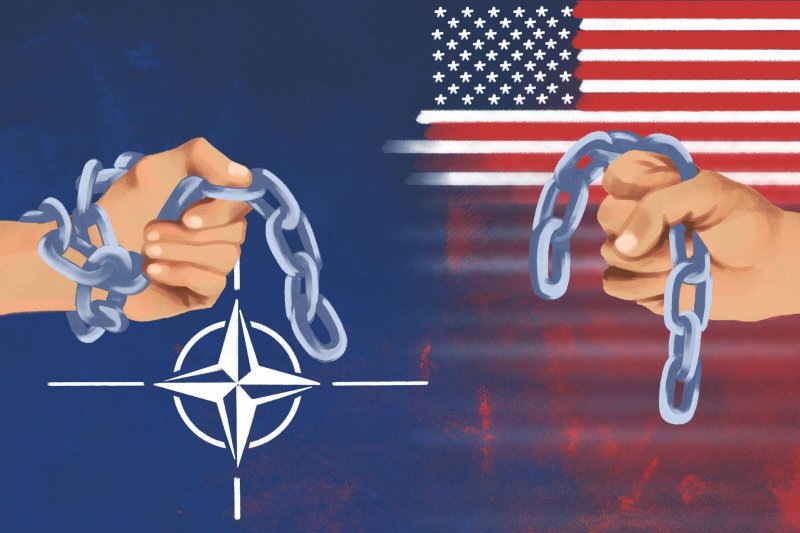
The year 2025 has been marked by a cascade of dramatic global developments. The conflict in Ukraine is nearing its end, Hezbollah has been defeated in Lebanon, Hamas has suffered defeat in Gaza, and Iran has lost much of its Shiite sphere of influence. Against this backdrop, an unexpected announcement has sent shockwaves through the international community: the United States has decided to leave NATO. The country that stood at the origins of the alliance and long served as its central pillar has declared that it can no longer shoulder responsibility for the collective security of its members.
On December 10, 2025, a bill proposing the United States’ withdrawal from NATO was introduced in the U.S. Congress. Its author, Congressman Thomas Massie, described the alliance as a “relic of the Cold War,” noting that it was established to counter the Soviet Union, which collapsed more than three decades ago. According to Massie, NATO’s stated objectives “no longer correspond to the national security interests of the United States.”
Massie’s initiative did not emerge in isolation but reflects a broader shift within the Republican establishment. At the same time, NATO officials acknowledge that the alliance has no contingency plan for a U.S. withdrawal. While such a process would not unfold overnight, few doubt that it is now a realistic prospect. In today’s geopolitical environment, no country, even the most powerful, can indefinitely assume responsibility for the security of states located thousands of miles beyond its borders.
As Massie noted, “U.S. participation in the alliance has cost taxpayers trillions of dollars and continues to expose the United States to the risk of involvement in foreign wars. Our Constitution does not allow for permanent international conflicts, as the Founding Fathers explicitly warned us. America should not be the guarantor of security for the entire world, especially when wealthy countries refuse to pay for their own defense.”
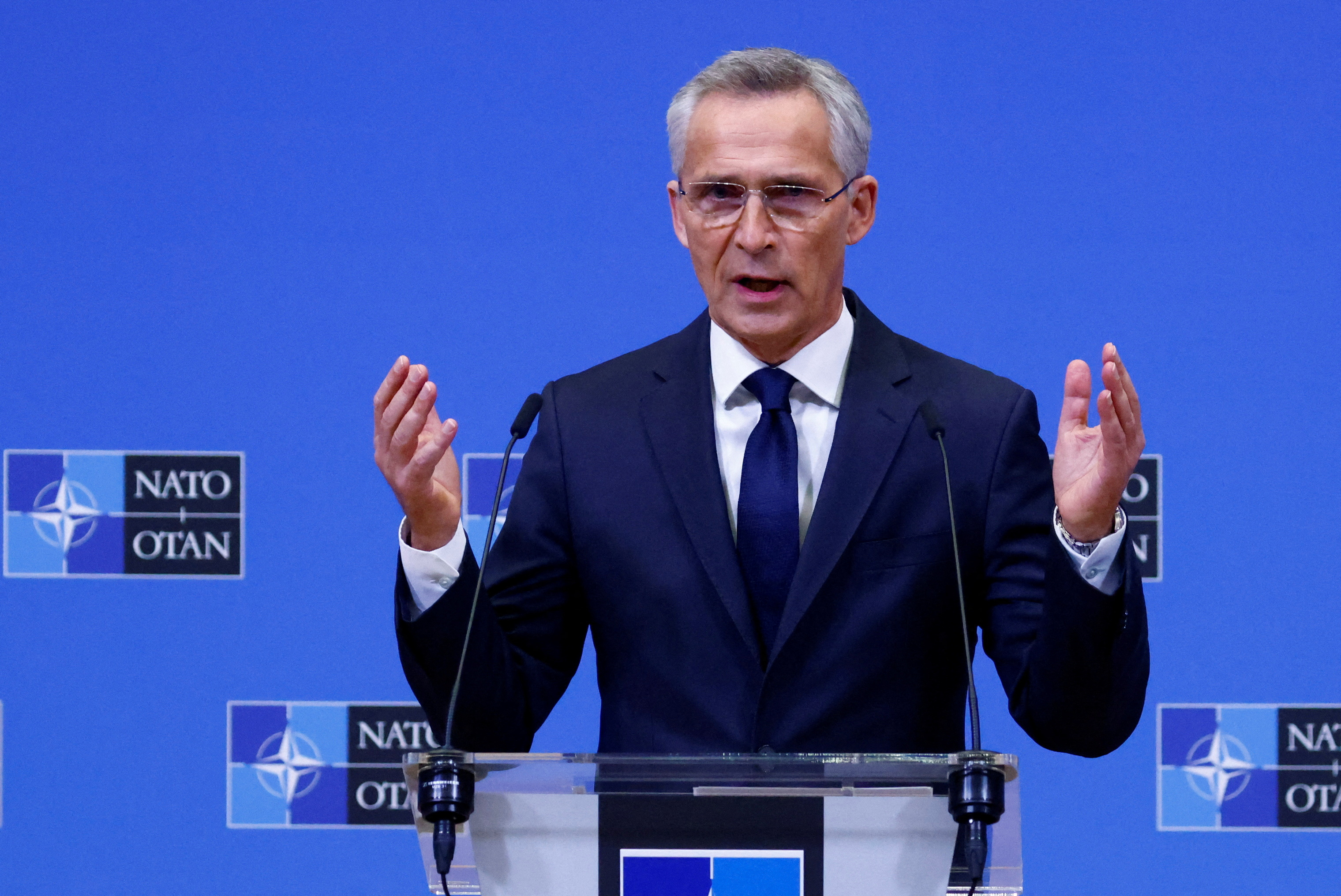
Photo: NATO's former Secretary General Jens Stoltenberg
A month earlier, former NATO Secretary General Jens Stoltenberg said in an interview with the British newspaper The Sunday Times that he had feared a U.S. withdrawal from the alliance as early as Donald Trump’s first presidential term. Recalling the NATO summit in 2018, Stoltenberg said the 45th president had effectively signaled that he was considering leaving the bloc. “I was concerned that I would become the secretary general who would witness the end of NATO,” he said. According to Stoltenberg, that outcome was averted at the time after European members of the alliance agreed to increase investment in their own defense.
In theory, this shift was inevitable. For years, political leaders avoided confronting the economic strain created by the obligation to guarantee the security of an increasingly fragile alliance. The Democratic Party and its leadership continued expansive spending policies, driving up the national debt, until it became clear that monetary expansion alone could no longer sustain U.S. global influence, which was gradually eroding in favor of China and Southeast Asian countries.
At the same time, the potential actions of President Donald Trump are fully consistent with the alliance’s founding documents. Article 13 of the NATO Treaty, signed in Washington on April 4, 1949, allows any member state to withdraw from the alliance one year after formally notifying the U.S. government once the treaty has been in force for 20 years. The treaty does not outline a specific procedure for a U.S. withdrawal.
Source: Reuters
In an effort to prevent a potential U.S. exit from the North Atlantic alliance during President Joe Biden’s administration, Congress in 2023 passed legislation barring the president from unilaterally withdrawing from NATO without Senate approval or the passage of a specific law by Congress. One of the bill’s authors was Republican Senator Marco Rubio, now an ally of Donald Trump and serving as U.S. secretary of state. The other author, Democratic Senator Tim Kaine, said at the time that the move reaffirmed U.S. support for “this most important alliance, which is the foundation of national security,” while sending “a powerful signal to authoritarian regimes around the world that the free world remains united.” Rubio echoed that view, arguing the law would “ensure the protection of national interests and the security of the country’s democratic allies.”
Since then, however, the global landscape has shifted, with the focus of international competition moving from human rights to access to resources. The broader system of international security is now undergoing a fundamental transformation. Despite the restrictions imposed by Congress, President Donald Trump could attempt to circumvent the Biden-era ban by invoking presidential authority over foreign policy. Precedents exist: in 2020, Trump withdrew the United States from the Open Skies Treaty despite congressional demands that the decision be coordinated with lawmakers.
This time, the legal and political stakes are higher. If the 47th president chooses to pursue U.S. withdrawal from NATO, the move would likely be challenged before the U.S. Supreme Court. By contrast, a withdrawal approved directly by Congress would face no legal barriers.

Source: CNN
(If you possess specialized knowledge and wish to contribute, please reach out to us at opinions@news.az).


Similar news