Why a school in Chernihiv became a target in Russia’s drone campaign


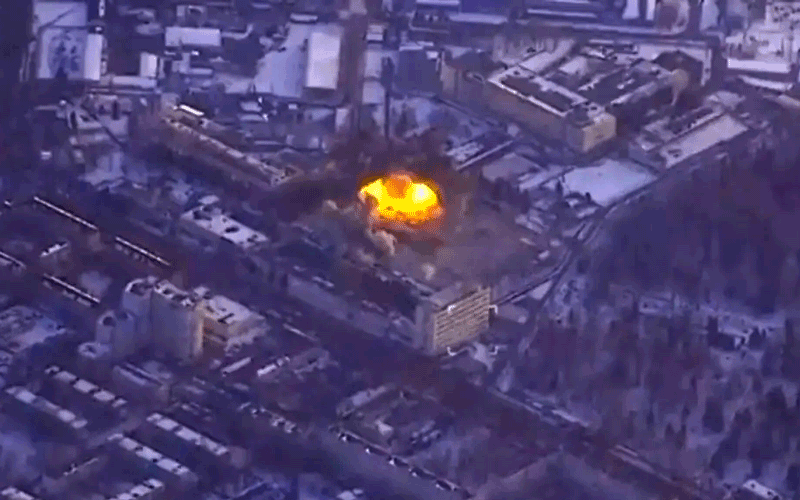
Russian drones struck a school in Ukraine’s Chernihiv region in the latest escalation involving unmanned aerial attacks on civilian infrastructure.
The strike caused significant damage to the building, raising immediate concerns about the safety of educational facilities in areas close to active frontlines and contested airspace.
RECOMMENDED STORIES
Local authorities reported that the attack occurred during a period of heightened drone activity, with multiple aerial threats detected across northern Ukraine. Emergency services were deployed to the scene to assess structural damage, extinguish fires, and ensure that no civilians remained trapped.
The incident underscores how the use of drones has expanded the scope of the conflict, bringing danger to locations that were once considered relatively safe from direct military action.
Why is the targeting of a school particularly significant?
Strikes on schools carry both humanitarian and symbolic weight. Educational institutions are not only civilian facilities but also represent stability, continuity, and the future of a community.
When a school is hit, the impact extends far beyond physical damage. It disrupts education, displaces students, and creates psychological trauma for families. It also signals that civilian infrastructure is increasingly vulnerable, regardless of its non military function.
Such incidents often draw international attention because they raise questions about compliance with the laws of armed conflict, which require distinction between military and civilian targets.
How have drones changed the nature of the conflict?
Drones have become a central tool in modern warfare, and their widespread use in Ukraine has transformed how attacks are conducted.
Unlike traditional airstrikes, drones are relatively low cost, highly maneuverable, and capable of reaching deep into territory without risking pilots. They can be deployed in large numbers, overwhelming air defense systems and increasing the likelihood that some will reach their targets.
This has made it easier to carry out strikes against infrastructure, including energy facilities, transport networks, and now educational buildings. The unpredictability of drone attacks also increases psychological pressure on civilian populations.
Why is the Chernihiv region vulnerable?
The Chernihiv region is located in northern Ukraine, relatively close to the border with Russia and Belarus. Its geographic position makes it susceptible to aerial threats, including drones launched from nearby territories.
Although not always at the center of frontline fighting, the region has experienced periodic attacks due to its strategic location. Infrastructure in such areas often faces risks because it can be reached quickly by aerial systems.
This proximity reduces warning times and increases the challenge for air defense units trying to intercept incoming threats.
Were there casualties in the attack?
Initial reports indicate that the strike primarily caused structural damage to the school building. Authorities have focused on ensuring that no casualties occurred, although the situation is often fluid in the immediate aftermath of such incidents.
Even in cases where there are no direct injuries, the consequences remain severe. Damage to infrastructure disrupts daily life, and the psychological impact on students, teachers, and families can be long lasting.
How does this fit into broader patterns of attacks?
The strike on a school is part of a broader pattern in which drones are used to target a wide range of infrastructure across Ukraine.
Energy facilities, residential buildings, and public institutions have all been affected in recent months. This pattern suggests a strategy aimed at weakening civilian resilience and creating pressure beyond the battlefield.
By expanding the range of targets, drone warfare blurs the line between military and civilian spaces, making it harder to maintain clear boundaries in conflict zones.
Why are education facilities increasingly at risk?
Education facilities are often located within communities and lack the fortification of military sites. This makes them more vulnerable to indirect or unintended strikes.
In addition, schools are sometimes used for logistical or emergency purposes during wartime, which can complicate their status and increase their exposure to risk.
Even when not directly targeted, their location in populated areas means they can be damaged by nearby strikes or falling debris from intercepted drones.
How are Ukrainian authorities responding?
Ukrainian authorities have been working to strengthen air defense systems and improve early warning mechanisms. Efforts include deploying additional interception systems and enhancing coordination between military and emergency services.
There is also a focus on protecting critical infrastructure and adapting civilian spaces to wartime conditions. This includes reinforcing buildings, conducting evacuation drills, and developing contingency plans for remote education.
However, the scale and frequency of drone attacks make complete protection difficult.
What are the broader humanitarian implications?
The humanitarian impact of such strikes is significant. Damage to schools disrupts education, forcing students to switch to remote learning or relocate.
This can exacerbate inequalities, as not all students have equal access to digital resources. It also places additional stress on families and communities already dealing with the pressures of conflict.
Over time, repeated disruptions can affect an entire generation’s educational development and future opportunities.
Why do such attacks draw international concern?
Attacks on civilian infrastructure, especially schools, often attract strong reactions from the international community. They raise concerns about adherence to international humanitarian law and the protection of civilians during conflict.
Such incidents can influence diplomatic discussions, shape public opinion, and potentially lead to calls for accountability.
They also highlight the broader human cost of the conflict, beyond military engagements.
Could this change the course of the conflict?
While a single strike is unlikely to change the overall course of the war, it contributes to the cumulative impact of ongoing hostilities.
Each incident adds to the pressure on civilian systems, economic stability, and public morale. Over time, these factors can influence strategic decisions and negotiations.
The continued use of drones in this way suggests that such incidents may become more frequent rather than less.
What does this mean for the future of warfare?
The attack reflects a broader trend in modern warfare, where technology enables strikes that are more dispersed, less predictable, and often closer to civilian life.
Drones lower the barrier to conducting aerial attacks, making them accessible tools for sustained operations. This shifts the nature of conflict from concentrated battlefields to widespread zones of risk.
As this trend continues, protecting civilian infrastructure will become an increasingly complex challenge.
Conclusion
The drone strike on a school in the Chernihiv region highlights the evolving nature of the conflict in Ukraine. It demonstrates how modern warfare increasingly affects civilian spaces, bringing danger to everyday environments.
Beyond the immediate damage, the incident underscores deeper issues about the use of technology in war, the protection of civilians, and the long term consequences for communities.
As the conflict continues, such events serve as a reminder that the impact of war extends far beyond the frontlines, shaping the lives of those who are not directly involved in the fighting.
By Faig Mahmudov


Similar news