Why China is closely watching the tactical moves in the Middle East


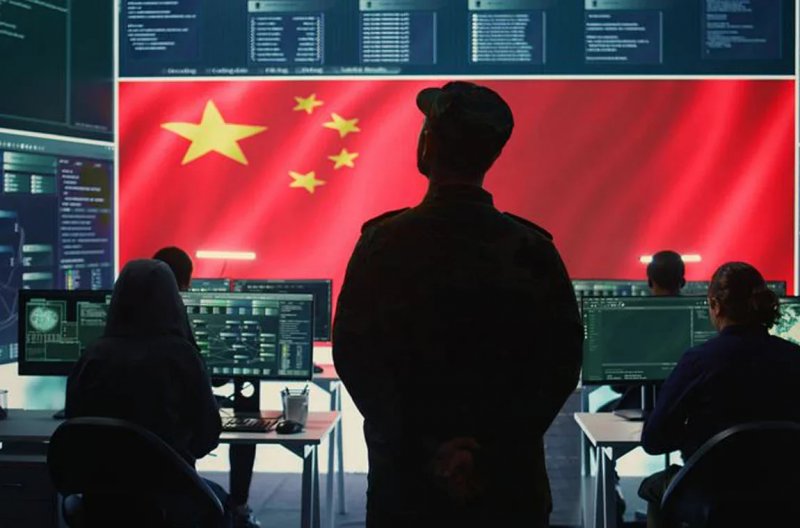
American wars in the Persian Gulf have consistently shaped the Chinese People’s Liberation Army’s (PLA’s) understanding of modern warfare and doctrinal reform.
The Gulf War in 1990-91 exposed Beijing to the revolution in military affairs, revealing the obsolescence of its reverse-engineered Soviet arsenal in high-technology conflict, News.Az reports, citing Orf online.
A decade later, the Iraq War drove the PLA to a decisive shift towards joint warfare and joint operational commands, which engineered the theatre command reforms of 2015-16, restructuring China’s higher defence echelons. The ongoing US-Israel-Iran war is, similarly, being closely observed by Beijing, generating important doctrinal takeaways to steadily inform adjustments in force structure, operational concepts and broader military outlook.
RECOMMENDED STORIES
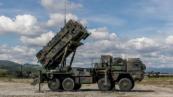
The first focus is on saturation warfare as a central operational theme. The widespread use of low-cost, slow-moving Shahed drones has demonstrated how inexpensive systems can degrade high-value air-defence assets, such as THAAD and MIM-104 Patriot. This reinforces Beijing’s belief that mass can offset technological superiority and that drones can be used as ammunition.
Even layered defences, namely, Iron Dome and Iron Beam, face saturation limits, enabling repeated penetration by missiles and drones. The integration of cluster munitions into missile payloads further compounds the challenge, forcing defenders to expend multi-million-dollar interceptors against cheaper threats, thereby eroding efficiency and resilience in air defence systems. The PLA has observed the exhaustion of American munitions and the lack of industrial depth to replenish them quickly as a serious weakness. Notably, nearly 80 RIM-161 Standard Missile 3 interceptors were expended in just 12 days, roughly a year’s worth of production.And if Iran, with its relatively modest production infrastructure, has put a strain on US interceptor inventories, China’s large industrial base and surge capacity, combined with saturation tactics, would be even more brutal for the adversary. The implication is clear – production sovereignty, end-to-end supply chain control and surge manufacturing capability are key to shaping the trajectory and sustainability of any confrontation.
A second theme in this discourse is the vulnerability of maritime chokepoints for China and the global economy. The Chinese discourse terms this “strategic suffocation”, the risk that disruption of energy, trade and sea lanes could destabilise its import-dependent economy. Two chokepoints are central to this – the Strait of Hormuz and the Strait of Malacca. Although Beijing can diversify energy import sources and trading routes and expand overland dependence on Russia and Central Asia through pipelines, the persistent vulnerability of maritime chokepoints demands a durable strategic response.
This requires a doctrinal shift in the PLA Navy from an excessive emphasis on near-seas defence to credible far-seas protection. Given the inherently fluid nature of maritime control, aptly described by Zhang Wenmu as “drinking through a straw held by others”, China must prioritise the expansion of its naval power-projection capabilities. In this context, strengthening offensive naval assets, particularly aircraft carriers and nuclear submarines, and enhancing capabilities in Djibouti and Gwadar (Pakistan) for naval deep-sea-basing, are essential to secure long-term energy flows and sustain economic resilience.
Intelligence constitutes the third major theme in the Chinese discourse. The decisive role of precise, actionable intelligence in targeting high-value leadership has become crucial. Beijing believes deep internal infiltration within the Iranian leadership was a critical enabler. Accordingly, the PLA Daily warned that internal vulnerabilities and sabotage pose critical threats. This provides a further push to anti-corruption and political ‘absolute loyalty’ campaigns in China, especially in the PLA.
Technical intelligence, particularly space-based intelligence capabilities, has also emerged as a crucial enabler. Chinese systems such as Jilin-1 and BeiDou-3 have provided persistent imagery, secure connectivity, and real-time data transfer for use in combat operations. The high-frequency, multi-spectral intelligence availability is steadily eroding the traditional fog of war, giving rise to a transparent “glass” battlefield. Beijing has reportedly used operational data from the Iranian theatre to code its BeiDou-3 for enhancing its capacity to detect and classify advanced platforms such as the F-35 and strategic bombers.
These developments compress decision cycles and shorten the kill chain, enabling precise targeting of mobile and high-value assets, including stealth fighters and carrier groups. For the PLA, the lesson is clear – the integration of intelligence, surveillance and reconnaissance across domains will be indispensable to future high-technology warfare, in which electronic sovereignty and anti-jamming resilience will be critical.The US fighter availability in this conflict began at above 85 per cent, falling off sharply after the second week as cannibalisation of parts and crew exhaustion affected sortie rates.
The fourth observation is stark – high-intensity war rapidly erodes readiness. The US fighter availability in this conflict began at above 85 per cent, falling off sharply after the second week as cannibalisation of parts and crew exhaustion affected sortie rates. Operational tempo has translated quickly into system fatigue for frontline platforms like the USS Gerald R. Ford while logistical realities have compelled the US to redeploy key air defence assets from South Korea. Beijing perceives that the US capacity to fight in two major conflicts simultaneously remains circumspect.
The fifth major lesson underscores the vital role of early-phase electronic warfare and deep underground command systems. Despite US bunker-busting strikes, key Iranian capabilities have survived due to hardened facilities and shoot-and-scoot tactics, underscoring Beijing’s focus on depth, redundancy, concealment and underground infrastructure investments.
Finally, horizontal escalation has emerged as a key lesson for the PLA. Beijing can make the risks of hosting American forces outweigh the benefits of alliance commitments. Forward bases in places such as Luzon (Philippines) and Okinawa (Japan) would be especially vulnerable, making them central to any high-stakes escalation strategy. In addition, by threatening vital sea lanes and chokepoints in the region, China could impose direct economic costs on US allies and pressure them to stay out of a conflict.
These lessons from the conflict in Iran apart, the PLA’s effectiveness in translating these insights into operational capability will be critical not only in a US-China contingency, but also across other theatres, including South Asia.
By Leyla Şirinova


Similar news