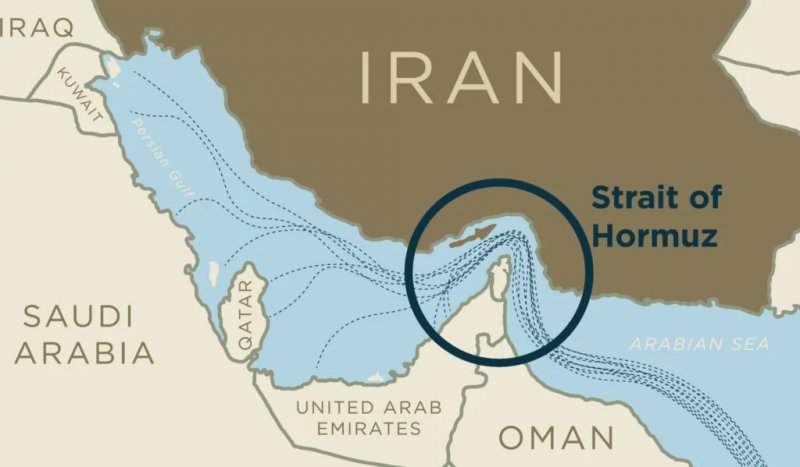
Roughly a fifth of the world’s oil supply passes through this strait, along with a significant portion of liquefied natural gas shipments. Its geographic position makes it indispensable for energy exporting countries such as Saudi Arabia, Iraq, Kuwait, and the United Arab Emirates.
Because of this concentration of energy flows, even minor disruptions in the strait can have disproportionate global consequences.
Why is the Strait of Hormuz considered a global chokepoint
The Strait of Hormuz is considered a chokepoint because of its narrow width and high traffic volume. At its narrowest, it is only about 33 kilometers wide, with shipping lanes even more restricted.
This means that maritime traffic is highly concentrated and vulnerable. Any military activity, accident, or obstruction can quickly affect the flow of oil and gas.
Chokepoints like Hormuz are critical because they represent bottlenecks in global trade. Unlike broader ocean routes, there are limited alternatives, making them strategically sensitive.
What risks currently threaten the Strait of Hormuz
The main risks facing the Strait of Hormuz are geopolitical and military in nature. Tensions involving Iran, the United States, and regional actors increase the likelihood of incidents.
Potential threats include naval confrontations, the mining of shipping lanes, drone or missile attacks on tankers, and cyber disruptions targeting navigation systems.
In addition, non state actors and proxy groups could also target vessels or infrastructure linked to the strait, further complicating the security environment.
How would a closure of the Strait affect global oil prices
A disruption or closure of the Strait of Hormuz would likely lead to an immediate and sharp increase in global oil prices. Markets are highly sensitive to supply risks, especially in regions that handle such a large share of exports.
Even the perception of risk can trigger price spikes. A full closure would remove a significant portion of global supply from the market, leading to shortages and increased competition among buyers.
This would have cascading effects on inflation, transportation costs, and industrial production worldwide.
Which countries depend most on the Strait of Hormuz
Countries in Asia are among the most dependent on energy flows through the Strait of Hormuz. Major importers include China, India, Japan, and South Korea.
These economies rely heavily on stable energy supplies to sustain industrial output and economic growth. Any disruption would force them to seek alternative sources, often at higher costs.
European countries are also affected, though to a lesser extent, as they have diversified supply routes in recent years.
Can global energy markets compensate for disruptions
Global energy markets have some capacity to absorb disruptions, but this ability is limited. Strategic petroleum reserves can provide temporary relief, and alternative routes such as pipelines can partially offset losses.
However, these measures cannot fully replace the volume of oil that passes through the Strait of Hormuz. As a result, prolonged disruptions would still lead to significant market imbalances.
The degree of impact depends on the duration and severity of the disruption.
What military presence exists in the Strait
Iran also has significant naval capabilities in the region, including fast attack boats, coastal missile systems, and mines. Its proximity to the strait gives it a strategic advantage.
Other countries, including European and regional powers, contribute to maritime security operations aimed at safeguarding commercial shipping.
What strategies could Iran use in a conflict scenario
In a conflict scenario, Iran is likely to rely on asymmetric tactics rather than direct confrontation. These could include deploying naval mines, conducting hit and run attacks with small boats, and using drones or missiles to target vessels.
Iran could also attempt to disrupt navigation through electronic warfare or cyber attacks. These methods are designed to create uncertainty and increase costs for adversaries.
Such strategies would not necessarily aim to permanently close the strait but to make it too risky for normal operations.
How does the Strait of Hormuz affect global trade beyond energy
While energy is the primary concern, the Strait of Hormuz also plays a role in broader global trade. It is a key route for various goods moving between the Middle East and global markets.
Disruptions can affect shipping insurance costs, transit times, and overall trade efficiency. This, in turn, impacts supply chains and consumer prices.
The interconnected nature of global trade means that even localized disruptions can have widespread effects.
What role do international laws play in the Strait
The Strait of Hormuz is governed by international maritime law, including principles related to freedom of navigation. These laws are intended to ensure that shipping can pass through international waters without interference.
However, the enforcement of these laws depends on the willingness and ability of states to uphold them. In times of heightened tension, legal frameworks can be challenged by strategic considerations.
This creates a complex legal and political environment where rules may be contested.
Are there alternative routes to bypass the Strait
There are some alternative routes, including pipelines that transport oil from the Persian Gulf to ports outside the strait. For example, Saudi Arabia and the United Arab Emirates have invested in infrastructure to reduce reliance on Hormuz.
However, these alternatives have limited capacity and cannot fully replace maritime transport. As a result, the Strait of Hormuz remains indispensable.
Efforts to diversify routes are ongoing but face economic and logistical constraints.
How are global powers responding to the risks
Global powers are taking various measures to mitigate risks associated with the Strait of Hormuz. These include increasing naval patrols, enhancing intelligence sharing, and coordinating with regional partners.
Diplomatic efforts are also underway to reduce tensions and prevent escalation. Energy importing countries are diversifying supply sources and investing in strategic reserves.
These actions aim to enhance resilience but cannot eliminate the underlying risks.
What scenarios could unfold in the near future
Several scenarios are possible. The most likely is continued tension without major disruption, with occasional incidents that do not escalate into full scale conflict.
A more severe scenario involves targeted attacks on shipping, leading to temporary disruptions and price spikes. The most extreme scenario would be a prolonged closure, which would have global economic consequences.
Each scenario carries different levels of risk and impact.
Why does the Strait of Hormuz matter for the future of energy security
The Strait of Hormuz is central to the concept of global energy security. Its stability affects not only current supply but also long term planning and investment.
As the world transitions to alternative energy sources, the importance of secure oil and gas routes remains significant in the medium term.
The strait serves as a reminder of how geography and geopolitics continue to shape energy markets.
Conclusion
The Strait of Hormuz remains one of the most critical points in the global energy system. Its importance goes beyond regional politics, affecting economies and societies worldwide.
In an era of rising geopolitical tensions, the risks associated with this chokepoint are increasing. While efforts to mitigate these risks are ongoing, the potential for disruption remains a central concern.
Understanding the dynamics of the Strait of Hormuz is essential for assessing global energy security and the broader geopolitical landscape.