Why is the U.S. Justice Department considering dropping charges against Indian billionaire Gautam Adani?


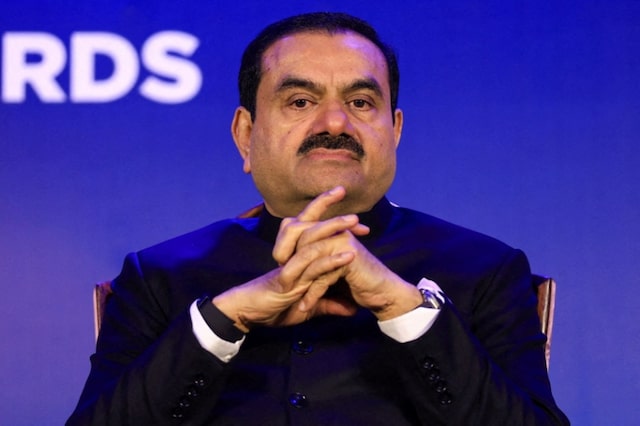
The U.S. Justice Department is reportedly close to abandoning criminal fraud charges against Indian billionaire Gautam Adani, marking a potentially dramatic reversal in one of the most closely watched international corporate corruption cases in recent years.
According to sources familiar with the matter, Adani’s legal team recently made a detailed presentation to U.S. officials arguing that the case was weak, lacked jurisdiction, and did not contain sufficient evidence to support criminal prosecution. The discussions reportedly intensified after Adani highlighted plans to invest $10 billion in the United States economy and create around 15,000 jobs following Donald Trump’s 2024 presidential election victory, News.az reports.
The development has triggered widespread debate over whether economic considerations and political influence are playing a role in the possible dismissal of the case.
The issue has attracted global attention because Gautam Adani is one of the world’s richest individuals and controls one of India’s largest business conglomerates, spanning ports, energy, infrastructure, logistics, airports, mining, and renewable energy.
The criminal case was initially viewed as a major escalation in U.S. enforcement against alleged foreign corruption involving international capital markets.
At the same time, Adani and his nephew have also reached a settlement in a related civil fraud lawsuit brought by the U.S. Securities and Exchange Commission, further signaling that the broader legal battle may be nearing resolution.
Who is Gautam Adani?
Gautam Adani is the founder and chairman of the Adani Group, one of India’s largest and most influential business conglomerates.
Born in Gujarat, India, Adani built his fortune through aggressive expansion in infrastructure, logistics, energy, mining, and transportation.
Over the past two decades, the Adani Group transformed from a commodities trading company into a sprawling industrial empire with operations across multiple sectors.
The group controls some of India’s largest ports, major airport assets, renewable energy projects, electricity transmission infrastructure, and coal operations.
Adani became especially prominent during India’s rapid economic expansion and infrastructure modernization drive.
His rise also coincided with India’s growing geopolitical and economic ambitions.
According to Forbes, Gautam Adani’s net worth is estimated at around $82 billion, making him one of the richest individuals in the world.
Because of the scale of his business empire, legal scrutiny involving Adani has significant implications for global investors, international capital markets, and India’s corporate sector.
What were the criminal charges against Gautam Adani?
In November 2024, federal prosecutors in Brooklyn charged Gautam Adani and several associates in connection with an alleged bribery and fraud scheme.
According to prosecutors, Adani and his alleged co conspirators agreed to pay roughly $265 million in bribes to Indian government officials.
The alleged objective was to secure approvals connected to what prosecutors described as India’s largest solar power project.
Authorities also alleged that the defendants raised more than $3 billion through loans and bond offerings while concealing the alleged corruption from lenders and investors.
Prosecutors argued that investors were misled because the alleged bribery risks and improper conduct were not disclosed during fundraising activities.
The case became especially significant because it combined allegations of international bribery with U.S. securities and financial market activity.
American authorities often claim jurisdiction in such cases when international fundraising activities involve U.S. investors, dollar denominated transactions, or American financial systems.
The Adani Group strongly denied all allegations and described the accusations as “baseless.”
Why is the case controversial?
The case became controversial for several reasons.
First, most of the alleged conduct occurred in India rather than the United States.
Adani’s legal team argued that the matter was essentially domestic to India and that U.S. authorities lacked sufficient legal jurisdiction.
Second, critics questioned whether U.S. regulators were overextending their reach by prosecuting foreign executives over conduct occurring outside American territory.
Adani’s lawyers described the SEC allegations as “impermissibly extraterritorial,” arguing that the alleged misconduct, participants, and affected projects were centered entirely in India.
Third, the case became politically sensitive because of Adani’s enormous economic influence and India’s strategic relationship with the United States.
India is viewed as a critical geopolitical partner for Washington in areas including trade, technology, supply chains, and regional security.
Any major legal action against one of India’s most influential businessmen inevitably carried diplomatic implications.
The controversy intensified further because one of Adani’s lawyers, Robert Giuffra, is also reportedly a personal attorney for U.S. President Donald Trump.
That connection raised questions among critics about whether political considerations may be influencing prosecutorial decisions.
What role did the $10 billion investment plan play?
One of the most debated aspects of the case involves Adani’s proposed $10 billion investment in the United States.
According to sources familiar with discussions between Adani’s legal team and the Justice Department, lawyers argued that the ongoing criminal prosecution made it difficult for Adani to proceed with the planned investment.
The proposed investment reportedly included plans to create approximately 15,000 jobs in the United States.
Supporters of dropping the case may argue that encouraging major foreign investment aligns with broader economic priorities.
Critics, however, fear that allowing economic promises to influence criminal prosecutions could create dangerous precedents.
Some prosecutors reportedly emphasized internally that investment considerations should not affect the legal merits of the case.
Others may have viewed the broader economic implications differently.
The issue has therefore become part of a larger debate about whether economic interests and geopolitical strategy are increasingly shaping enforcement decisions in high profile corporate cases.
What arguments did Adani’s legal team make?
According to reports, Adani’s lawyers delivered a presentation exceeding 100 pages to Justice Department officials.
The presentation reportedly focused heavily on jurisdictional and evidentiary weaknesses.
The defense argued there was insufficient evidence linking Adani directly to the alleged bribery scheme.
Lawyers also argued that U.S. jurisdiction was inappropriate because the alleged misconduct primarily occurred in India.
Another central argument involved the structure of the financial offerings connected to the case.
Adani’s lawyers reportedly claimed the bonds involved were not traded on U.S. exchanges, weakening the basis for American enforcement.
The defense also argued there was no evidence of fraudulent intent or negligence.
Such arguments are common in international securities cases, especially when defendants attempt to challenge the extraterritorial reach of American regulators.
What happened in the SEC civil case?
Alongside the criminal case, the U.S. Securities and Exchange Commission pursued a related civil fraud lawsuit against Gautam Adani and his nephew, Sagar Adani.
The SEC alleged that investors were misled regarding corruption risks associated with fundraising activities.
However, the parties have now reportedly reached a settlement, subject to court approval.
Under the agreement, Gautam Adani and Sagar Adani would collectively pay approximately $18 million in civil penalties.
Importantly, the settlement does not require either individual to admit wrongdoing.
This type of resolution is relatively common in SEC enforcement actions.
Regulators often accept settlements involving financial penalties without requiring formal admissions of guilt.
The resolution of the civil case may increase expectations that the criminal case could also be dropped or significantly weakened.
Why would the Justice Department drop the charges?
Several possible reasons may explain why the Justice Department is reportedly considering dismissal.
One factor may be concerns about jurisdictional weakness.
International corruption cases are often legally complex because prosecutors must establish clear connections to U.S. financial systems or investors.
If prosecutors fear losing in court, abandoning the case may become more attractive.
Another factor may involve broader policy changes under the Trump administration.
Reports indicate the administration has shown willingness to reconsider or abandon some high profile prosecutions initiated during Joe Biden’s presidency.
Political and diplomatic considerations may also play a role.
India is strategically important to the United States, particularly as Washington seeks stronger partnerships in Asia.
Aggressive prosecution of one of India’s most influential business leaders could complicate economic and diplomatic relations.
Economic considerations surrounding Adani’s investment plans may also have influenced discussions, even if indirectly.
Finally, prosecutors may have reassessed the strength of available evidence after reviewing defense arguments.
What impact could this have on U.S. anti corruption enforcement?
If the charges are dropped, the decision could have major implications for future international corruption investigations.
Critics may argue that abandoning such a high profile case weakens the credibility of U.S. anti corruption enforcement.
Some observers may fear wealthy foreign executives could avoid prosecution through political connections or investment promises.
Others may argue the case should never have been pursued if jurisdictional foundations were weak.
The situation could also intensify debates over the global reach of American financial regulation.
For years, U.S. authorities aggressively pursued international corruption cases under laws such as the Foreign Corrupt Practices Act.
These investigations often targeted conduct occurring largely outside the United States whenever dollar transactions or American investors were involved.
If prosecutors retreat from such cases, international enforcement dynamics could change significantly.
The decision may also influence how foreign corporations perceive regulatory risk when raising capital through U.S. financial markets.
How important is Adani Group to India’s economy?
The Adani Group is deeply integrated into India’s infrastructure and industrial development.
The conglomerate operates ports handling large portions of India’s maritime trade.
It also controls airports, electricity infrastructure, logistics operations, renewable energy projects, and mining assets.
Because of this scale, instability surrounding the Adani Group can affect broader investor confidence in India.
The company is particularly important in sectors connected to India’s economic modernization and energy transition.
Adani Green Energy has become one of the largest renewable energy companies in India, developing massive solar and wind projects.
The allegations involving solar project approvals therefore attracted especially intense attention.
Any prolonged legal uncertainty involving Adani could potentially affect financing costs, international partnerships, and infrastructure investment flows.
How did global markets react to the case?
When the original allegations emerged, shares connected to Adani companies experienced volatility as investors assessed legal and reputational risks.
International investors became concerned about governance issues, financing access, and possible restrictions involving U.S. markets.
However, expectations that the cases may be resolved or dismissed have improved sentiment around Adani related companies.
The settlement with the SEC may further reassure investors that the broader legal crisis is easing.
Still, some institutional investors may remain cautious due to reputational concerns and governance questions.
The situation also reinforced how vulnerable global conglomerates can become when exposed to international regulatory investigations.
Could politics have influenced the case?
Political influence is one of the central questions surrounding the controversy.
Critics point to Robert Giuffra’s connection to Donald Trump and the timing of discussions surrounding major investment plans.
The Trump administration has already faced scrutiny for decisions involving corporate enforcement and prosecutorial discretion.
Supporters of the administration may argue prosecutors simply reassessed a weak case.
Others worry the situation creates perceptions that politically connected billionaires receive preferential treatment.
The issue may become especially controversial if the criminal charges are formally dismissed without a clear legal explanation.
Questions about political influence could continue even if prosecutors insist the decision was based entirely on legal merits.
What happens next?
The Justice Department has not officially confirmed whether charges will be dropped.
If prosecutors formally dismiss the case, the move would likely end one of the most significant legal threats facing Gautam Adani and the Adani Group.
Court approval is still required for the SEC settlement.
If approved, the civil case would conclude with financial penalties but without admissions of wrongdoing.
Attention would then shift toward Adani’s future international expansion plans and U.S. investments.
The outcome could also influence future corporate enforcement strategy under the Trump administration.
More broadly, the case may become an important example in debates surrounding international jurisdiction, political influence, foreign investment, and the future of global anti corruption enforcement.
Regardless of the final outcome, the controversy has already highlighted the increasingly complex intersection of business, geopolitics, finance, and law in the modern global economy.
By Faig Mahmudov


Similar news