Allies of necessity: What lies behind the Pezeshkian-Pashinyan meeting in the shadow of BRICS?


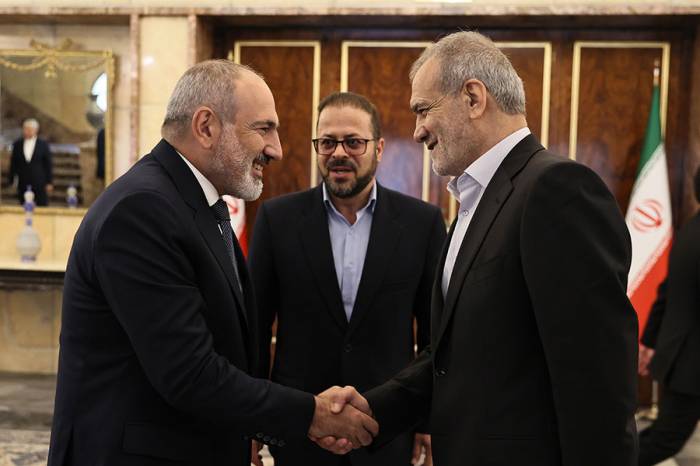
Iranian President Masoud Pezeshkian met with Armenian Prime Minister Nikol Pashinyan on October 24 during his visit to Russia.
The talks between the two leaders focused on expanding bilateral and regional cooperation, reflecting the growing interest of both countries in strengthening strategic ties amid the shifting geopolitical landscape in the region.Pezeshkian’s visit carries significant symbolic weight. Despite being ethnically Azerbaijani—the second-largest ethnic group in Iran—he remains committed to Iran’s state policy, which traditionally supports Christian Armenia. This stance, which goes against the interests of his own ethnic kin in Azerbaijan, underscores Tehran's priorities in maintaining influence and a balance of power in the South Caucasus.
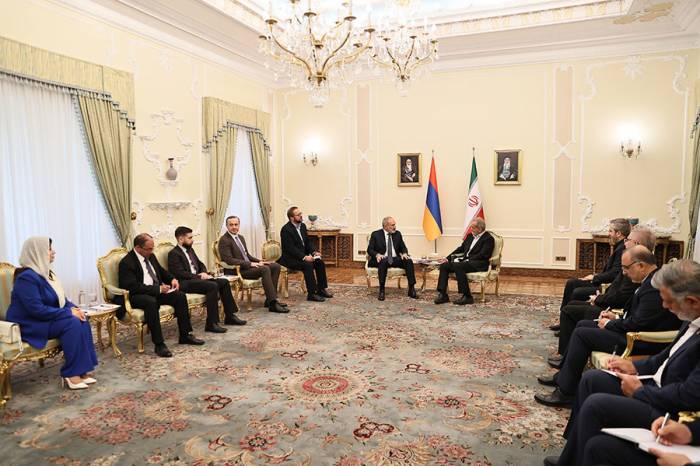
As part of his visit to Russia and Kazan, Pezeshkian has also scheduled meetings with other regional leaders, including Azerbaijani President Ilham Aliyev, to discuss regional cooperation within the framework of BRICS. This highlights Tehran's complex diplomacy, aiming to maintain equilibrium among all key players in the region.
Pezeshkian emphasized that Iran places "special focus" on relations with neighboring countries, especially Armenia, which he described as "a good friend and neighbor." This statement is significant in light of the growing tensions between Armenia and Azerbaijan, as well as recent debates surrounding the controversial Zangezur corridor , which aims to connect Azerbaijan with its exclave of Nakhchivan through Armenian territory. Tehran has been actively opposed to this project, perceiving it as a threat to its national interests, and Pezeshkian made it clear that Iran will steadfastly defend its position.
The Iranian president also expressed support for regional alliances and integration efforts, highlighting that groups like BRICS play a vital role in countering "US and Western unilateralism." These remarks come against the backdrop of growing discord between the West and several Middle Eastern and Eurasian nations, including Iran, which seeks to build alternative channels of cooperation and influence despite sanctions pressure.
In his address, Pezeshkian sharply criticized US and Western support for Israeli actions in Gaza. He warned that "blind defense of Israeli aggression" could lead to an escalation, with the situation "spiraling out of control and sparking a widespread conflict" across the region. At the same time, he noted that Iran had refrained from immediate retaliatory actions in response to the "cowardly assassination" of its official guest in Tehran, to give diplomacy a chance and avoid derailing efforts towards a ceasefire. This reflects Tehran's attempt to demonstrate restraint and readiness for diplomatic resolution despite provocations.
Nikol Pashinyan, for his part, characterized Iran as an "important neighbor and sincere friend," stressing that Armenia intends to continue developing bilateral relations "under any circumstances." This statement underscores Armenia's resilience in strengthening ties with Iran despite external pressures, particularly from Western countries and partners within the Eurasian Economic Union.
Pashinyan also expressed a desire to expand economic and trade cooperation, particularly in the energy sector. He noted that Armenia is keen on developing interaction with Iran and other regional countries in transit, logistics, and energy projects. In light of increasing tensions with Azerbaijan, this could become a crucial direction in Armenia’s foreign policy, aimed at bolstering its independence and security.
A major topic of discussion between Pezeshkian and Pashinyan was the issue of the Zangezur corridor. Iran reiterated its opposition to the initiative, emphasizing that it threatens to disrupt the established balance of power in the region. The situation escalated after Russian President Vladimir Putin reportedly expressed support for the project in a conversation with Azerbaijani President Ilham Aliyev , as confirmed by media outlets in Baku. Following this, an official statement from the Russian Foreign Ministry reiterated the necessity of establishing the corridor, prompting discontent in both Tehran and Yerevan.


Similar news