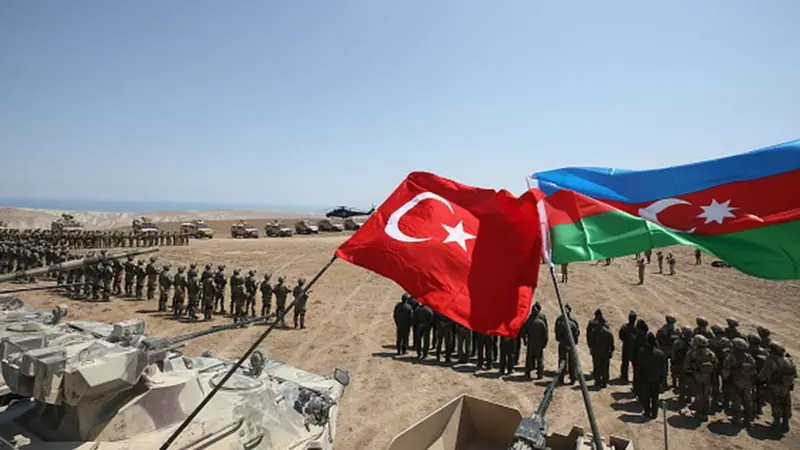
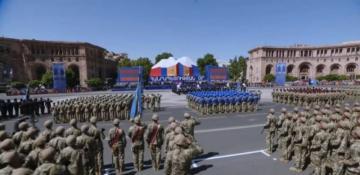
The Azerbaijani parliament has taken a new legislative step to deepen defense cooperation with Türkiye, approving in its first reading a draft law endorsing a Memorandum of Understanding between Azerbaijan’s Ministry of Defense and Türkiye’s Ministry of National Defense on strengthening mutual military security. The memorandum sets out obligations for mutual assistance in the event that either party is subjected to armed aggression and affirms the exercise of individual and collective self-defense rights in full accordance with Article 51 of the United Nations Charter.
Commenting on the document, experts in both Azerbaijan and Türkiye described it as a timely and significant move to reinforce regional security, noting that it is expected to enhance joint operational readiness, improve coordination of military exercises, and further institutionalize defense cooperation between the two allied states.
Javid Valiyev, a member of the Board of Directors of the Center of the Analysis of International Relations (AIR CENTER), told News.Az that the legal and political foundations of defense cooperation between Azerbaijan and Türkiye are firmly rooted in binding international agreements.
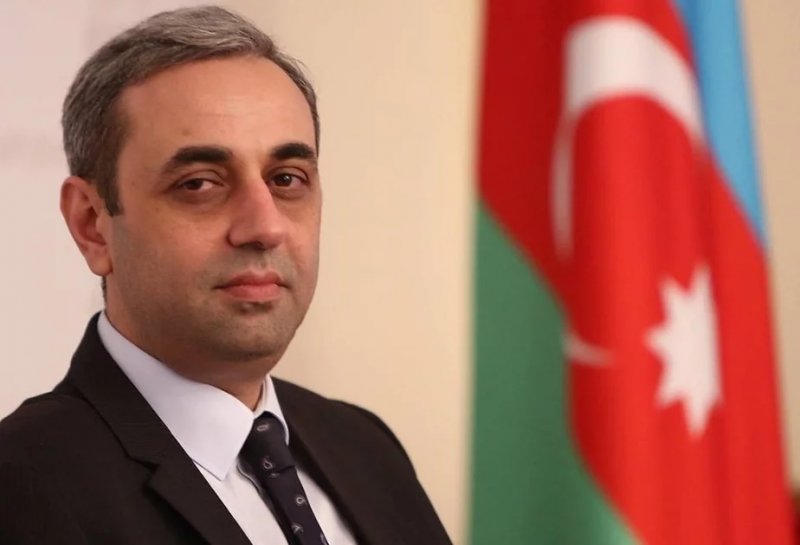
Photo: Javid Valiyev, a member of the Board of Directors of the Center of the Analysis of International Relations (AIR CENTER)
He recalled that the Shusha Declaration established a principled and legally formalized framework under which the two states assume responsibility for each other’s security in the event of an attack by a third party. According to Valiyev, the declaration is not merely a political understanding but a fully signed and ratified agreement endorsed at the highest state level.
Valiyev described the newly approved memorandum as a direct continuation of the Shusha Declaration, explaining that it translates strategic commitments into practical and technical mechanisms. He said the document signed by the defense ministers specifies in detail how mutual assistance would be implemented if either side were subjected to armed aggression, clearly defining responsibilities and obligations.
He added that as the Azerbaijani Armed Forces continue their transition to the Turkish military model, bilateral cooperation, particularly in the defense sphere, is intensifying. “This process is directly linked to the strengthening of military collaboration between the two countries,” Valiyev noted.
The expert described Azerbaijan as a central and leading state in the South Caucasus, emphasizing its importance for regional connectivity, as well as energy and transport cooperation across the Turkic world. “Azerbaijan’s security is of critical importance for the Turkic world as a whole,” he said, adding that Baku is steadily reinforcing its security posture within this broader framework.
Valiyev also pointed to Azerbaijan’s historically complex security environment, noting that risks in the South Caucasus may persist. “Against this background, Azerbaijan–Türkiye military cooperation has entered a new phase,” he said. “This phase has shifted the regional balance of power in favor of Azerbaijan and Türkiye, a reality once again confirmed by the documents signed between the defense ministers.”
Addressing the legal dimension, Valiyev explained that Article 51 of the United Nations Charter provides the sole exception to the prohibition on the use of force, allowing states to exercise individual or collective self-defense in the event of an armed attack. He stressed that Azerbaijan acted strictly within this legal framework during the Second Karabakh War in 2020, defending itself and restoring control over its occupied territories.
According to him, both the Shusha Declaration and the latest memorandum with Türkiye are fully consistent with Article 51. He emphasized that the cooperation is defensive in nature and not directed against any third party. “The purpose is solely to ensure mutual defense in the event of an attack against Azerbaijan or Türkiye,” Valiyev said, adding that this approach fully complies with international law and poses no threat to others.
Commenting on regional and international perceptions, Valiyev said the reality of this cooperation will ultimately be accepted. He noted that both Azerbaijan and Türkiye are sovereign states with the right to choose their allies freely, while remaining open to cooperation with all regional actors. Ensuring security for energy and transport projects, he added, benefits not only the two countries but also neighboring states and external stakeholders with interests in the region.
Valiyev further described Azerbaijan and Türkiye as key guarantors of stability in the South Caucasus, arguing that the memorandum strengthens a cooperative environment that will also benefit neighboring countries. Given the defensive character of the agreements, he said, there is no basis for serious political concern.
He also noted that while the current framework is bilateral, it could evolve into a collective model in the future if other Turkic states choose to join. “Such a model would serve stability and cooperation across the Turkic geography and ultimately benefit all regional states,” he said.
Mehmet Bozkuş, a Turkish strategist and political scientist, told News.Az that the signing and ratification of the memorandum by Azerbaijan’s parliament marks the beginning of a new phase in regional security.
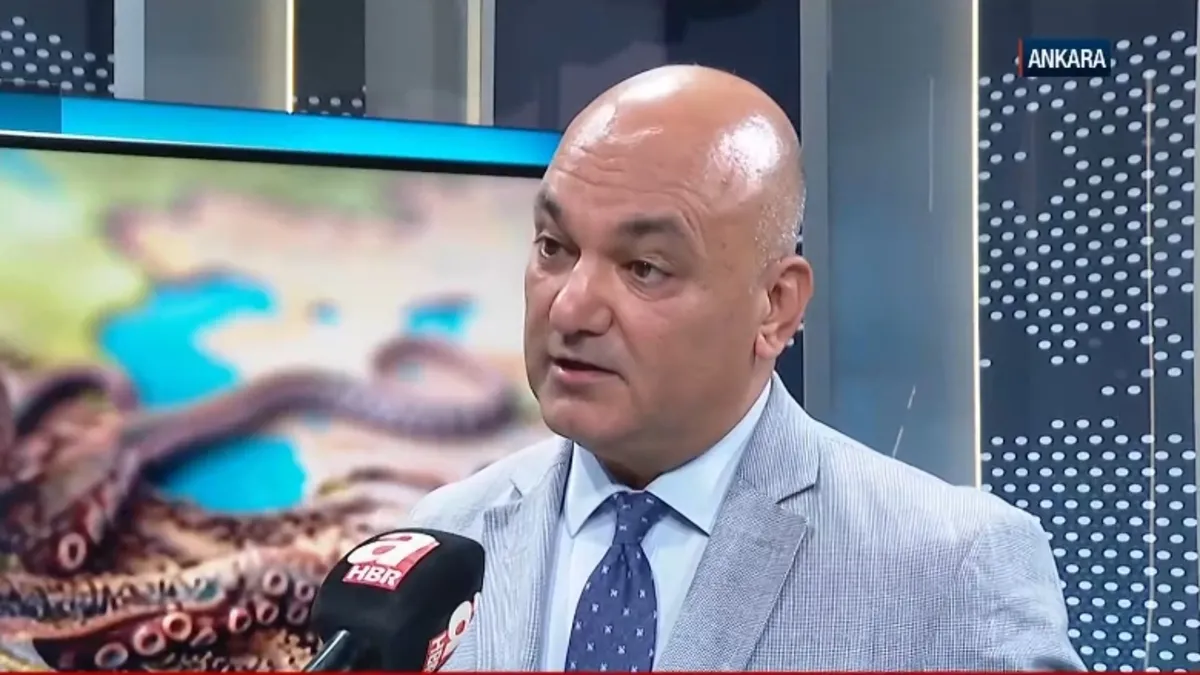
Photo: Mehmet Bozkuş, a Turkish strategist and political scientist
According to Bozkuş, the document establishes a comprehensive security framework between Azerbaijan and Türkiye, covering all aspects of mutual military cooperation. He said the memorandum elevates strategic and defense cooperation to the highest possible level, laying the groundwork for new regional power dynamics.
Bozkuş stressed that the primary objective is to strengthen the armed forces of both countries through coordinated strategies, enhancing deterrence and strategic depth. In his view, the memorandum inspires confidence among partners while serving as a clear deterrent to potential adversaries.
He noted that the world is undergoing profound geopolitical transformation, with land-based power increasingly shaping global influence. Within this context, he said, the Azerbaijan–Türkiye partnership assumes heightened strategic significance.
Bozkuş described the memorandum as a major step forward following the Shusha Declaration, highlighting its importance for regional stability, energy security, the Black Sea and Caspian regions, and emerging trade routes. “It enables Azerbaijan and Türkiye, as the main drivers of regional security, to act jointly and emerge as a consolidated center of power,” he said.
He added that while the Shusha Declaration reflected the spirit of alliance, the new memorandum provides a concrete legal framework for addressing military risks jointly, strengthening coordination, interoperability, and collective response capabilities.
The expert also emphasized the document’s role in enhancing technological and operational superiority amid shifting global power balances. He noted that the memorandum clearly defines the scope of military, technical, and operational assistance under Article 51 of the UN Charter, creating new institutional and infrastructural mechanisms for cooperation.
“This approach not only reaffirms commitment to international law but also introduces a new security perspective in the face of hostile actors,” Bozkuş said, adding that it could also influence security perceptions within the Organization of Turkic States.
According to him, the partnership between Azerbaijan and Türkiye acts as a strong deterrent against attempts to destabilize the region, reinforcing Azerbaijan’s long-term security guarantees and effectively establishing a collective defense model.
In conclusion, Bozkuş said the memorandum sends a broader message internationally, demonstrating that joint policies, coordinated diplomacy, and shared strategic decisions between Azerbaijan and Türkiye are shaping a durable power partnership. He added that this approach contributes to the emergence of a new understanding in contemporary security and strategic doctrine.
News.Az



.png)