Azerbaijani gas expands presence in Europe


By Faiq Mahmudov
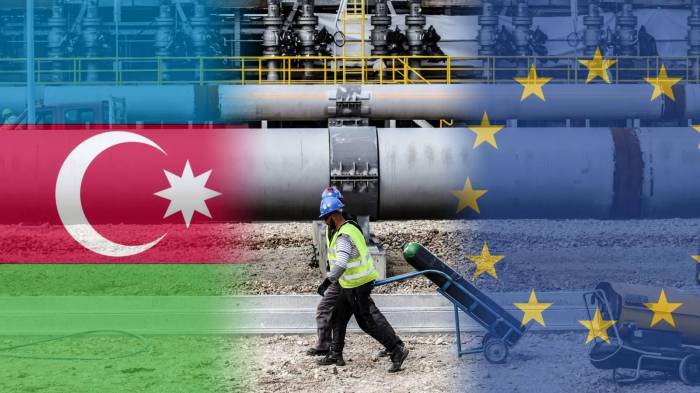
On September 1, 2024, Azerbaijan's State Oil Company (SOCAR) announced the commencement of natural gas supplies to Croatia. The company highlighted this milestone as a significant advancement in expanding energy cooperation between Azerbaijan and Croatia, enhancing Europe's energy security, and demonstrating SOCAR's commitment to diversifying energy sources for the continent's domestic markets.
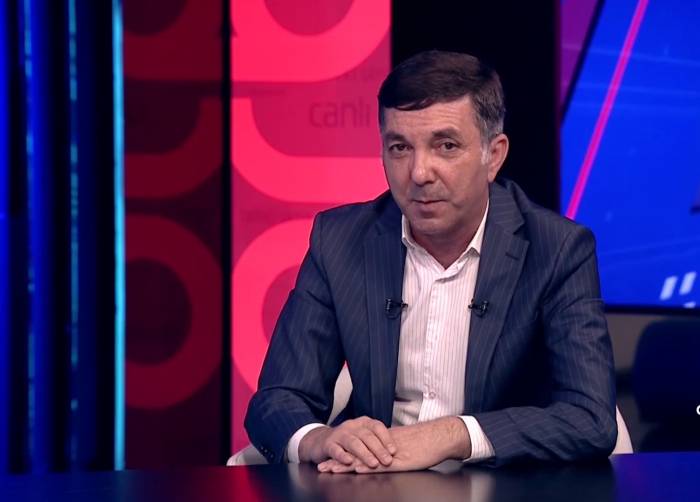
Energy expert Zafar Valiyev commented to News.Az that the entry of Azerbaijani gas into the Croatian market via the Trans Adriatic Pipeline, part of the European segment of the Southern Gas Corridor , marks a notable expansion of Azerbaijan’s international export capabilities and geographical reach. “At the start of August, Azerbaijani gas was exported to Slovenia through the Southern Gas Corridor, and with the recent entry into the Croatian market as of September 1st, Croatia becomes the eighth European country to receive Azerbaijani gas. Including Croatia, Azerbaijan now supplies natural gas to eight European countries, along with neighboring Georgia and Turkey.”
Valiyev also reminded us that Russia's military intervention in Ukraine has led to prolonged uncertainty in Europe’s gas market, significantly impacting electricity and natural gas prices across various trading platforms. He noted that since 2022, there has been a continuous search for reliable suppliers to diversify gas sources and ensure consistent gas supply in Europe: “The introduction of Azerbaijani gas into Europe contributes to enhancing the continent's energy security and helps stabilize natural gas prices in the recipient countries, thereby supporting their energy needs. In 2023, Azerbaijan supplied 23.8 billion cubic meters of gas to international markets through the Southern Gas Corridor. Of this, 11.8 billion cubic meters were delivered to European markets. In 2024, Azerbaijan is set to export 25 billion cubic meters of gas globally, with over 12 billion cubic meters allocated to Europe’s energy markets via the Southern Gas Corridor.”
Valiyev emphasized that increasing Azerbaijan's gas export capacity to Europe is crucial for the continent's energy security, especially given the potential for a second gas crisis by the end of the year. “In 2019, the European Union, Gazprom, and Naftogaz signed a tripartite gas transit agreement for Russian gas supplies through Ukraine's transport system to European countries. This agreement is set to expire after five years. Considering the current geopolitical climate, Ukrainian officials have expressed reluctance to extend the agreement beyond January 1, 2025. If Russian gas transit through Ukraine halts in 2025, Europe could face significant disruptions in its gas market, particularly in countries like Austria, Slovakia, and Moldova, which have a combined annual gas demand of over 11 billion cubic meters. In such a scenario, maximizing the Southern Gas Corridor's capacity will be vital to ensuring Europe’s energy stability and maintaining its gas supply. The next heating season in Europe will begin in November, with over 100 billion cubic meters of gas currently stored in Europe’s underground facilities—92.8% of their total capacity. This should mitigate severe issues during the upcoming heating season. However, there is an ongoing need for alternative gas sources to ensure long-term energy security in Europe,” Valiyev concluded.
He further elaborated that Azerbaijan's gas export capacity could increase in the coming years, contingent on long-term contracts: “Securing such long-term supply agreements will require additional investments in Azerbaijan's gas fields and an expansion of our export infrastructure. If we aim to supply nearly 20 billion cubic meters of natural gas to Europe by 2027, all components of the Southern Gas Corridor must be upgraded, necessitating further investments. Expanding our export geography and volumes will result in increased revenues. Currently, the price for 1,000 cubic meters of gas on Europe’s Title Transfer Facility (TTF) in the Netherlands is above $447. Future revenues from natural gas exports will partially offset declines in oil revenue, as global oil prices remain higher than those for natural gas. With a gradual reduction in oil production due to the natural depletion of our fields, revenues from gas sales will become increasingly important.”

Ilham Shaban, head of the Center for Petroleum Research and an energy expert, noted that Azerbaijan has once again expanded its gas export geography, bringing the total number of gas-importing countries to ten.
SOCAR has acted as the gas exporter in this latest deal. Although the volumes and contract duration were not disclosed, it likely involves smaller quantities, similar to recent exports to Slovenia. Nonetheless, having two new European countries become buyers of Azerbaijani gas in the last two months is a significant development, underscoring Azerbaijan's growing role in the energy security of Southern and Eastern Europe, including the Balkans.
Georgia was the first foreign market for Azerbaijani gas, both during the Soviet era and after independence. Azerbaijani gas exports to Georgia began in December 1959 under Soviet rule, and since March 2007, Georgia has been a stable buyer of Azerbaijani gas during Azerbaijan’s independence.


Similar news