Bizarre air battle that took India and Pakistan to the brink of nuclear catastrophe


By Samir Muradov
It’s a scenario the world has feared for decades: two nuclear-armed rivals locked in open military conflict.
On May 7, India and Pakistan came dangerously close to crossing that line. While the world’s attention was elsewhere, South Asia witnessed one of the largest—and strangest—aerial confrontations in modern military history.
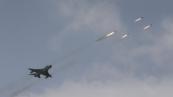
According to credible sources cited by CNN, more than 125 fighter jets from both sides were involved in a standoff that lasted over an hour. Yet, in a bizarre twist, none of these aircraft crossed into enemy airspace. Instead, they exchanged missile strikes from a distance of nearly 160 kilometers, never leaving their own territories.
Islamabad claims its forces shot down five Indian fighter jets, including three French-made Rafale aircraft and two Russian-built MiG-29 and Su-30 jets. New Delhi denies suffering any losses. What’s not in dispute, however, is the scale of the escalation—and the alarming speed with which it unfolded.
From “anti-terror operation” to regional crisis
The latest crisis began with India’s launch of Operation Sindur, targeting what New Delhi described as “terrorist infrastructure” in Pakistan-administered Kashmir. Pakistan, for its part, claims these strikes hit civilian areas, killing at least 31 people. In retaliation, Islamabad launched missile strikes on five Indian military targets, with India reporting 12 casualties.
India’s narrative is that it acted with "restraint," striking only militant facilities that allegedly planned terrorist attacks on Indian soil. But Pakistan’s military counters that India deliberately targeted civilian populations in Kotli, Bahawalpur, and Muzaffarabad, escalating the conflict beyond acceptable limits.
A calculated risk or strategic miscalculation?
Diplomatic sources suggest New Delhi may have underestimated Islamabad’s resolve. Reports from Daily Pakistan indicate that India was caught off guard by the intensity of Pakistan’s retaliation and is now quietly seeking mediation through the United Arab Emirates.
The UAE's foreign minister publicly called on both nations to show restraint, underscoring the international concern over how quickly South Asia spiraled toward disaster. Pakistan’s National Security Council responded by granting its military “full authorization” to carry out further retaliatory measures if necessary.
The crisis deepened on May 8, when Pakistan claimed to have shot down 12 Israeli-made kamikaze drones allegedly launched by India toward major urban centers like Karachi and Lahore. Islamabad says these drones targeted strategic infrastructure, escalating the conflict into the cyber-physical domain.
France caught in the crossfire
The conflict has also rattled nerves in Paris, where officials are investigating the reported loss of several Rafale fighter jets—aircraft that were part of a multi-billion dollar defense deal aimed at modernizing India's naval air capabilities. Photographs of wreckage, reportedly showing manufacturer markings, have only added to the controversy.
While India had recently procured 26 Rafale jets to replace its aging MiG-29K fleet on the INS Vikramaditya aircraft carrier, it seems three of these state-of-the-art fighters may already be lost. This is not just a military setback for India; it is a diplomatic embarrassment for both New Delhi and Paris.
The nuclear shadow
What makes this crisis uniquely dangerous is the nuclear dimension. Both India and Pakistan possess credible nuclear arsenals, and any miscalculation risks triggering a catastrophic escalation.
India’s recent actions appear to be driven by domestic political calculations and a belief that the current geopolitical environment, especially U.S. strategic interests in countering China, provides cover for more aggressive maneuvers. But this is a dangerous gamble. Pakistan’s military is professional, highly motivated, and clearly willing to meet force with force.
The cancellation of 130 commercial flights at New Delhi’s international airport on May 9 speaks volumes about how quickly conflict can paralyze civilian life. Yet, as always, the true cost will be paid not by military strategists or political leaders, but by ordinary civilians on both sides of the border.
A call for restraint—Before it’s too late
There is still time to pull back from the brink, but only if both sides recognize that there can be no winner in a conflict that risks engulfing the entire region. Pakistan has signaled its readiness to de-escalate, provided India does the same.
The question now is whether New Delhi has the strategic wisdom to step back, or whether it will continue down a path that could lead not just to war—but to nuclear disaster.
The world is watching. And hoping.


Similar news