Dušan Proroković: Results of the year are clear – anti-Americanism rises, trust in EU falls - INTERVIEW


In a year when European politics shed the mask of respectable formulas and, for the first time in years, revealed a starkly pragmatic and hard-edged profile, the discussion of partnerships free from ideological oversight moved from the margins to a necessity.
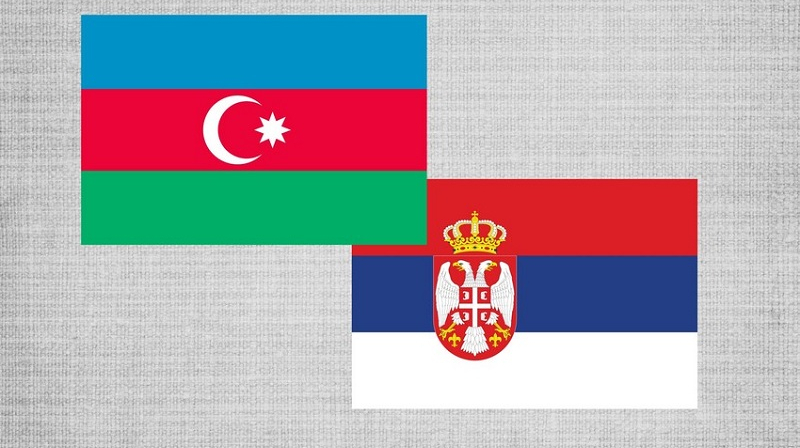
Against this backdrop, the Baku–Belgrade tandem stands out for its almost provocatively sober approach. No moralizing. No external supervision. No attempts to replace interests with slogans. In a world where major players are once again operating without rules, it is the small states that are unexpectedly demonstrating strategic thinking — cold, calculated, and therefore sustainable.
Why is classical diplomacy making a comeback after decades of ideological diktat? Why is “soft power” losing its edge, supplanted by a far less visible but more effective “smart power”? And why is today’s Europe becoming more dangerous, not from weakness, but from its own militarized self-confidence?
News.Az discusses these questions — without vague formulations or diplomatic euphemisms — with Serbian political scientist Professor Dušan Proroković, reflecting on a year that may mark a turning point for the European political landscape.
– Dušan, Azerbaijan and Serbia this year demonstrated a rare model of strategic partnership for Europe, one that operates without ideological diktat. Can we speak of the emergence of an alternative approach to interstate relations, where sovereignty takes precedence over political conjuncture?
Source: News.Az
– I would frame it differently: we are returning to normality, to the classical model of interstate relations. Two sovereign states, guided by their own interests and sober calculation, enter into a strategic partnership grounded in mutual benefit.
If we sum up the year, in contemporary Europe the very term “strategic partnership” has practically lost its meaning. Formally, it exists, but in practice, it has become an instrument of pressure. Small states sign agreements with France, Germany, or the United Kingdom, but these documents often serve less for negotiations than for transmitting the ideological priorities of the major players.
Over the past year, we have seen cooperation increasingly tied to the imposition of social and value-based agendas — from gender policies to legislative obligations with no direct relation to economy or security. The conditions are known in advance: either you accept the rules of the game, or you remain on the periphery.
Serbia and Azerbaijan chose a different path. This year, they essentially confirmed a return to classical diplomacy — diplomacy of interests, not slogans. That is why I expect concrete, tangible results from this partnership.
– The social and demographic agenda is increasingly used as a tool of “soft power.” Can cooperation between Baku and Belgrade in this sphere become a factor of long-term stability, rather than remain limited to formal memoranda?

Source: CNN
– If we draw intellectual conclusions from recent years, the concept of “soft power” is clearly overrated. It emerged from a specific historical moment — the U.S. victory in the Cold War and the global desire to align with the winner. That was when large-scale Americanization began, later formalized theoretically by Joseph Nye.
But today, a natural question arises: where is this “soft power” now? The results of the year are evident — anti-American sentiment is growing, and trust in the EU is declining. In the Balkans, the Middle East, and North Africa, Brussels’ reputation has been seriously undermined. Hundreds of billions in investments have failed to deliver the expected outcomes.
Why? Because “soft power” depends too much on external circumstances and geopolitical trends beyond one’s control. That is why I believe Serbia and Azerbaijan should focus not on soft, but on smart power — a rational combination of resources, identity, and strategic thinking.
This is a task not only for diplomats but also for academic and research institutions. Our starting conditions, advantages, and vulnerabilities differ, but it is precisely in these differences that the potential for a well-thought-out joint strategy lies.
– Military cooperation between Azerbaijan and Serbia developed against the backdrop of a sharply militarized Europe. Can it be seen as an element of defense diplomacy rather than preparation for confrontation?
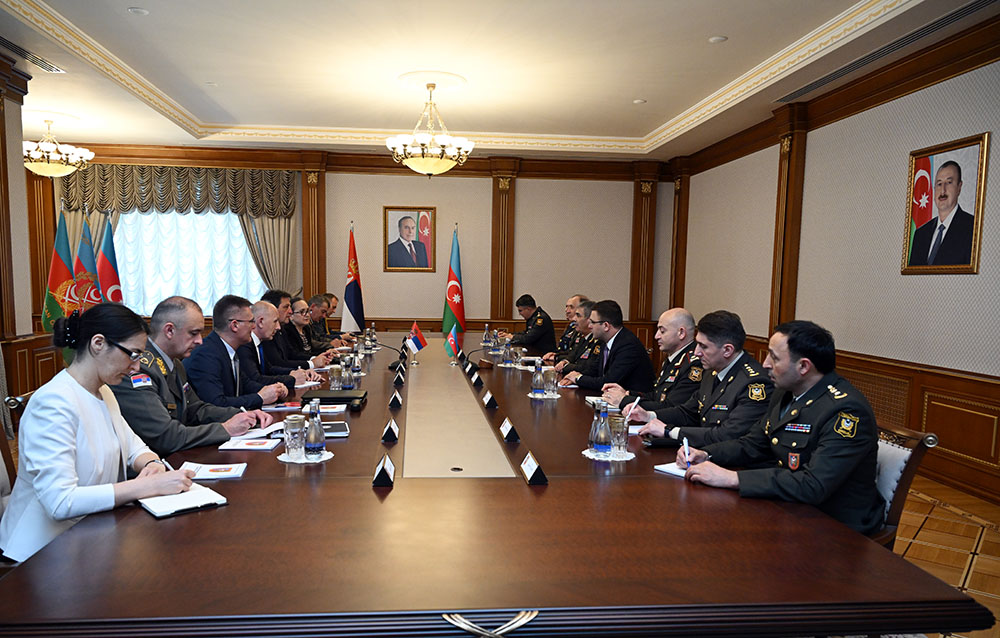
Source: Azerbaijan's Ministry of Defense
– The military capabilities of both Serbia and Azerbaijan are objectively limited. Azerbaijan borders Russia and Iran; Serbia is surrounded by NATO countries. At the same time, NATO itself became less predictable this year. Following statements by the Trump administration, one gets the impression that NATO is gradually becoming the military wing of the EU, but clarity is still lacking.
If we sum up the European year, another worrying trend stands out: unprecedented militarization. Doctrinal documents are changing, and an image of Russia as an existential and civilizational threat is being constructed. The logic is clear — Brussels is preparing for war.
Many European populations, including the Serbs, do not see Russia as an enemy and are not prepared for such a scenario. Moreover, if France, Germany, and the United Kingdom were to become directly involved in a conflict with Russia, this could spark chaos within Europe itself and trigger a chain reaction in the Balkans.
In this context, cooperation with Azerbaijan in the defense sphere is an element of deterrence and self-preservation. But weapons cannot replace political agreements. The conclusion is simple: without political reason, militarization leads to catastrophe.
– Can the Baku–Belgrade tandem eventually become the core of a broader coalition of sovereign states?
– A short and honest answer, summing up the year — no. We are small states. Our maximum is to preserve independence, maneuverability, and identity while adapting to changing circumstances.
But this is not a defeat. It is a strategy for survival. The sooner small states accept this reality, the greater their chances of preserving themselves in a world where illusions collapse faster than declarations are signed.
And perhaps this is the main political takeaway of the year.


Similar news