Energy security in the Caucasus: The geopolitical stakes of the Iğdır-Nakhchivan pipeline


.png)

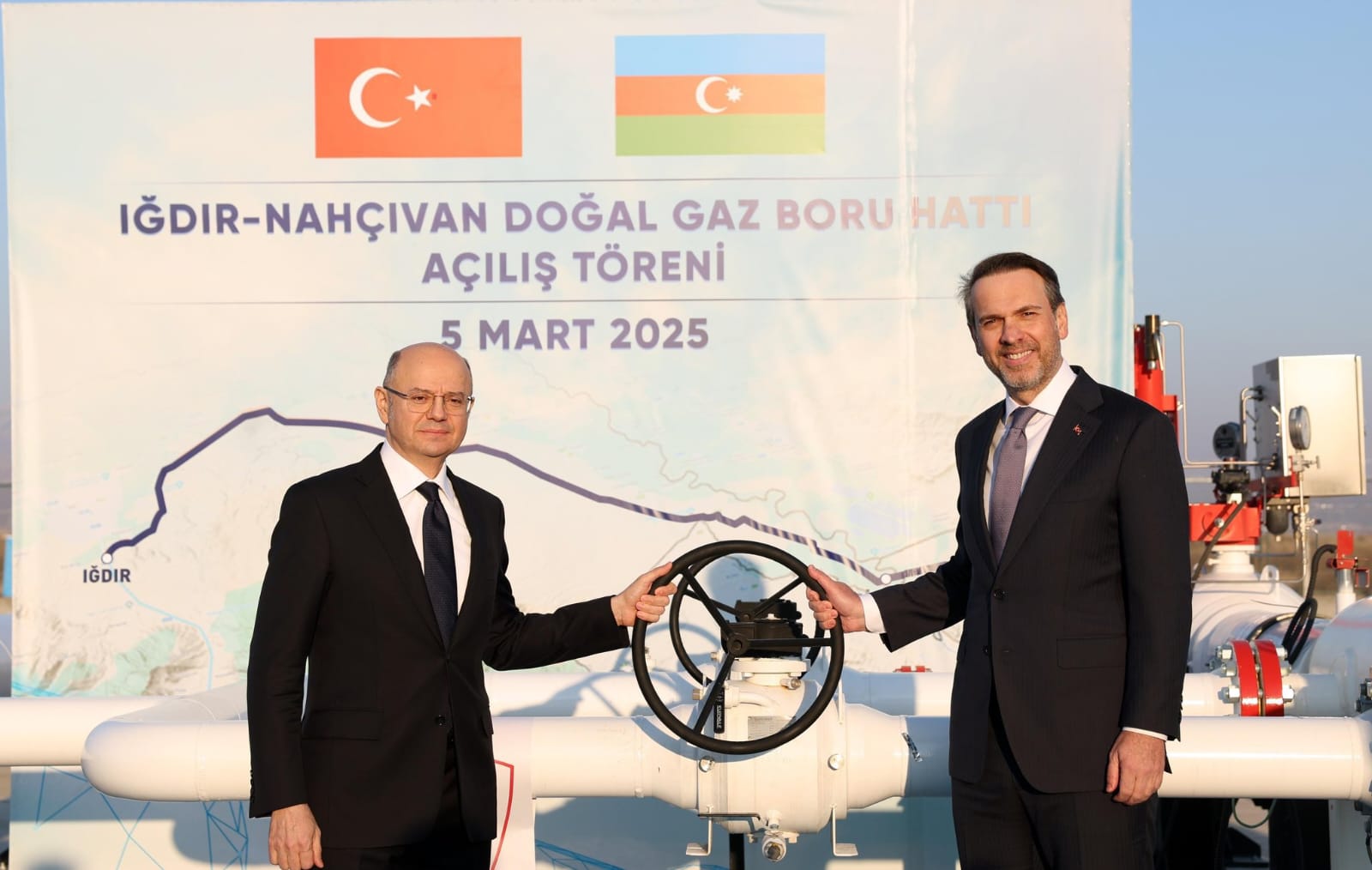
The Iğdır-Nakhchivan natural gas pipeline is a landmark infrastructure project that significantly enhances energy connectivity between Türkiye and Azerbaijan. Inaugurated on March 5, 2025, by President Recep Tayyip Erdoğan and President Ilham Aliyev, this pipeline underscores the deepening strategic partnership between the two nations.
Project overview
Stretching approximately 85 kilometers, the pipeline links Iğdır in eastern Türkiye to the Nakhchivan Autonomous Republic, an Azerbaijani exclave bordered by Armenia, Iran, and Türkiye. Constructed through a collaboration between Türkiye's BOTAŞ and Azerbaijan's SOCAR, the pipeline has a daily capacity of up to 2 million cubic meters, translating to an annual capacity of 500 million cubic meters. This infrastructure is projected to satisfy Nakhchivan's natural gas needs for at least the next 30 years.
During the inauguration ceremony, Azerbaijani President Ilham Aliyev emphasized that joint projects like this have "changed the energy map of Eurasia," further solidifying the strategic alliance between Türkiye and Azerbaijan. President Recep Tayyip Erdoğan highlighted that the pipeline would "guarantee Nakhchivan's energy security for a long time," reflecting the growing energy cooperation between the two nations.
Ending Nakhchivan’s energy isolation

In an interview with News.Az, political scientist Sultan Zahidov, AIR Center's leading advisor, a lecturer at the Faculty of International Relations and Economics of Baku State University (BSU), described the Iğdır-Nakhchivan gas pipeline, whose foundation was laid by Azerbaijani President Ilham Aliyev and Turkish President Recep Tayyip Erdoğan on September 25, 2023, as a significant contribution to Azerbaijan's energy security.
“After the Bolsheviks ceded Western Zangezur to Armenia in 1920, Nakhchivan's direct connection with mainland Azerbaijan was severed. The occupation of Karabakh in the early 1990s further isolated Nakhchivan, severely affecting its energy supply. Blockaded by Armenia, Nakhchivan faced significant challenges in securing electricity and other resources. In 2016, an agreement between Azerbaijan and Iran enabled a swap supply of natural gas, but this arrangement was limited. Iran used this dependency as a geopolitical tool, demanding a transit fee. With the commissioning of this pipeline, which has a daily transmission capacity of 2 million cubic meters and an annual capacity of 730 million cubic meters, these challenges will be eliminated, fully meeting Nakhchivan's natural gas demand,” Zahidov explained.
Strategic and geopolitical implications
Source: Trend
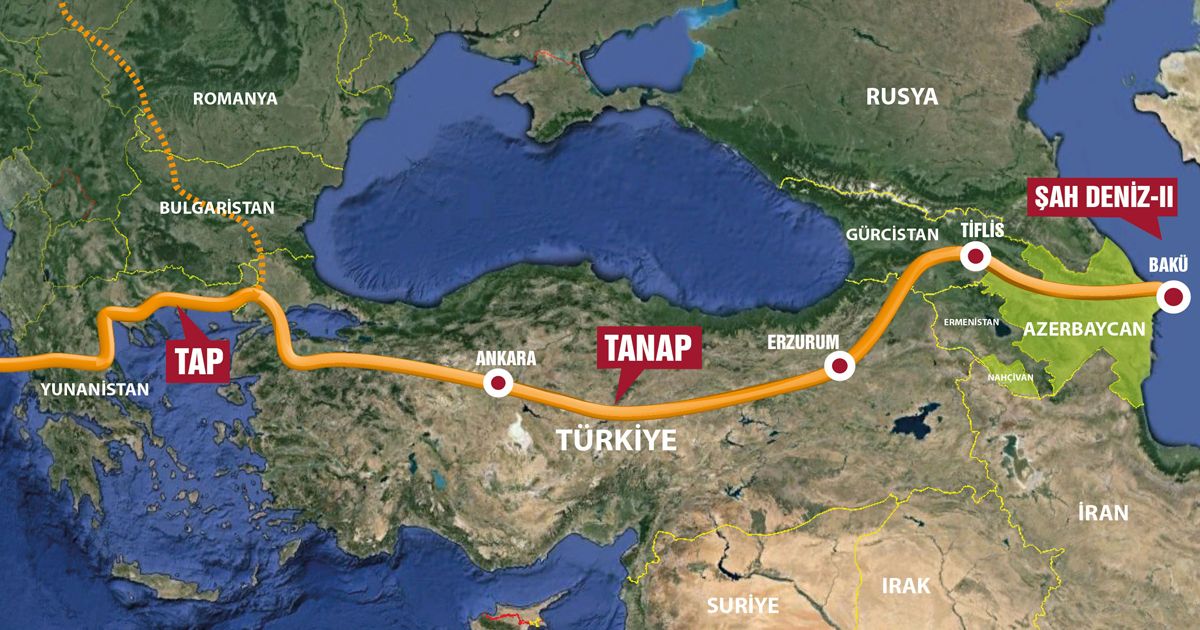
The Iğdır-Nakhchivan pipeline builds on previous successful collaborations, such as the Baku-Tbilisi-Ceyhan oil pipeline and the Trans-Anatolian Natural Gas Pipeline (TANAP). These projects have not only strengthened bilateral ties but also reshaped Eurasia's energy landscape, establishing Türkiye and Azerbaijan as key energy corridors between East and West.
Sultan Zahidov noted that the commissioning of the Iğdır-Nakhchivan gas pipeline stands as a testament to the enduring friendship and brotherhood between Azerbaijan and Türkiye.
“Over the years, the two nations have successfully implemented major energy and infrastructure projects, including the Baku-Tbilisi-Ceyhan oil pipeline, the Baku-Tbilisi-Kars railway, and the Baku-Tbilisi-Erzurum gas pipeline. The realization of this new initiative will further strengthen bilateral relations, fostering greater regional cooperation.
This strategic gas pipeline project reaffirms Azerbaijan’s pivotal role as a global energy hub. Currently, Azerbaijan supplies energy to 12 countries, including 10 in Europe, solidifying its position in the international energy market. As the central junction of the East-West and North-South communication corridors, Azerbaijan plays a crucial role in enhancing Eurasia’s transport, infrastructure, and energy networks, driving sustainable development and regional connectivity,” he said.
Strengthening Turkic integration
Source: www.turkicstates.org
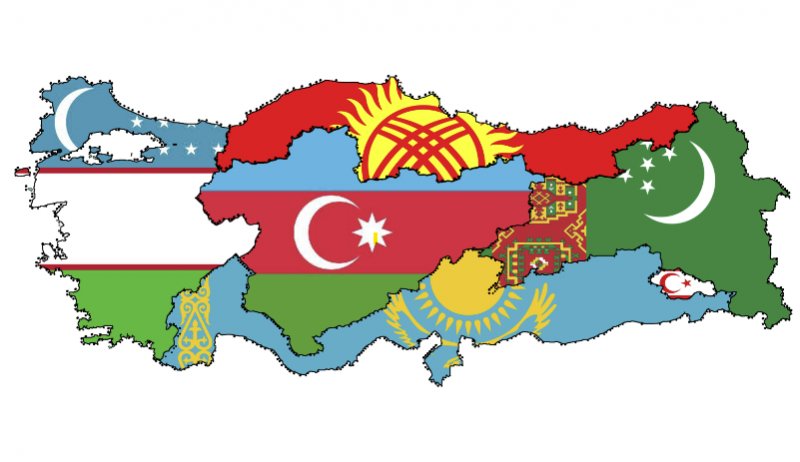
Mr. Zahidov also highlighted that the Iğdır-Nakhchivan gas pipeline would strengthen Turkic integration by enhancing the influence of Azerbaijan and Türkiye, reducing Nakhchivan’s energy dependence, and expanding regional cooperation.
“The realization of this project will play a significant role in advancing integration within the Turkic world. Nakhchivan, often regarded as the gateway to the Turkic world, holds strategic importance in the region. Reducing Nakhchivan's reliance on Iran for energy supply will bolster the influence of both Azerbaijan and Türkiye in the Caucasus, while also accelerating internal integration efforts within the Turkic world.
Central Asian nations are actively engaged in key regional energy and transportation initiatives, such as the Middle Corridor and the Baku-Tbilisi-Ceyhan pipeline. The launch of projects like the Iğdır-Nakhchivan gas pipeline is expected to serve as a catalyst for deeper cooperation among Turkic states, further expanding the framework for collaboration and connectivity across the region,” Zahidov noted.
A strategic foresight
Source: AzerTAG
The Iğdır-Nakhchivan gas pipeline stands as a testament to the strategic foresight of Türkiye and Azerbaijan. By addressing longstanding energy challenges and reducing external dependencies, the pipeline not only enhances regional energy security but also reinforces the geopolitical alliance between the two nations. As energy cooperation deepens, the South Caucasus region is likely to witness increased stability, economic development, and integration into the broader global energy framework.


Similar news