Erdogan and Putin’s talks: Turkey’s future in BRICS


The upcoming BRICS Summit, to be held in Russia from October 22 to 24 , has drawn significant attention due to the participation of leaders from 24 nations. In light of Western efforts to isolate Russia, the summit serves as a counter-narrative, showcasing the emergence of new global power centers.
With 35% of the world’s GDP concentrated within BRICS and a population exceeding 3.5 billion, the bloc continues to grow in influence. Discussions about establishing a BRICS currency—possibly digital—further reflect the intention to reduce reliance on the U.S. dollar.The steady decline of the dollar’s dominance as a global reserve currency, from 95% to 60% over the last 25 years, signals a significant shift in financial power. This trend points not only to the weakening of American financial hegemony but also to the rising economic potential of the Global South.
Turkey’s support for BRICS expansion aligns with its shifting foreign policy priorities. As a NATO member since 1953 and a key player on the alliance’s eastern flank, Ankara has long positioned itself as a guardian of Western security interests. However, Turkey’s economic ambitions have evolved beyond its historic focus on Europe, especially given the EU’s prolonged hesitancy toward granting full membership. In recent years, Turkey has pursued more diverse partnerships, including with BRICS countries.
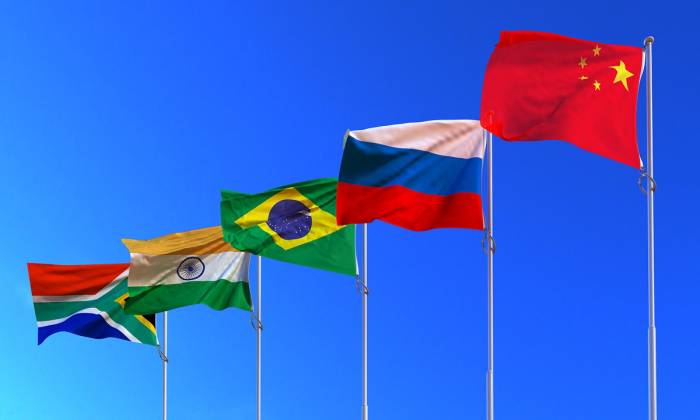
Should Turkey join BRICS , it stands to benefit from closer economic cooperation with new markets, thereby reducing its reliance on European trade. Turkey's strategic geographic position could transform it into a vital link between BRICS and Europe, offering the bloc greater access to European markets and enhancing global trade integration. Turkey’s membership would also highlight the growing appeal of BRICS as an alternative platform for countries seeking to diversify their alliances.
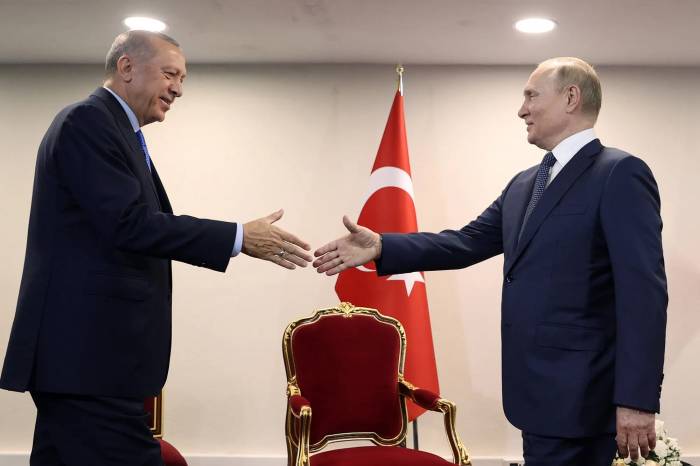
A significant feature of the BRICS Summit will be the bilateral meeting between President Recep Tayyip Erdoğan and President Vladimir Putin. Their discussions are expected to focus on energy cooperation, with particular emphasis on the gas hub project in Turkey. Despite early ambitions, the project has not advanced as planned, requiring enhanced political and economic collaboration for its success.
The Sinop nuclear power plant project will also feature prominently in these talks, as Turkey seeks Russian backing to ensure its timely completion. Additionally, the possibility of Turkey joining BRICS will be a topic of strategic importance. Such a move could strengthen Turkey’s geopolitical influence, positioning it as a bridge between Europe and Asia and further cementing the role of BRICS in global governance.
Turkey’s diplomatic involvement in the Ukraine conflict demonstrates its capacity to mediate in complex geopolitical disputes. In 2022, Ankara facilitated critical negotiations between Russia and Ukraine, culminating in the Istanbul Grain Deal. This agreement underscored Turkey’s potential as a reliable intermediary. With speculation of a possible meeting between the Russian and Ukrainian presidents by the end of 2024, Turkey could again offer its platform for renewed peace talks.
While Western nations continue to supply arms to Ukraine, Turkey advocates for dialogue, emphasizing that sustainable peace can only be achieved by addressing the interests of all parties involved, including Russia. Ankara’s diplomatic strategy reflects its understanding that military solutions alone cannot resolve long-term security challenges.
Turkey’s call for negotiations, despite Western insistence on military support for Ukraine, stems from a pragmatic understanding of geopolitical realities. Ankara recognizes that any new European security framework must involve Russia. While Kyiv has secured certain security assurances from Western countries, the absence of long-term guarantees from Russia risks turning these agreements into mere temporary arrangements.
Turkey’s position acknowledges that ignoring Russia’s interests will hinder the establishment of lasting peace in Eurasia. As a regional power, Turkey seeks to balance competing interests by promoting diplomacy and fostering inclusive security arrangements. This approach aligns with its broader strategy of diversifying partnerships and exploring new alliances through platforms like BRICS.
The BRICS Summit in Russia symbolizes the shifting dynamics of global politics, highlighting the limitations of Western efforts to isolate Russia and the growing influence of the Global South. Turkey’s active support for BRICS expansion reflects its broader ambition to reposition itself within the emerging multipolar world order. Through strategic dialogue, energy cooperation, and mediation efforts, Turkey aims to strengthen its role as a key geopolitical player.
As BRICS explores new financial instruments and trade partnerships, the bloc’s future trajectory will have significant implications for global governance. The outcomes of the summit will demonstrate whether BRICS can emerge as a viable alternative to traditional Western-dominated structures and pave the way for more inclusive international cooperation.
(If you possess specialized knowledge and wish to contribute, please reach out to us at opinions@news.az).


Similar news