Europe losing interest in EVs while hybrids gain popularity


By Asif Aydinli
According to Data Bridge Market Research , the global hybrid vehicle market is expected to grow in the period from 2022 to 2029. It is believed that the average annual growth rate of the hybrid vehicle market will be 12.83% during this period. In Europe, this figure will be 6.25%. Considering this figures, it is worth noting that Europeans admit that consumers are returning to petrol-driven models, and states are contemplating changes to policies that stimulate the production of electric vehicles.
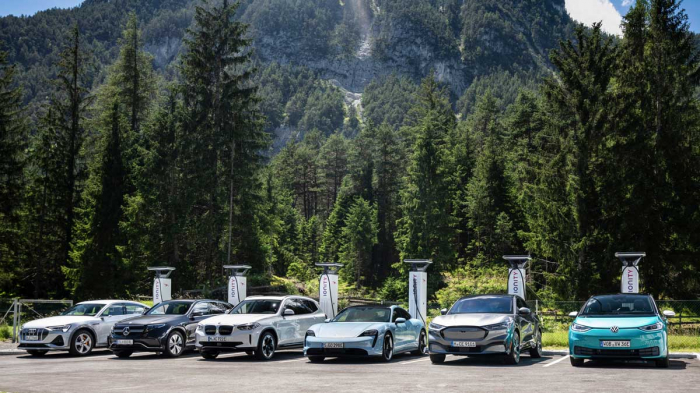
Citing top executives from General Motors, Nissan, Hyundai, Volkswagen, and Ford, The Financial Times recently noted that due to the declining demand for electric vehicles, well-known car manufacturers are now focusing on hybrid vehicles. According to the publication, the still weak infrastructure of charging stations and high interest rates on loans have reduced buyer activity regarding fully electric vehicles, revitalizing hybrid vehicle sales, which most of the industry long considered nothing more than a temporary solution.  The head of Ford's European division, Martin Sander, said at the Future of the Car Summit in London held with the support of The Financial Times that the pace of transition in Europe "depends on the consumer", and the company is ready to continue selling hybrid models into the next decade, even though it previously announced plans to completely switch to electric vehicles on the European continent by 2030.
General Motors, which previously almost excluded plug-in hybrids from its model row, announced in January of this year that it would resume using this technology. Car manufacturers have to adjust their plans amid growing competition from Chinese companies and existing concerns that governments may change the announced plans for transitioning to electric vehicles and abandoning fossil fuel-powered vehicles. Competition from Chinese companies has only increased the focus of car manufacturers on hybrids, the profitability of which is usually expressed in double digits, while the production of electric vehicles is often associated with losses. As a result, according to the European Automobile Manufacturers' Association (ACEA), in February 2024, the demand for hybrid vehicles has increased by 29%. Against this backdrop, a decline in electric vehicle sales was recorded on Europe's largest market — Germany.
The number of people wishing to buy electric vehicles has dropped in Iceland and Finland. Apparently, drivers in these countries were disappointed with the efficiency of electric vehicles in winter and switched to hybrids, which is also confirmed by The Financial Times. Electric vehicle manufacturers admit that sub-zero temperatures reduce the maximum trip range, as the car consumes more energy to heat the cabin and maintain the working temperature of the batteries. Heat has a similar effect: Additional energy is used for cooling the cabin. According to the EU Green Deal, presented by the European Commission in the summer of 2021, Europe should fully transition to "clean" vehicles free from CO2 emissions by 2035. In fact, this will mean a ban on the sale of new cars with diesel and petrol engines.
By 2050, Europe aims to achieve climate neutrality. However, the European market has yet to achieve the level of development at which electric vehicles become much cheaper and easier to charge. For this reason, hybrids are still preferred here. Facing huge costs in reorienting their business towards the production of electric vehicles, high sales of petrol cars, and shareholders demanding profitability, the European automotive industry cannot yet decide whether hybrids are a bridge to a fully electric future or a dead end. As long as the abovementioned problems exist, the current situation works in favour of maintaining hybrids on the market. Even car manufacturers admit this. For instance, Renault CEO Luca de Meo stated that a complete ban on fossil fuel vehicles in 2035 is " potentially possible, but the right conditions must be created ". 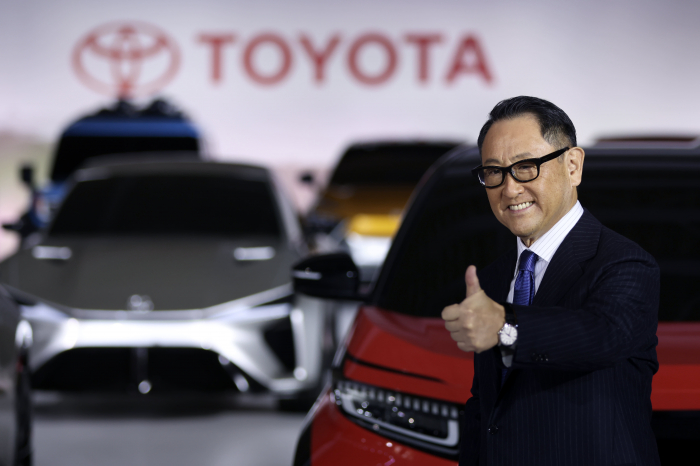 Toyota Chairman Akio Toyoda spoke out against the transition to electric vehicles by banning traditional fuel transport. Back in late 2020, he noted that electric vehicle supporters do not take into account emissions resulting from power generation, as well as costs associated with transitioning to electric vehicles. Even now, four years later, he believes that the share of electric vehicles on the market will reach a maximum of 30%, while the rest will be occupied by hybrids, hydrogen fuel cell vehicles, and fuel-powered vehicles. This acute topic has already become part of European policy, sparking heated debates.
The largest conservative political force in Europe, the European People's Party (EPP), intends to abandon plans for Europe's complete transition to "clean" vehicles free from CO2 emissions. In June this year, elections will be held to the European Parliament, and if the EPP wins, it promises voters to reconsider this ban, Politico reports . German MEP Jens Gieseke, who represented the EPP in discussions on tightening CO2 emissions standards, has long opposed the European Commission's "green" ideology. He warned that the decision to stop selling ICE cars would lead to "Havana effect": In his opinion, Europeans will end up driving old fuel-driven cars for decades, as in the capital of Cuba. 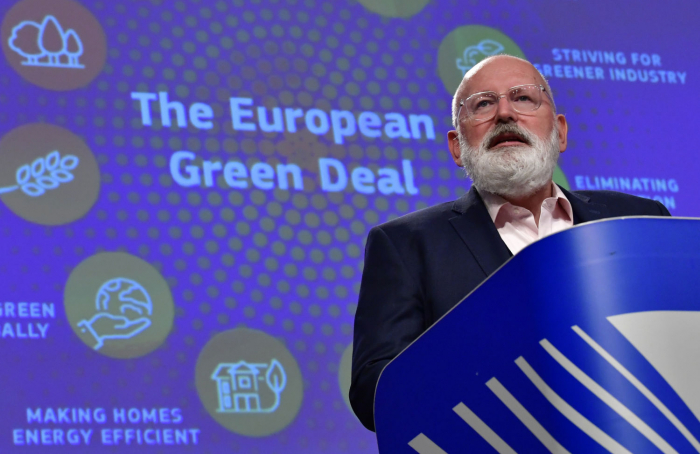 According to Europe Elect s, the EPP remains the most popular group in the European Parliament: it might gain 22.9% of the vote. This is approximately 177 seats out of the 705. There is not much time left to see if the expected forecasts will come true and what the future of hybrid cars on the Old Continent will be.


Similar news