France vs. Türkiye: Can Macron and Erdoğan bridge the divide?


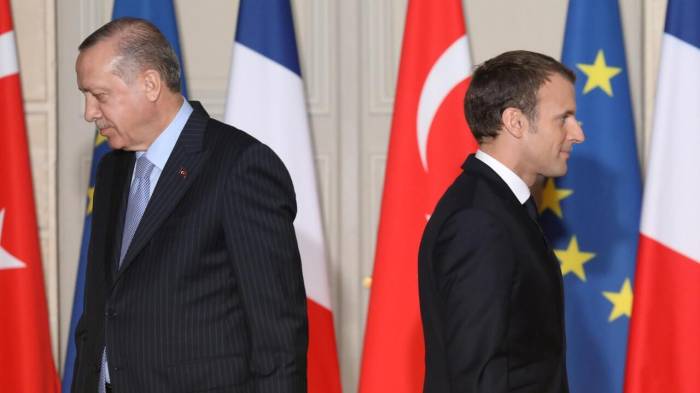
Turkish President Recep Tayyip Erdoğan and French President Emmanuel Macron held a phone conversation to discuss key aspects of bilateral relations and pressing regional and global challenges, according to the Turkish Presidency’s Communications Directorate.
The two leaders focused on strengthening political and economic cooperation, highlighting the need to deepen engagement in trade, security, and cultural affairs. Their dialogue also addressed conflict resolution in regions where both nations wield significant influence, as well as broader issues such as counterterrorism, climate change, and the preservation of international stability.
Erdoğan and Macron reaffirmed their commitment to maintaining constructive dialogue and advancing cooperation to enhance global peace and security. A follow-up meeting is expected in the near future to build on these discussions.
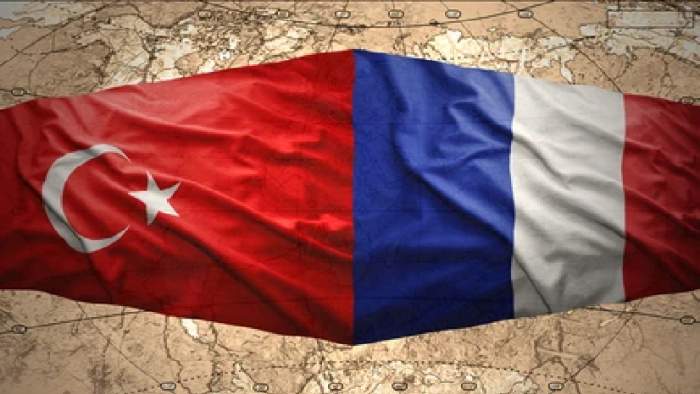
Despite efforts to foster dialogue, tensions between France and Türkiye have intensified in recent years, largely due to geopolitical rivalries. Political analyst Tofig Abbasov argues that France's foreign policy ambitions have contributed to these frictions, particularly in regions such as Libya, the Eastern Mediterranean, and Cyprus.
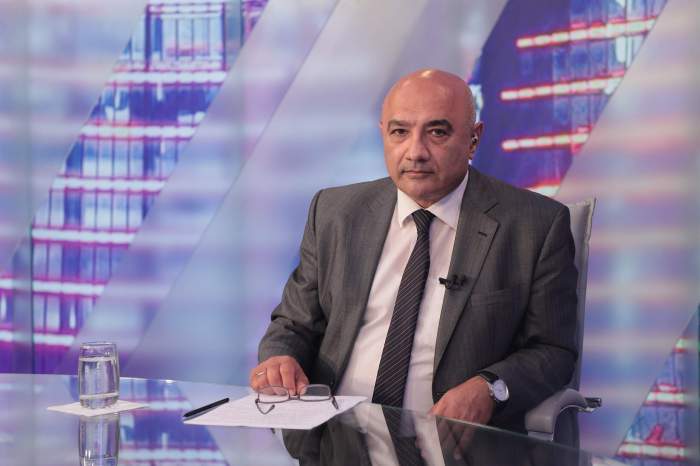
"France has traditionally sought to maintain dominance in strategically vital areas, often imposing its stance as an indisputable given," Abbasov explains. "Naturally, this has triggered a strong response from Türkiye."
In Libya, for example, France backed Field Marshal Khalifa Haftar, while Türkiye supported the internationally recognized government. "This alignment of opposing forces underscores the deeper strategic rivalry between the two nations," Abbasov notes.
The Eastern Mediterranean has also been a flashpoint, particularly over contested territorial waters around Cyprus and Greece. France, siding with its NATO and EU allies, has played an active role in these disputes, while Türkiye, leveraging its military strength and regional strategy, has remained steadfast in defending its interests.
France’s ambitions extend beyond security concerns to economic stakes, particularly in the energy sector. "Paris has aggressively sought a foothold in Mediterranean gas extraction, but Ankara has made it clear that it can manage these resources independently," Abbasov observes.
Another persistent point of contention is Türkiye’s long-stalled bid for European Union membership, with France playing a central role in blocking progress. "For years, France has actively worked to delay Türkiye’s accession, using every available diplomatic tool," Abbasov says.
However, he notes that the dynamics may be shifting. "Paris is beginning to recognize that prolonged confrontation with Türkiye is counterproductive. Under Macron, France has encountered diplomatic setbacks, and there is a growing realization that Türkiye is not a nation that can be maneuvered at will—compromise is necessary."

The evolving relationship also intersects with broader regional conflicts, particularly the Armenia-Azerbaijan dispute. "France’s backing of Armenia contrasts sharply with Türkiye’s firm support for Azerbaijan," Abbasov points out. "Ignoring the strategic partnership between Ankara and Baku is a miscalculation that could impact France’s influence in the South Caucasus."
Against this backdrop, France appears to be recalibrating its approach. "Macron’s administration is signaling a readiness to engage with Türkiye, recognizing that continued friction could erode France’s standing on the global stage," Abbasov concludes. "Should Paris persist in its hardline stance, it risks not only straining ties with Ankara but also weakening its diplomatic leverage more broadly."


Similar news