Germany prepares for war: Key NATO military installations strengthen defense


By Samir Muradov
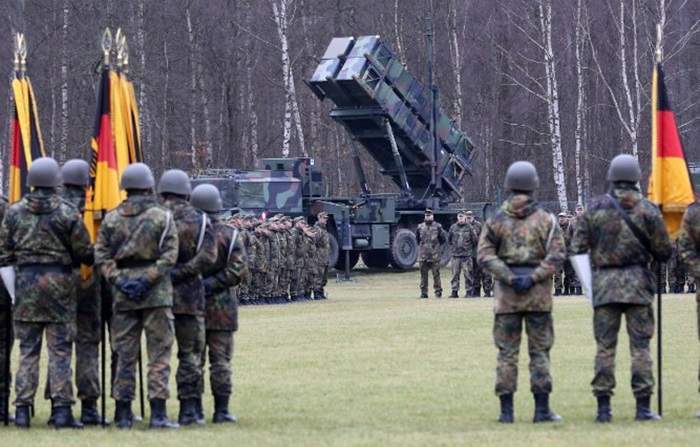
Amid growing geopolitical tensions in Europe, Germany is ramping up its military activities by conducting large-scale exercises under the name Red Storm. These maneuvers by the Bundeswehr, Germany’s armed forces, are designed to train the defense of strategic infrastructure and ensure operational coordination in the event of a potential conflict. This is happening against the backdrop of concerns about a possible escalation of war in Europe within the next five years.
Germany plays a crucial role in ensuring the security of the Alliance . The country is home to key NATO and U.S. military installations , which serve as vital hubs for operational activities in Europe. Among these are several important facilities:1. Stuttgart – the location of the U.S. European Command (EUCOM), responsible for coordinating operations in Europe, Russia, and Africa. It also hosts the U.S. Africa Command (AFRICOM), overseeing military operations on the African continent.
2. Ramstein – one of the largest U.S. airbases in Europe, home to the U.S. Air Forces in Europe (USAFE), which plays a critical role in NATO's air operations.
3. Wiesbaden – the headquarters of the U.S. Army Europe (USAREUR), responsible for overseeing ground operations of U.S. forces on the continent.
4. Grafenwoehr and Hohenfels Training Areas – major sites for large-scale NATO and U.S. exercises, where combat readiness scenarios are practiced.
5. Büchel Air Base – a storage site for NATO’s tactical nuclear weapons, including U.S. B61 bombs, which may be deployed in the event of a conflict.
These facilities underscore Germany's strategic importance within NATO’s security system , positioning it as a critical logistics hub for troop movements and the supply of allies.
As the war in Ukraine drags on with global repercussions, it is only logical that NATO is intensifying the training of its armed forces. Russia's actions have undermined trust in the pan-European security system, violating international agreements and principles of international law. The Red Storm exercises aim to enhance the operational coordination of forces and ensure readiness to defend NATO's eastern borders if necessary.
Moreover, Germany, as NATO's strategic logistics center, plays a pivotal role in deterring potential threats. Key routes for transporting troops and supplies to the Alliance's eastern borders run through its territory. Importantly, the Red Storm exercises are not only focused on mobilizing forces but also on improving their coordination in modern conditions, where the speed of decision-making and new technologies play a decisive role.

Despite the strategic importance of these exercises, their scale raises concerns among some critics who believe that such maneuvers may heighten tensions between the West and Russia. There are indeed fears that preparations for war with Russia could be perceived as a provocation. However, the Kremlin's aggressive policies in recent years have forced NATO and European countries to seriously reconsider their approaches to security. Russia's refusal to pursue diplomatic resolutions and the growing unpredictability of its actions have made such exercises a necessity.
NATO’s eastern frontiers have become zones of constant exercises and increased Alliance presence since Russia's full-scale invasion of Ukraine. Nonetheless, the question of NATO's readiness to rapidly deploy its forces in the event of further escalation remains open. The Red Storm exercises are designed to assess the Alliance’s ability to respond swiftly to new challenges and threats.
Doubts about NATO's ability to effectively mobilize resources and troops in the event of a large-scale conflict are justified. However, conducting such exercises is a critical part of preparing for potential unforeseen scenarios. They test the Alliance's readiness and its ability to quickly and effectively defend its borders.
The key question on Europeans' minds today: Is a large-scale war in Europe inevitable? Exercises like Red Storm can be seen as a signal of preparation for the worst-case scenario, but the real likelihood of a major conflict remains low as long as NATO and Russia adhere to deterrence policies. However, the situation in Ukraine has shown that wars in the 21st century can erupt suddenly and evolve with a high degree of unpredictability.
Russia’s aggressive actions have disrupted the status quo, and military preparations and exercises are no longer seen merely as precautionary measures—they have become necessary to deter new threats.
The Red Storm exercises and NATO's increased military activity on Europe’s eastern borders send a clear message of serious concern over the potential escalation of conflict in the region. Germany, as NATO’s strategic logistics hub, continues to play a key role in ensuring Europe’s security. In the coming years, the Alliance’s readiness to counter potential threats will depend not only on military exercises but also on the political will to maintain peace and stability.


Similar news