How Azerbaijan is future-proofing its liberated territories


Editor's note: Aysel Mammadzada is an Azerbaijan-based journalist. The views expressed in this article are the author’s own and do not necessarily reflect those of News.Az.
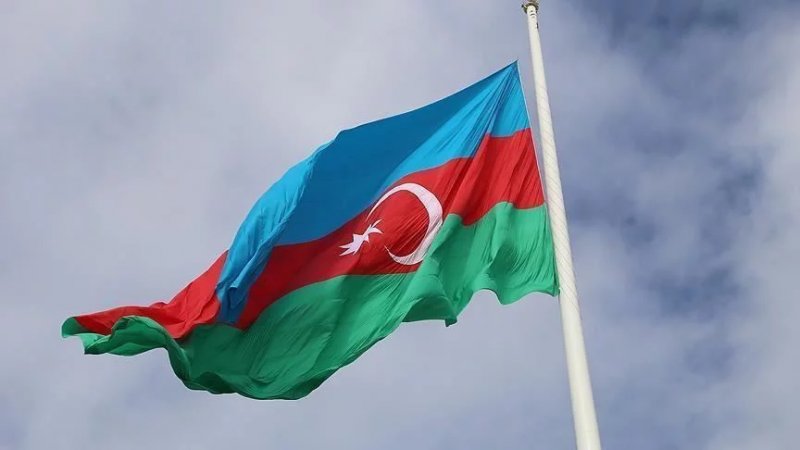
Since 2020, Azerbaijan has undertaken one of the most ambitious reconstruction programs of the post-Cold War era to restore its liberated territories. Known as the First State Program on the Great Return, the initiative goes beyond rebuilding destroyed towns or resettling displaced citizens. Fundamentally, it is a generational transformation aimed at turning once war-torn regions into productive, sustainable, and dignified communities that support modern life.
At its core, the program is guided by a clear strategic principle: the liberated territories should not simply be made habitable, but should serve as a model of long-term regional development, providing security, infrastructure, and economic opportunity for current and future generations. In this way, Azerbaijan is showing that post-conflict victory is measured not just by military success, but by the restoration of society and the revival of everyday life.
Building before returning: A strategy-driven reconstruction model
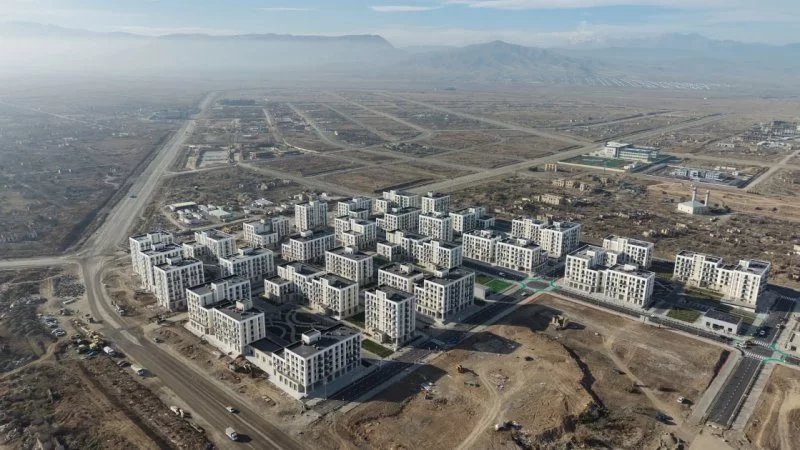
The first stage of the Great Return prioritized foundation-building over hurried resettlement. Without energy, water, transportation, and communication networks, no region, especially one emerging from decades of mine contamination and devastation, can function. This pragmatic, forward-looking approach was underscored in the state’s strategic statement:
"To restore the regions and integrate them into Azerbaijan’s economic chain, major infrastructure projects such as energy, water supply, roads, and tunnels have been implemented, mobility is being increased, and the population is being comfortably settled."
This emphasis reflects a nuanced understanding of reconstruction: returns must be dignified and sustainable, not merely symbolic. By ensuring that roads, power lines, pipelines, and public utilities are in place before population movements, Azerbaijan is avoiding the pitfalls often seen in other post-conflict zones, where civilians were encouraged to return before conditions were truly livable.
A phased and organized return of the population
Today, roughly 70,000 residents live and work in the restored regions. These returns are neither spontaneous nor uncontrolled; they are phased, closely monitored, and supported by both physical and social infrastructure development. This approach is further reinforced by official guidance:
“Currently, 70,000 people are living there, and more displaced persons and residents will be returned throughout the year. Projects are implemented gradually and with high quality, while public oversight is ensured.”
By 2027, the number of returnees is expected to reach 96,000 across 91 settlements. This carefully managed process reflects demographic planning rather than emotionally driven policy, enhancing the long-term sustainability of the restored territories.
Historic financial commitment and national prioritization
No ambitious reconstruction effort can succeed without financial realism. Between 2020 and 2026, the Azerbaijani government allocated 30.5 billion AZN for the redevelopment of the liberated territories — one of the largest domestic spending commitments in modern national reconstruction history.
The allocation is structured as follows:
- 22.3 billion AZN for 2020–2025, including 18.5 billion AZN in direct investment expenditures
- 4.7 billion AZN allocated for 2025
- 3.5 billion AZN allocated for 2026
These figures highlight two key dynamics: economic capacity and political will. Reconstruction is not treated as a secondary budgetary concern but as a central pillar of nation-building.
Demining: The silent prerequisite of development
Before a single brick could be laid or a railway restored, vast areas had to be cleared of deadly land mines and explosives. To date, more than 247,000 hectares have been cleared in Karabakh and Eastern Zangezur, an operation that is both costly and technically complex.
Demining is the invisible foundation of victory; without it, no agricultural field, school, airport, or home can be safely established. Azerbaijan’s dedication to this task underscores that the Great Return is implemented not as a symbolic gesture, but as a comprehensive national policy.
Transportation and connectivity: Reopening economic corridors
Modern transportation networks are reshaping the region’s economic geography. The development of airports, highways, and railways in the liberated territories is reconnecting these areas not only with the rest of Azerbaijan but also with international transport corridors.
Key milestones include:
- Three international airports in Fuzuli, Zangilan, and Lachin
- 65 road projects totaling 3,714.8 km, with 441.5 km already completed
- Barda–Aghdam railway (47.1 km) completed and operational
- Horadiz–Agbend railway now 69% complete
- Aghdam–Khankendi railway 28.3% complete
These networks serve multiple purposes: facilitating civilian mobility, supporting trade and logistics, and providing strategic routes that strengthen regional cooperation and economic diversification.
Energy and water security: Powering a new era
Energy and water infrastructure form the backbone of sustainable regional development. In the liberated territories, this encompasses:
- Over 1,000 km of high-voltage transmission lines
- Six major gas pipelines
- Gasification of 31 residential settlements
Water management, particularly in mountainous areas, has been reinforced through major projects such as the Zabukhchay Reservoir (26.8 million m³) and its 51.6 km pipeline, securing water supply for both households and agriculture.
These initiatives ensure that new settlements do more than merely exist — they thrive.
Housing, health, education, and cultural life
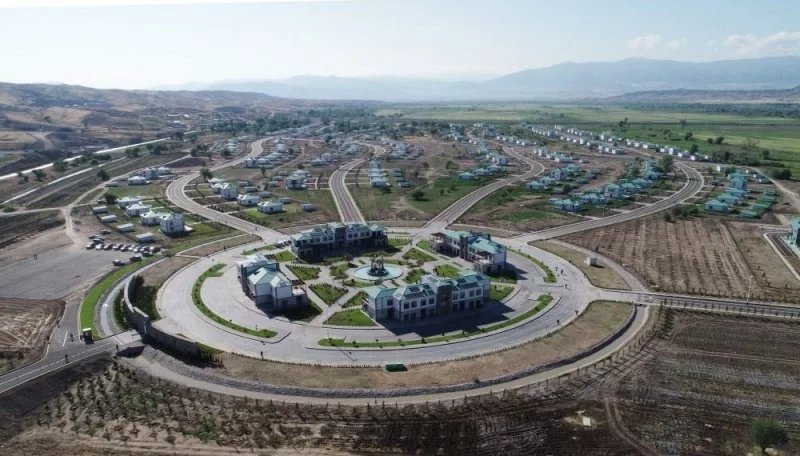
The success of the Great Return is measured not only in kilometers of roads or billions in investments, but in the social reintegration of returning communities. To date:
- 31 settlements have been restored
- Over 24,000 former IDPs have already returned
- Nearly 70,000 residents actively live and work in the region
Social infrastructure is rapidly expanding, including:
- A 90-bed Shusha Treatment and Health Center
- 21 schools
- 14 preschool institutions
- Multiple cultural and community facilities
These institutions are essential for reversing the demographic vacuum created over 30 years of displacement.
Restoring dignity and historical continuity
Beyond the statistics lies the human dimension. Hundreds of thousands of Azerbaijani families carried memories, keys, and photographs of homes they were unable to return to for decades. The Great Return gives tangible form to those memories, restoring continuity, heritage, and dignity — elements that cannot be measured but are essential to national revival.
In this context, victory is not complete when territory is liberated, but when life resumes.
A model for post-conflict reconstruction
The First State Program on the Great Return shows that Azerbaijan sees reconstruction not as a short-term post-war necessity, but as a multi-decade development strategy that integrates:
- Infrastructure
- Security
- Economic planning
- Education
- Social policy
- Cultural restoration
Few countries in recent memory have undertaken post-conflict reconstruction on a comparable scale, with such coherence and financial commitment.
As reconstruction progresses, new opportunities are emerging in tourism, agriculture, renewable energy, transport logistics, and innovation. The liberated territories are not simply being rebuilt — they are being future-proofed.
If the upcoming phases maintain this level of discipline, the Great Return could become one of the most successful and dignified post-conflict restoration models of the 21st century.
(If you possess specialized knowledge and wish to contribute, please reach out to us at opinions@news.az).


Similar news