Why Azerbaijan is emerging as one of the most financially stable states


Editor’s note: Seymur Mammadov is a special commentator for News.Az and the director of the international expert club EurAsiaAz. The article reflects the author’s personal opinion and does not necessarily represent the views of News.Az.
Azerbaijan’s economic policy in recent years clearly demonstrates that stability and sovereignty do not have to remain mere slogans or declarations. They can be the direct result of consistent and well calculated decisions. At a time when the global economy is facing rising geopolitical risks, debt pressures, and financial market volatility, Azerbaijan can confidently speak about its financial self sufficiency, minimal debt burden, and substantial reserves that ensure long term stability even amid global turbulence.
One of the country’s key achievements has been the sharp reduction of external debt. Several years ago, the government set a clear and principled objective to reduce external borrowing and move away from dependence on international financial institutions. This goal was implemented consistently and decisively. As a result, Azerbaijan’s external debt has fallen to a historic low and now stands at approximately 6.3 to 6.4 percent of GDP. This level is well below not only international benchmarks, but also the internal target of 10 percent that had originally been considered the upper limit.
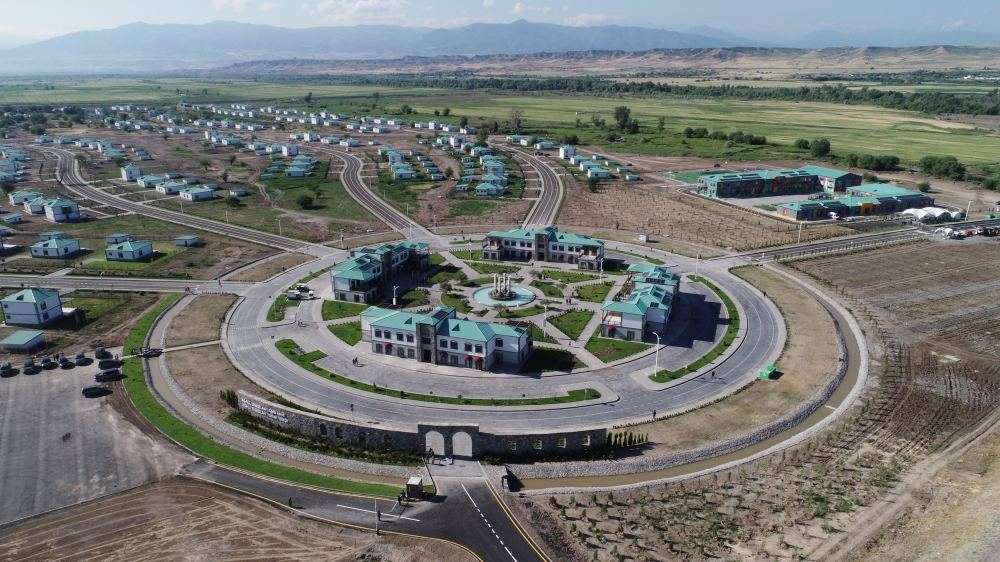
It is important to emphasize that this approach does not imply a rejection of borrowing as such. Azerbaijan has not closed the door to external financing. Instead, it has adopted a pragmatic and selective strategy. The country is returning to borrowing only in limited volumes and strictly for clearly defined purposes. Planned loans in the range of two to four billion dollars will be directed primarily toward infrastructure projects, including the development of transport corridors, the modernization of water supply and sewage systems, and the strengthening of regional connectivity.
At the same time, funding for the social and defense sectors will not be reduced, and projects related to the restoration of liberated territories will be fully financed. All of these areas have been and remain unconditional priorities of state policy.
Source: Trend
The country’s financial security provides a particularly strong foundation for this model. Azerbaijan’s strategic foreign currency reserves have continued to set new historical records for several consecutive years. Since the beginning of 2025, they have increased by more than $12.5 billion, reaching a level of $83 to 84 billion. According to data from the Central Bank and the government, these reserves exceed the country’s external debt by approximately 17 times. This is a ratio that is rarely observed even among advanced economies and in itself reflects an exceptional level of resilience.
Importantly, the growth of reserves has not been a one off event. It has been steady and sustained. By the end of the first half of 2025, reserves reached $77.7 billion, surpassed $81 billion by the end of September, and rose to a new historical maximum by December.
The structure of these reserves also deserves special attention. The strategic decision to increase the share of gold has proven to be both timely and far sighted against the backdrop of growing geopolitical risks and global uncertainty. Rising global gold prices allowed the State Oil Fund of Azerbaijan to gain more than $10 billion solely through asset revaluation. This diversification reduces vulnerability to commodity market fluctuations and strengthens the country’s financial safety cushion, providing an additional margin of security in the event of external shocks.
These factors have been directly reflected in international assessments. Two leading rating agencies, Moody’s and Fitch, have upgraded Azerbaijan’s sovereign credit rating to investment grade and simultaneously revised the outlook from stable to positive. It is important to understand that an investment grade rating is not a formality. It directly affects borrowing conditions, expands access to international financial markets, and allows the country to attract capital on more favorable terms.
Source: News.Az
At the same time, officials in Baku openly state that they consider the current rating level to be understated. Low external debt, substantial reserves, a largely self-sufficient economy, and large-scale investments in regional development place Azerbaijan in a position that arguably warrants higher standing in global rankings. The financial foundation that has been built is robust and in many respects stronger than that of several countries with the same rating. This suggests that Azerbaijan’s real economic indicators are not yet fully reflected in international assessments.
Economists also point to another revealing fact. Azerbaijan has joined the small group of countries whose foreign currency reserves exceed their GDP. There are very few such cases worldwide. In advanced economies, the situation is typically the opposite. For example, in Germany, foreign currency reserves account for less than 1 percent of GDP, while in the world’s second largest economy, China, they exceed 56 percent.
Azerbaijan’s economy is, of course, not comparable in scale to the leading economies of Europe and Asia. However, at its current stage of development, substantial financial reserves represent not excess, but a strategic necessity. They serve as a safety cushion and a guarantee that the economy will withstand any global scenario.
At the same time, no serious economic problems are expected in Azerbaijan in the medium term. According to forecasts, total GDP in 2026 will grow by nearly 3 percent and reach $134 billion. Growth in the non-oil sector is projected at 5 percent, with its volume reaching $101.7 billion. The share of the non-oil and gas sector in the national economy is expected to exceed 75 percent, indicating ongoing and deepening diversification.
Against the backdrop of global instability, Azerbaijan’s economic model appears particularly illustrative. The combination of cautious debt management, accumulated reserves, and targeted investment in infrastructure enables the country not only to meet its current obligations with confidence, but also to lay the groundwork for long-term sustainable growth. This is not an economy of quick wins, but one of strategic endurance, a quality that is increasingly becoming a key competitive advantage in the modern global economy.
(If you possess specialized knowledge and wish to contribute, please reach out to us at opinions@news.az).


Similar news