London blocks Russian oil routes


By Asif Aydinli
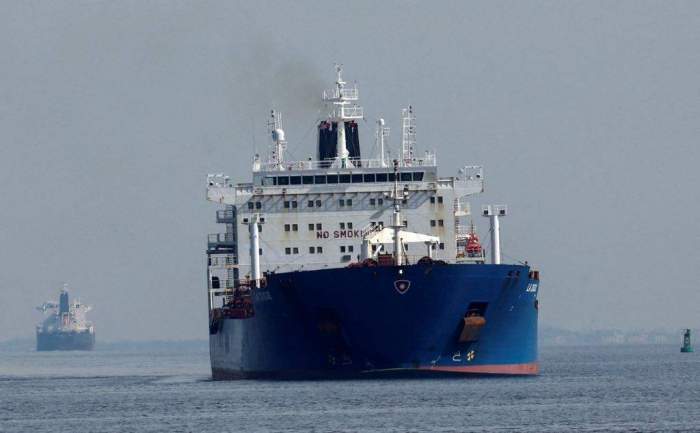
The United Kingdom has imposed sanctions on 11 oil tankers, which, according to British authorities, transport Russian oil and petroleum products to third countries in Russia's interest. The sanctions list was published on the British Treasury’s website. All 11 vessels on the sanctions list are flagged under Gabon, the Cook Islands, and Panama, News.Az reports citing neftegaz.ru.
The imposition of sanctions means that these ships will not be able to enter British ports, and their registration in the UK shipping register may be terminated. The Treasury cites the transportation of Russian oil or petroleum products to third countries in Russia's interest as the reason.According to Vessel Finder , some of the sanctioned vessels are moving from South Korean ports to Murmansk, from Ust-Luga to Egypt, from Primorsk to the Suez Canal, from Egypt to Novorossiysk, and so on.
In early July 2024, sources from The New York Times reported that current and former US Treasury officials proposed new measures against the "shadow fleet" of oil tankers that help deliver Russian oil in circumvention of sanctions. The proposal includes fines that would limit sales or decommission tankers. However, there are concerns that the proposed measures will lead to higher energy prices.
The price cap on Russian oil and petroleum products transported by sea was introduced by the Price Cap Coalition (G7, EU, and several other countries) in stages, synchronized with the entry into force of the EU embargo: December 5, 2022 - a price cap on Russian oil at $60 per barrel, February 5, 2023 - a price cap on petroleum products: $100 per barrel for premium products and $45 per barrel for discounted products. The G7 countries are taking measures to tighten control over the price cap and further pressure Russia to counteract its circumvention. The US has introduced a series of sanctions against ships and shipowners suspected of violating the price cap.
In February 2024, the US imposed blocking sanctions against Sovcomflot and its tankers, which temporarily caused them to idle, but now the tankers appear to be operating relatively normally.
After the conflict in Ukraine began, hundreds of tankers were bought by a group of unknown traders, intermediaries, and investors to maintain the supply of Russian oil on the market. In December 2022, the Financial Times reported that Russia was assembling a "shadow fleet" to bypass restrictions, which included 100 outdated tankers. Consulting firm Rystad data indicated that in 2022, Russia planned to add 103 tankers to its fleet through purchases and the redistribution of ships serving Iran and Venezuela.
In a late January 2023 publication, The Economist estimated the number of tankers used for Russian oil at 360 units. In March 2023, CNN reported that 25 to 35 ships per month were entering Russia's shadow fleet. In total, about 600 tankers (10% of the world market) were used to transport Russian oil at that time. Trafigura estimates the shadow fleet at 650 ships, Gunvor at 300-400 ships.
In February 2024, Deputy Prime Minister Alexander Novak stated that after the introduction of sanctions, Russia reoriented its oil and petroleum product exports to new markets. In 2023, 86% of oil exports went to friendly countries compared to 40% in 2021, and 84% of petroleum product exports compared to 30% in 2021.
In June 2024, Vladimir Putin extended the decree prohibiting oil supplies under price cap contracts, signed in December 2022, until the end of 2024.
P.S. The global oil market remains complex and unstable, and the imposition of sanctions on tankers is another step in trying to control the spread of Russian oil. The international community continues to seek ways to pressure Russia while attempting to avoid a sharp increase in energy prices. This includes diplomatic efforts and economic sanctions aimed at limiting financial flows and the transportation of oil. At the same time, the introduction of new measures may prompt Russia to seek alternative routes and ways to circumvent restrictions, potentially further complicating the situation. The energy market is under close scrutiny, and any changes in logistics or sanctions policy could significantly impact global prices and oil availability. Maintaining a balance between effective sanctions and stable energy prices will be a delicate and ongoing challenge for policymakers worldwide.


Similar news