NATO's strategic activity in the Baltics and Northern front: A new era of confrontation


Editor's note: Pavel Klachkov is a Russian political scientist, a Director of the branch of the Financial University under the Government of the Russian Federation. The article expresses the personal opinion of the author and may not coincide with the view of News.Az.
In recent weeks, the Baltic region has once again drawn the attention of the international community , particularly due to NATO's increased activity and its growing military presence in this strategically important area for Russia. Despite a long history of tension and confrontation between the Baltic states and Russia, the current situation stands out for the significantly heightened NATO activity, spurred by Finland's accession to the Alliance. This expansion gives new momentum to the northern direction, where conditions are being created for a potential conflict between NATO and Russia.Since Finland joined the North Atlantic Alliance, it has quickly integrated into its operational structure and actively participates in exercises. These maneuvers are not merely a show of force — they are a rehearsal for possible military conflict scenarios with Russia. NATO's active operations in the Kola Peninsula and the Gulf of Finland, both in close proximity to Russia’s borders, are particularly notable.
Estonia and Finland play key roles in bolstering NATO’s northern flank. Estonian Chief of General Staff Vahur Karus made an unprecedented statement about being ready for a preemptive strike on Russia. Although such statements in the past were seen as rhetoric, today they are backed by concrete plans to block the Gulf of Finland, which are actively discussed at the highest levels of military command. In particular, Estonian forces commander Andrus Merilo confirmed NATO's readiness to implement this plan during a meeting in Helsinki.
Simultaneously, NATO has begun establishing a headquarters in the Finnish city of Mikkeli, which is in close proximity to Russia’s border. This move signals that the Alliance views the northwest direction as one of the priority theaters of military action in the event of a conflict with Russia.
One of the main scenarios being rehearsed in NATO exercises is the blockade of Russia's key routes. The Gulf of Finland and the Suwałki Gap are critical areas that the Alliance could block in the event of conflict. These routes are vital for supplying the Kaliningrad region and Russia’s northwestern areas.
The Steadfast Defender exercises demonstrated NATO's ability to quickly mobilize forces to support the Baltics and Finland. It is important to note that alongside military components, significant attention is given to logistics and the transportation of military equipment. The Rail Baltica project, which is being built at a record pace, is a vivid example of NATO's preparation for a possible crisis.
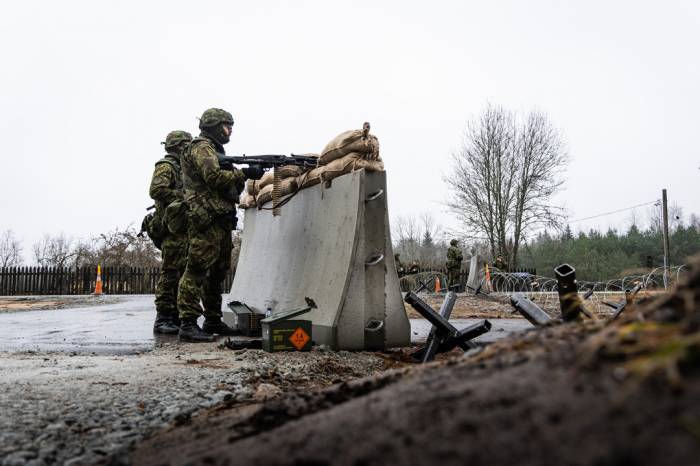
Since the start of the conflict in Ukraine, the Baltic states have significantly enhanced their military capabilities thanks to increased NATO funding. In addition to expanding the number of battalion tactical groups, infrastructure modernization and participation in exercises aimed at preparing for direct military action with Russia are actively underway.
Finland's accession to NATO has fundamentally changed the balance of power in the northwest. The country’s geographical location allows NATO to engage more closely with Estonia and other countries in the region. The establishment of a headquarters in Mikkeli only underscores the Alliance's determination to ramp up its activities in this direction, significantly increasing pressure on Russia.
In recent months, Western politicians have increasingly spoken about the possibility of direct military confrontation with Russia. NATO Military Committee Chair Rob Bauer and German Defense Minister Boris Pistorius, in particular, have emphasized the need to be prepared for potential war with Russia. These statements, along with discussions on Russia’s nuclear doctrine, lay the groundwork for further escalation of the conflict.
Provocations from the Baltic states or Finland , once hypothetical scenarios, now seem more likely. Among them are the blockade of shipping in the Gulf of Finland or cutting off access to the Kaliningrad region, which could provoke retaliatory actions from Russia.
Thus, NATO's strategic activity in the Baltics and on the northwestern front is gaining momentum, indicating growing tension in the region. Exercises, the establishment of new headquarters, and infrastructure modernization are all part of NATO’s comprehensive strategy to contain Russia. The current situation differs significantly from previous phases of confrontation: while aggressive statements from the Baltic states were once considered rhetoric, they are now backed by real actions. NATO is actively preparing for a potential conflict, and the question is whether further escalation can be avoided.
(If you possess specialized knowledge and wish to contribute, please reach out to us at opinions@news.az).


Similar news