New Caledonia vs. France: What’s behind the election postponement?


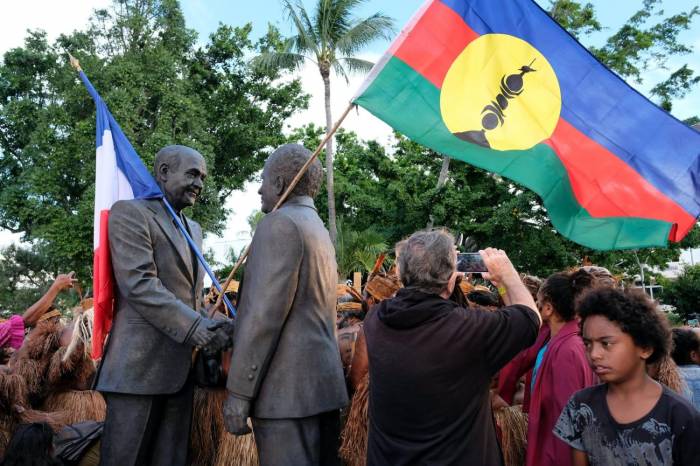
The elections in the French overseas territory of New Caledonia have been postponed until the end of 2025. This was recently announced by the Prime Minister of the Fifth Republic, Michel Barnier.
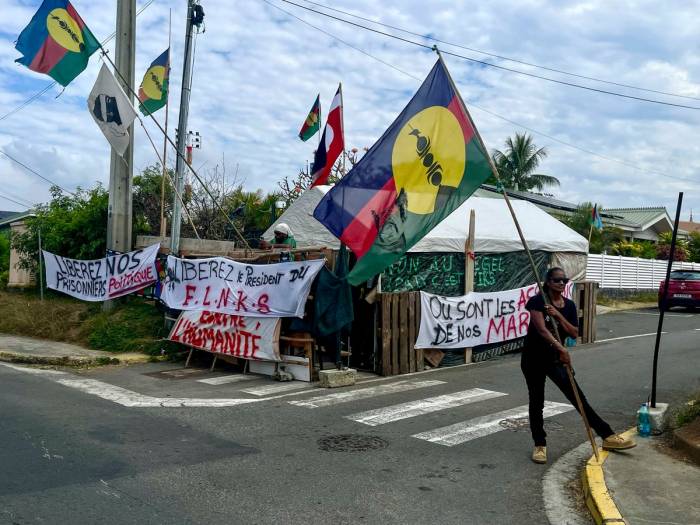
The French government has delayed the elections in New Caledonia, with the new Prime Minister, Michel Barnier, stating that the elections have been postponed by a year — until the end of 2025. During this time, the government aims to convince the indigenous Kanak people that remaining an overseas territory of France is more beneficial than gaining independence.
Simultaneously, Paris has taken a step back by promising not to send the controversial constitutional amendments bill to parliament for ratification. Let’s recall that these amendments would grant voting rights in regional elections to those who have lived in New Caledonia for more than 10 years. This change was intended to ensure that the indigenous Kanaks would remain a minority.
At first glance, it may seem that Paris has made concessions to the Kanaks , but this impression is misleading. If the French authorities were genuinely interested in making concessions to the population of the overseas territory, the elections would not have been postponed. They would have been held on schedule under the existing law, which prevents the majority of the incoming population from voting. However, the elections have been delayed for a year, during which Paris intends to either placate the rebellious island or resolve its problem through more radical means. France is determined to keep New Caledonia in its grip by any means necessary. If protests continue, the methods of persuasion will become more severe. There are no guarantees that the elections in a year's time will take place in a way that benefits the island's indigenous population, which, thanks to the suzerain's neocolonial policies, now constitutes a minority in their own homeland.
Paris is trying to ignore the political reasons behind the events in New Caledonia, attributing the discontent solely to economic difficulties. Barnier, speaking in parliament, stated that his government "understands the suffering" of the people of New Caledonia and will stand by their side. However, the protests that erupted in May were not sparked by the rising cost of living. Twelve people did not die fighting for lower prices. Azerbaijan was also not to blame, despite France’s attempts to attribute its own failures and miscalculations to external forces. It is surprising that Barnier did not mention Baku in his parliamentary speech. Perhaps the new prime minister wanted to emphasize the economic background of the protests in New Caledonia, downplaying their true cause.
In reality, the independence movement in New Caledonia has existed for several decades. Major protests began in 1984, and four years later, the Matignon Accords were signed between the pro-independence and pro-French sides. In 1998, the Nouméa Accord was signed, which outlined who had the right to vote in local elections: those who lived in New Caledonia at the time of the agreement and their descendants. This eased tensions but did not satisfy Paris or the growing non-indigenous population. The island's favorable climate attracted many Europeans, and in recent years, numerous French citizens and residents of other French overseas territories, with lower living standards, have settled there.
Today, the indigenous population makes up only 40% of New Caledonia’s 300,000 inhabitants. The policy of assimilation and dilution of the indigenous population has borne fruit.
The Nouméa Accord of 1998 expanded the autonomy of the overseas territory with special status. Once the situation had relatively calmed, Paris decided it was time to reverse course. The constitutional amendments were justified as a necessity for "greater integration into the French political system." In reality, the French authorities were alarmed by the three independence referendums and the growing protest sentiments. France is determined not to lose New Caledonia or other overseas territories, as this would diminish its status as an "Indo-Pacific power." The archipelago houses military bases and is a strategically significant region, whose importance, according to experts, will only increase in the coming decade. Therefore, Paris sought to take measures to nullify any chance of the Kanaks gaining a majority in the next referendum.
The rise in anti-French sentiments is the result of France's own policies. Paris refuses to acknowledge that its former colonies are populated by people, not slaves to be exploited in mines or displayed in cages like monkeys. Such was the case in 1931 when France exhibited a group of Kanaks in a cage at the International Colonial Exhibition. A people who have endured such suffering and humiliation under the French boot now wish to start anew, free from external domination. This is entirely natural, and if Paris truly wanted to keep New Caledonia, it should have attempted to negotiate with the island’s indigenous population 40 years ago. Perhaps then the Kanaks would not be so eager today to rid themselves of their French passports. These passports offer them significant advantages, but they are ready to renounce them. Doesn’t that say something?
According to experts , New Caledonia may still cause plenty of headaches for Paris. The Élysée Palace would do well not to deceive itself — the problems stem not from the economy but from the colonial past, whose shadow still lingers in many ways today. The process of decolonizing the island will continue despite the government's tricks. A new elite, born from the struggle for independence, now wants to control the wealth of their land. Why should New Caledonia’s strategic nickel reserves enrich French pockets when the Kanaks could use them to build the economic foundation of their own independence? This is a crucial question, and it is one that is already being asked in New Caledonia.
(If you possess specialized knowledge and wish to contribute, please reach out to us at opinions@news.az).


Similar news