Éparses islands: Another victim of French neocolonialism


By Tural Heybatov
In October 2019, French President Emmanuel Macron made a two-hour visit to Grande Glorieuse, part of the Éparses Archipelago, a territory disputed by Madagascar since 1976.
Macron’s provocative stance ignited anger in Madagascar, which regards the Éparses as part of its territory. Rivo Rakotovao, President of Madagascar's Senate, responded: "Symbolically, this is too much! Madagascar, too, could go there and say, 'This is Madagascar!' The need to sit at the negotiating table to resolve these long-standing disputes is now urgent." And indeed, these disputes have persisted for far too long.
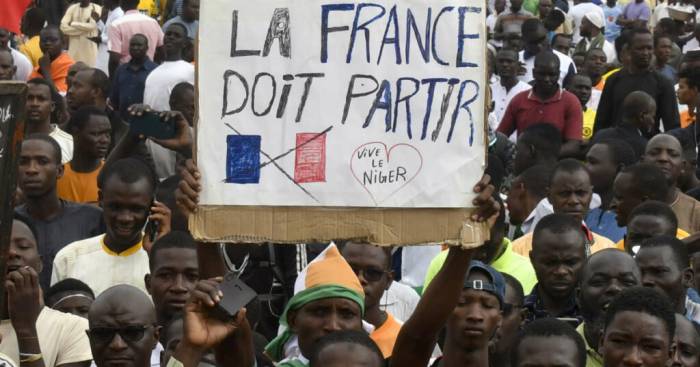
In 1897, Madagascar and its dependent territories, including the Éparses Islands, became a French colony. Madagascar gained independence in 1960, but through various maneuvers, political tricks, and administrative tactics, France managed to retain control of the archipelago, which has significant strategic and natural resources. Paris made no attempt to hide its strong-arm tactics. President Charles de Gaulle was open about his intentions: "These islands and islets may be of great importance to us, especially for nuclear testing. I will not allow Madagascar any involvement in what happens on the islands, even in meteorological observations." No one dared to oppose him—not even the UN.
Since 2005, the Éparses Archipelago has been considered part of the French Southern and Antarctic Lands. In May 2019, the issue was discussed during talks in Paris between Macron and Malagasy President Andry Rajoelina. A bilateral commission was created to develop an agreement by the 60th anniversary of Madagascar's independence. However, instead of honoring the agreements, Paris declared the archipelago a national nature reserve.
With an area of just 43 square kilometers, the Éparses Islands are inhabited only by military personnel and scientists. So why does France cling so tightly to this territory? The answer lies in its wealth of hydrocarbon deposits and strategic location. By controlling the Éparses, France can oversee a marine area of 640,400 square kilometers—almost twice the size of the maritime area controlled by mainland France (371,000 square kilometers).
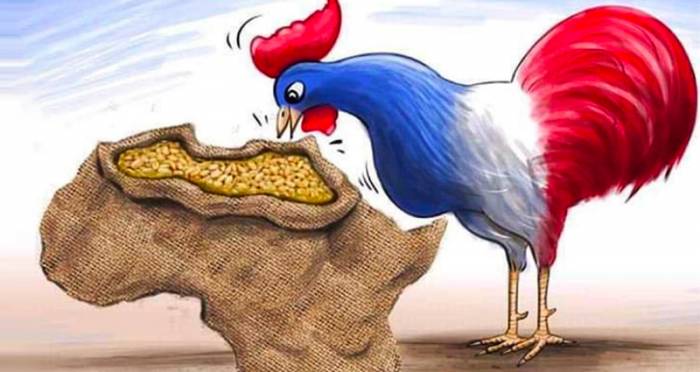
This territory’s abundant hydrocarbons are being exploited unlawfully by France, essentially plundering resources as part of Paris' neocolonial agenda. Under international law, post-colonialism, these islands belong to Madagascar. However, Madagascar lacks the military power to reclaim its land. Resolving the issue diplomatically would be possible if Paris respected international law. Instead, France flouts it, exploiting Madagascar's resources while Macron portrays himself as an environmentalist. Declaring the archipelago a nature reserve further entrenches French control—a decision laden with hypocrisy, considering that behind the environmental facade, oil extraction harms the islands' coral reefs and violates the economic rights of their rightful owners.
The Malagasy government has taken a firm stance against France’s "environmental terrorism," informing the international community of the ongoing destruction of this natural environment. Yet, this has made no difference. Paris continues its policy , signaling that it has no intention of relinquishing the territory.
France's claim to sovereignty over the Éparses is seen not only as a violation of property rights but as a breach of human rights and a blatant disregard for international law. Since 1973, Madagascar has demanded the return of the islands, arguing that decolonization is incomplete. The UN passed two resolutions in 1979 and 1980 supporting Madagascar, urging the French government to commence negotiations for the return of the islands without delay. UN Resolution 34/91 emphasizes that these islands are remnants of colonial rule and insists that their status should be resolved through international dialogue. The African Union has also consistently demanded the return of the islands to Madagascar.
France has ignored these demands, demonstrating blatant disrespect for both international law and the UN, showing that it intends to cling to neocolonial practices in pursuit of economic and geostrategic objectives. However, until Macron, French presidents generally avoided visiting these contested areas. Macron, seeing himself as a modern-day Napoleon or, at the very least, another de Gaulle, has broken with that restraint.
In October 2024, Malagasy President Andry Rajoelina, during the Francophonie Summit in Paris, commented on the Éparses issue in an interview with Le Figaro. "Like in the case of the Chagos Archipelago, which the United Kingdom returned to Mauritius, we wish for a similar successful outcome. We also want a return through an agreement. There is a joint commission, but we are still waiting. These islands are rich in natural resources, and the closest one, Juan de Nova, is just 150 kilometers from our coast. They are Madagascar."
In the post-colonial era, neocolonialism , with France as its leader, has reared its head. By ignoring UN demands and violating the rights of indigenous people, France continues its policy unchecked—a stain on international organizations that appear powerless in the face of Paris’s exploitative agenda. The international community must take this issue seriously and take steps against France to curb its colonial policy. Returning the Éparses Islands to Madagascar would be a triumph of justice, though such examples are rare in our world.


Similar news