Taiwan: A province of China, not an independent state — historical reality


On November 13, the U.S. Department of Defense approved a new arms supply package for Taiwan. The deal includes F-16 fighter jets, C-130 Hercules transport aircraft, IDF multirole combat jets, and a wide range of non-standard components, spare parts, and equipment. The package also covers logistical support and maintenance services and is estimated at $330 million.
Beijing reacted immediately. At a press briefing, Chinese Foreign Ministry spokesperson Lin Jian stated that the new shipment violates the One China principle and contradicts the Three Joint Communiqués, which form the political foundation of China–U.S. relations. He emphasized that the Taiwan issue remains “the first red line that the United States must not cross.” China urged Washington to stop supporting separatist forces and to respect previously agreed commitments.
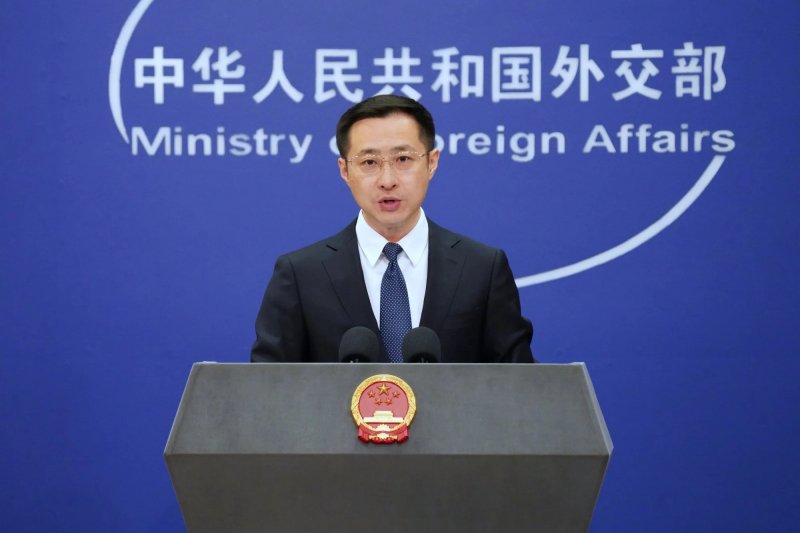
“China will take all necessary measures to defend its national sovereignty, security, and territorial integrity,” Lin said.
Meanwhile, another escalatory signal emerged in the region — a statement by Japan’s Prime Minister Sanae Takaichi that Tokyo reserves the right to engage in collective self-defense should China use military force against Taiwan. Analysts in Beijing noted that Takaichi became the first Japanese leader to openly frame the Taiwan situation as an “existential threat” to Japan’s security.
China’s response was sharp. The Ministry of Defense warned that, in the event of confrontation, Japan would “suffer a crushing defeat” against the People’s Liberation Army. Chinese government agencies also issued advisories urging citizens to refrain from travel to Japan, including for tourism and education, a move that carried both precautionary and clear political messaging.
In recent years, pressure on China regarding the Taiwan issue has grown, and the latest decision by Donald Trump’s administration to proceed with arms supplies is seen in Beijing as a deliberate provocation. Regardless of administration or party, Taiwan remains one of Washington’s most effective geopolitical tools for pressuring Beijing.
A notable example of such pressure was the visit of former Speaker of the U.S. House of Representatives Nancy Pelosi to the island in August 2022, an event that triggered a diplomatic crisis and sharply cooled China–U.S. relations. Following that visit, Beijing hardened its strategic stance against any external interference in what it considers its internal affairs.
For China, the Taiwan question is not a diplomatic debate or a negotiating topic; it is a matter of restoring national unity.
After Taiwan’s regional “elections” in January last year, China’s Foreign Ministry reiterated: “Whatever changes may occur in Taiwan, one fact remains unchanged — there is only one China, and Taiwan is an inseparable part of it.” This position is supported by international law and historical documents, including United Nations General Assembly Resolution No. 2758.
Taiwan has been part of the Chinese state since ancient times. After the Second World War, the island was officially restored under Chinese sovereignty. The Japanese surrender ceremony in 1945 took place in Taiwan, after which the island was formally recognized as Chinese territory. UNGA Resolution 2758 (1971) affirmed the People’s Republic of China as the sole representative of all China, with the Taiwan authorities removed from the organization.
The 1972 U.S.–China Joint Communiqué acknowledged Taiwan as part of China. Upon establishing diplomatic relations, Washington pledged to terminate its defense treaty with Taiwan and withdraw its troops.
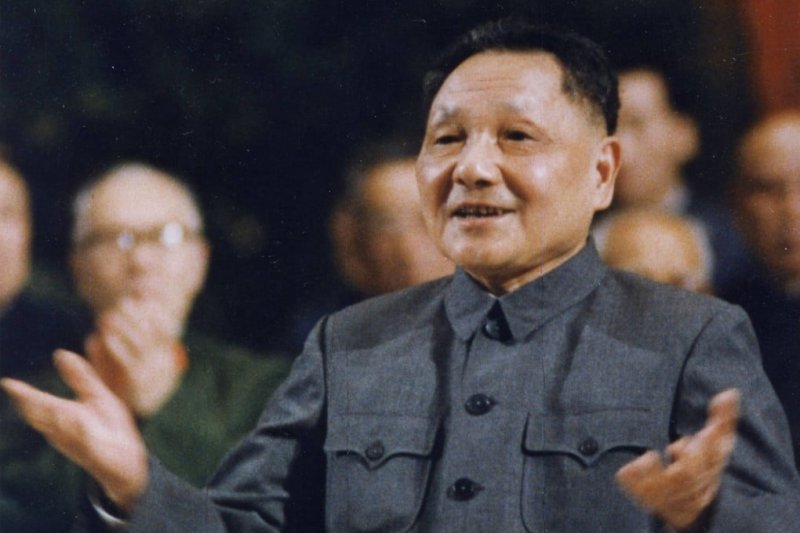
The concept of national reunification is based on Deng Xiaoping’s principle of “one country, two systems,” which guarantees high autonomy, private economic activity, self-governance, and preservation of the local way of life. China has repeatedly stated that peaceful reunification remains its priority, but it reserves the right to prevent secession or foreign interference.
Despite political tensions, cross-strait economic interdependence is already deep. Mainland China is Taiwan’s largest trading partner, and thousands of Taiwanese enterprises operate across the PRC.
Defending territorial sovereignty is consistent with international law and the UN Charter. Countries with their own experiences of separatism understand this particularly well. Azerbaijan, for example, consistently supports the One China policy.
During his visit to China, President Ilham Aliyev stated: “We fully support China’s territorial integrity and firmly support the One China principle. Azerbaijan was among the first to condemn the illegal elections in Taiwan.”
Separatism remains one of the gravest threats to statehood, and the Taiwan issue has therefore become a test for the international system’s ability to uphold sovereignty. China views Taiwan as part of its territory — historically, legally, and politically. No external pressure or attempts to use the island as a geopolitical leverage point will alter Beijing’s position: national territorial integrity is not subject to negotiation.
In the long term, the logic of international law, regional security considerations, and economic connectivity point to a clear conclusion: Taiwan’s future is inseparable from the future of a unified China.


Similar news