Triple support: How the U.S., Russia, and France strengthen Armenia


By Tural Heybatov
On March 2, 2024, during the Antalya Diplomatic Forum, Russian Foreign Minister Sergey Lavrov delivered a striking statement that seemed to confirm what many had suspected: the once-strong relationship between Russia and Armenia was heading downhill. Lavrov openly accused the Armenian leadership of deliberately undermining their alliance, pointing to Armenia's growing ties with non-regional powers as evidence of a betrayal of its commitments to Russia. He hinted that this shift could lead to a serious reevaluation of their partnership. But is this really the beginning of the end for Russian-Armenian relations, or is there more to the story than meets the eye? Could it be that, behind the dramatic political headlines, the economic cooperation between the two countries is not only surviving but thriving?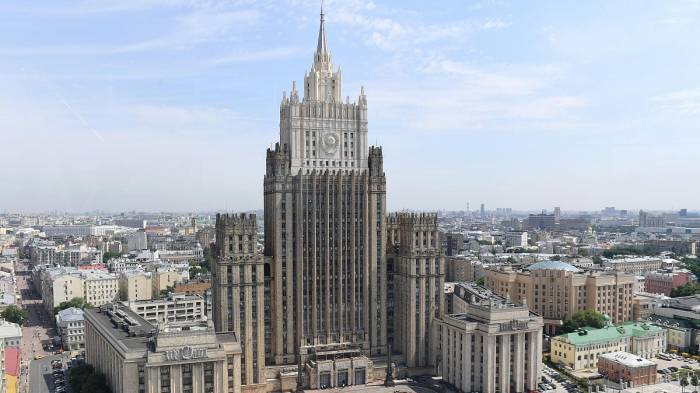
The turning point in Russian-Armenian relations dates back to 2018, when the "Velvet Revolution" brought Nikol Pashinyan , a politician with pro-Western leanings, to power. This shift marked the beginning of growing tensions between the two nations. Over time, political analysts and experts started discussing a gradual cooling of relations. Following the 44-day war in Karabakh in 2020 , Armenia even went as far as accusing Russia of "betrayal," further inflaming the situation.
In political discourse, Armenia is increasingly portrayed as a "puppet of the West." This strategic pivot toward the West has been underscored by a series of high-profile actions by Yerevan: the deployment of an EU monitoring mission , reduced engagement with the CSTO, and a noticeable cooling of relations within the Commonwealth of Independent States (CIS). Meetings in Brussels with European leaders only reinforced this new course.
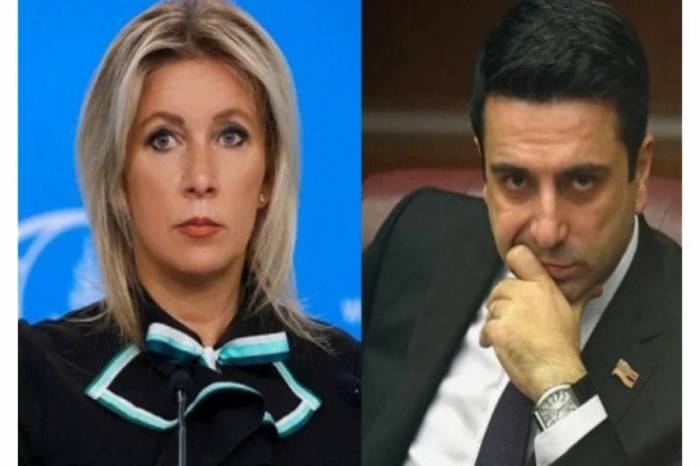
On the surface, relations between Moscow and Yerevan appear strained. Public spats between officials, like the well-publicized verbal exchanges between Russian Foreign Ministry spokesperson, make it seem like the countries are at odds. But if we take a closer look, this political drama might just be masking the fact that economic ties between the two countries are stronger than ever.
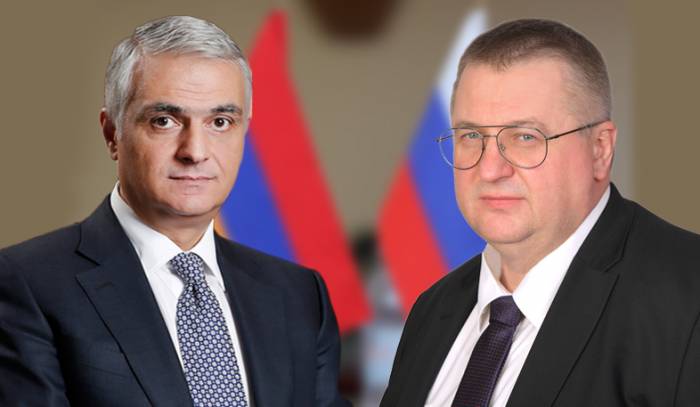
While politicians trade barbs and sharp words, economic data tells a different story. At a recent meeting of the Armenian-Russian Intergovernmental Commission on Economic Cooperation, Armenian Deputy Prime Minister Mher Grigoryan and Russian Deputy Prime Minister Alexei Overchuk presented some striking figures. By the end of 2024, trade turnover between the two nations is expected to hit a record $16 billion.
The trade relationship between Russia and Armenia is not just holding steady—it's booming. In 2023, trade increased by 55.8%, reaching $7.4 billion . And in just the first half of 2024, it had already jumped to $8.4 billion, putting the $16 billion target well within reach by the end of the year. For comparison, back in 2020, trade turnover was just $2.3 billion—almost seven times less. This rapid growth suggests that despite the political tensions, economic cooperation between the two countries is actually deepening.
The figures presented by Overchuk suggest that the dramatic headlines about a crisis in Russian-Armenian relations might be overblown. While political rhetoric paints a picture of serious disagreements, the reality on the ground shows a different dynamic—both nations are not only maintaining economic ties but are actively expanding cooperation in key sectors. Industry, energy, transport, and logistics remain at the heart of their bilateral projects.
It’s important to recognize that economic ties are more than just numbers—they reflect real strategic interests and mutual dependencies. Even as political relations seem to be cooling, Armenia is still deeply embedded in the economic structures that bind it to Russia. Russian capital continues to play a crucial role in Armenia’s economy, and Armenian goods have a reliable market in Russia.
Despite Pashinyan’s pro-Western stance, Armenia’s economic dependence on Russia remains largely unchanged. Russia is still Armenia’s largest trading partner, and there’s little sign that this status will change in the near future. For a country facing complex geopolitical challenges and lacking access to the sea, Russia remains a vital partner. Despite ongoing efforts to diversify its foreign economic ties, Armenia has yet to demonstrate the capacity to fundamentally shift its trade and economic orientation.
On the one hand, this reliance on Russia can be seen as a potential risk—being too dependent on a single partner always carries some vulnerability. On the other hand, Armenia continues to reap the benefits of this relationship, maintaining stable trade and economic ties even in the midst of political crises.
The West, of course, is eager to play a larger role in Armenia’s economic future. The deployment of the EU mission and Yerevan’s close ties with Brussels indicate that Europe is betting on Armenia as a key regional partner. However, despite these efforts, no Western nation can currently match the depth of Armenia’s economic ties with Russia. Strategic infrastructure, energy supply chains, and market access remain firmly within Moscow’s sphere of influence.
So, back to the original question: is the deterioration of Russian-Armenian relations real, or is it simply a well-orchestrated political performance? At first glance, both sides appear determined to convince the world that their disagreements are serious. But the economic data tells a different story. Not only has economic cooperation continued—it has reached unprecedented levels, showing that both nations are still benefiting from their relationship.
It seems that behind the scenes, there may be deeper strategic calculations at play, and the much-talked-about "deterioration of relations" is just another act in a complex political game. The real goal? To preserve and even strengthen the bilateral relationship, despite external pressures and changing political narratives.
The sharp rise in trade between Russia and Armenia over the last three years raises plenty of questions. As it turns out, the answers lie in the economic and strategic maneuvers both countries are using to bypass sanctions and fulfill their own economic and military needs. Despite Armenia’s pro-Western trajectory and growing involvement in Western diplomatic formats, it hasn’t stopped the two nations from continuing to cooperate for mutual benefit.
Much of this trade growth is not due to Armenia’s industrial expansion or traditional exports. The primary driver has been the re-export of goods, including dual-use products, gold, and diamonds. Armenia has become a crucial transit point for Russian goods, which have been blocked from direct access to international markets due to Western sanctions.
Dual-use goods, which are materials and equipment that can serve both civilian and military purposes, have become central to Armenia and Russia’s strategy for bypassing Western sanctions. Through intermediaries and transport companies, these goods are being redirected from the EU and the U.S. to Russia, providing a major source of revenue for Armenia. Without a developed industrial base of its own, Armenia would have struggled to achieve the sharp increase in trade turnover on its own. Economist Aghasi Tavadyan notes that a significant portion of Armenia’s foreign trade growth stems from the re-export of Russian gold and diamonds.
One of the most striking examples of these re-export schemes is the trade in Russian gold and diamonds. In 2023, gold made up 21.5% of Armenia's total exports, with diamonds accounting for an additional 7% . Altogether, a substantial 28.5% of Armenia's exports were tied to these commodities, which are then sent to markets in the United Arab Emirates and Hong Kong. Despite Armenia’s public moves towards the West, such as aligning with Western diplomatic formats, this data reveals that Yerevan remains an essential partner for Moscow, helping Russia dodge sanctions while boosting its own revenues.
The income generated from these operations has enabled Armenia to significantly ramp up its military purchases, including arms from Western suppliers. Essentially, Russia has turned Armenia into a "financial corridor," allowing it to profit from re-exports, which in turn helps finance the purchase of Western weapons. This creates a paradox: a nation that often criticizes Russia in its public discourse is, in reality, being financially supported by Russian re-export schemes.
With the money earned from re-exports, Armenia has begun modernizing its military. Given the region’s ongoing conflicts, particularly the tense relations with Azerbaijan, Yerevan sees this as a necessary step. The funds from Western financial aid and re-export revenues are being channeled toward strengthening its military capabilities.
Western countries, fully aware of these re-export schemes, have opted to look the other way. Why? The answer lies in Armenia's geopolitical significance. Despite its deep ties with Russia, Armenia is viewed as a critical player in the West’s efforts to gain influence in the South Caucasus. This is why the European Union continues to provide massive financial aid packages—such as the €2.6 billion it gave Armenia in 2023 or infrastructure development, digitalization, and climate projects. But where is all this money actually going?
For Paris, Brussels, and Washington, Armenia is a key partner that they cannot afford to lose, even if it maintains close economic ties with Russia. Western political support for Armenia is now a major element in the geopolitical competition in the region. For instance, France has emerged as a major supplier of arms to Armenia, using third-party countries like India to circumvent arms bans in conflict zones. Reports from mid-2023 even suggested that France was planning to establish military equipment production in Ukraine, with a portion of this equipment earmarked for Armenia.
Armenia has managed to maneuver between the competing interests of Russia and the West, benefiting from both sides. On one hand, Yerevan profits from its economic ties with Moscow, particularly through the re-export of Russian goods. On the other, Armenia receives substantial political and financial support from the West, which allows it to pursue an independent agenda.
This complex geopolitical balancing act underscores Armenia’s significance to both Russia and the West. Despite the apparent discord, both sides remain invested in supporting Yerevan, even as they publicly posture against one another. The situation became especially clear in October 2023, when Politico revealed that representatives from Russia, the U.S., and the EU held a secret meeting in Istanbul to discuss ways to restrain Azerbaijan ahead of its counter-terrorist operation in Nagorno-Karabakh. Despite ongoing conflicts between Russia and the West, the fact that these powers managed to coordinate efforts to protect Armenia speaks volumes.
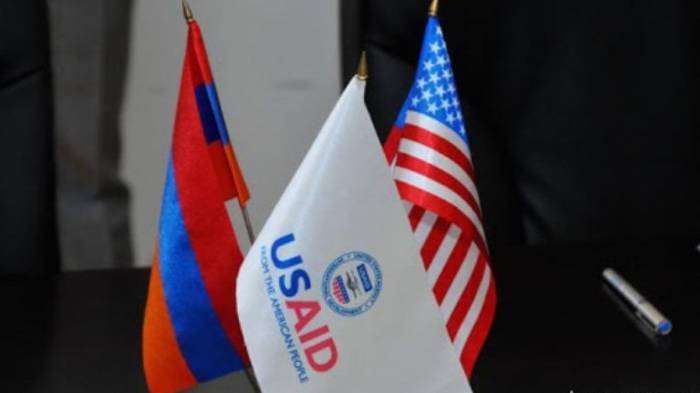
In the end, Armenia continues to receive military and financial backing from both the West and Russia. The United States, through USAID, has increased its assistance to Armenia, doubling its support from $120 million to $250 million in 2023 . France, meanwhile, continues to supply weapons through intermediaries, ensuring that Yerevan remains well-armed. Even Russia, despite its seemingly deteriorating relations with Armenia, has resumed arms deliveries, including high-precision weapons like Smerch missiles.
Thus, Armenia finds itself in a privileged position, benefiting from both sides of the geopolitical divide. While Moscow continues to see Yerevan as a vital outpost in the Caucasus, the West views Armenia as a critical tool for curbing Russian influence in the region. This balancing act has made Armenia a central figure in the broader geopolitical struggle.
As Armenia reaps the rewards of this delicate geopolitical game, its increasing militarization presents new challenges for regional stability. Despite Azerbaijan's efforts to maintain open international relations, it now faces an increasingly militarized Armenia, supported by both the West and Russia. The buildup of Armenia’s military power dims the prospects of peaceful resolution and creates new threats to the region’s security.
Ultimately, the relationship between Russia and Armenia is more than a bilateral issue—it has far-reaching consequences for the entire South Caucasus. As Armenia continues to modernize its military and strengthen its economic base through re-exports, the region will face growing challenges in maintaining peace and stability. Azerbaijan will be forced to respond to these developments to protect its own security and interests.


Similar news